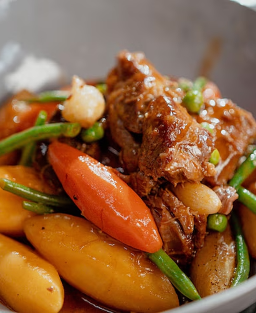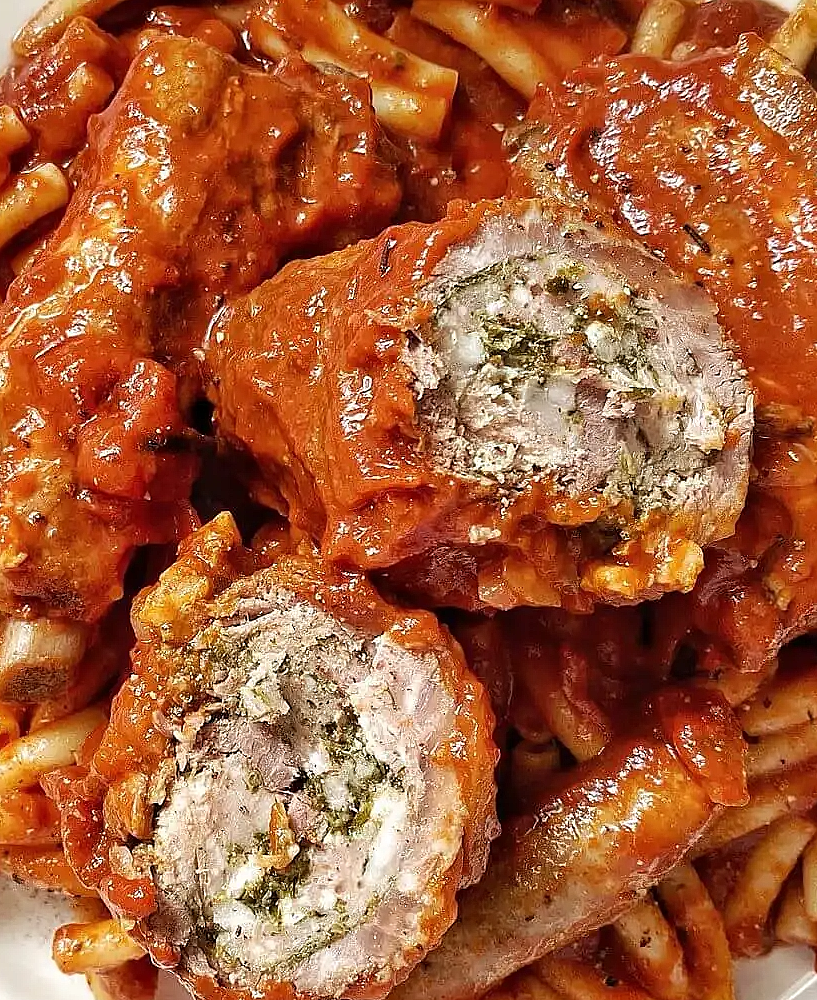


Traditional Sète Macaronade Recipe
Simmered in the style of Sète port families
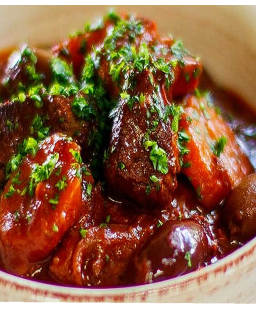
An iconic dish of Languedoc, rich in pasta, melting beef, and a tomato sauce flavored with herbs and red wine.
Beef Macaronade
Sète Macaronade
Macaronade (Occitan: macaronada setòria)
The Brotherhood of the Sète Macaronade safeguards the local culinary heritage.
Founded in the early 1990s, it ensures the transmission of this emblematic dish, born from the union of Italian traditions (Neapolitan maccheroni) and Languedoc culture. Each year, the World Macaronade Championship celebrates conviviality and Sète identity.
Members in costume participate in local festivals, preserving the recipe, training young chefs, and promoting the dish in restaurants and cooking workshops.
19th century: Italian workers arrive at Sète port, introducing macaroni and slow-cooked meat.
20th century: Adapted for family Sunday meals with local red wine and Mediterranean herbs.
Contemporary era: Lighter, vegetarian, or street-food versions (“macaronade bowl”), retaining its convivial nature.
Traditional Sète: Beef, tomato-red wine sauce, orange zest, long cooking with thickened sauce.
Biterroise: More tomato-forward sauce, addition of local sausages.
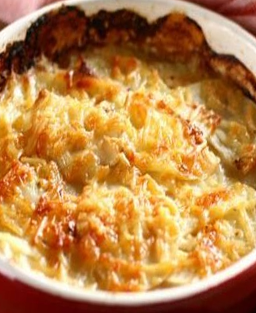
Contemporary chef (Michel Roux): Gratinated macaronis, shredded slow-cooked beef chuck, gourmet presentation.
Street food: Concentrated sauce, shredded meat, served in a “bowl.”
Legend tells of a Neapolitan fisherman who fell in love with a woman from Sète. One day he shared with her family a dish of macaroni from his native Italy. The pasta was adapted locally with slow-cooked meat, garlic, herbs, and Languedoc tomatoes. Thus, macaronade was born—a symbol of love, encounters, and Mediterranean fusion, still embodying today the convivial and fraternal spirit of Sète’s Occitan cuisine.
Country: France
Region: Occitanie (Hérault)
Status: Oral transmission – dish of Sète heritage
Codified recipe: No, but defended by the Brotherhood
Inventor: Italian-Sète community, 19th century
Specifications: Meat (chuck, sausage, pork), hollow macaroni, red wine, tomato sauce, garlic, herbs, slow cooking mandatory
Classic and contemporary:
Le Mas Bleu – Sète: Traditional family version with beef cheek
La Marine – Sète: Classic recipe with local red wine and slow cooking
Chez François – Sète: Oven-gratinated for texture
Maison Tarbouriech – Marseillan: Surf-and-turf adaptation around the Thau lagoon
Auberge du Vieux-Port – Mèze: Original revisit with meat and squid
Chef Michel Roux – Montpellier: Refined contemporary bistronomic interpretation
Local figures and transmission:
Jean Brunelin: Sète chef and author, former head of the Taste Macaronade Brotherhood, defender and codifier of the traditional recipe
Rudy Cerrato: Sète restaurateur promoting festive macaronade
Paul Chollet – Les Poêlées de Pépé: Illustrates contemporary attachment of Sète chefs to this identity dish
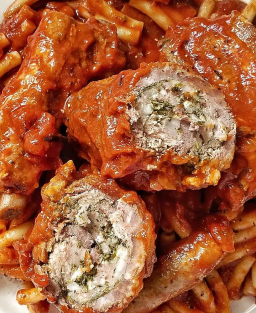
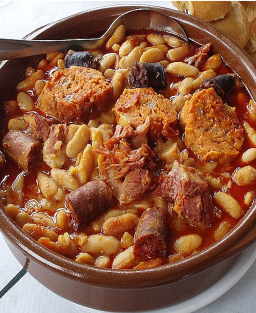
Appearance: deep red, generous sauce coating pasta and shredded meat
Texture: tender meat, soft pasta, lightly crisp surface
Aromas: sun-dried tomato, red wine, garlic, olive oil
Specialty: long simmer, pasta cooked separately, integrated into the sauce for aromatic intensity
Thick-bottomed pot or Dutch oven
Chef’s knife
Skimmer
Colander
Ladle
Wooden spoon
Meats:
6 slices beef chuck
500 g pork short rib (croustillous)
400 g sausage
120 g sausage meat
Vegetables and aromatics:
3 onions
5 cloves
3–4 garlic cloves
Fresh parsley
Sauce:
600–700 g fresh tomato coulis
1 glass of full-bodied red wine
Pasta:
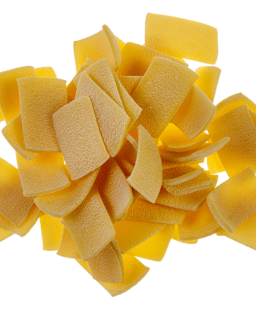
500 g penne rigate or macaroni
Cheese (for serving):
Grated mix of Parmesan and Pecorino Romano, black pepper
Trim beef slices to ~1 cm thickness
Lay flat, season lightly with salt and pepper
Place a spoonful of filling (sausage meat, garlic, parsley) in the center
Roll into compact roulades, secure with toothpicks or kitchen twine
Chill until ready
Tip: Slightly fibrous chuck ensures melting texture after long cooking
Heat a drizzle of olive oil in a cast-iron pot
Sear brageoles on all sides until golden, then set aside
Sauté sliced onions until lightly caramelized
Add tomato coulis, allow to brown slightly
Deglaze with red wine, scraping up browned bits, let reduce
Return brageoles, add a whole onion studded with cloves and a little water, cover, simmer gently
Sear pork short rib pieces until golden
Add to pot, simmer 2 h on low, add water if needed
15 minutes before end, sear sausage and add
Expected result: reddish-brown sauce, tender, flavorful meat
Boil large pot salted water (10 g/L)
Cook macaroni or penne al dente
Drain and mix into the pot to coat with sauce
Gently combine, rest 5 min off heat
Adjust seasoning
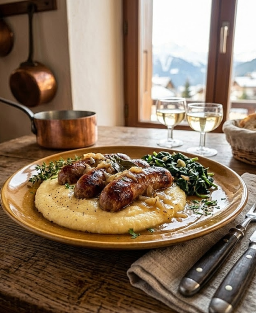
Serve in a pot or family dish
Sprinkle with grated cheese, crack black pepper
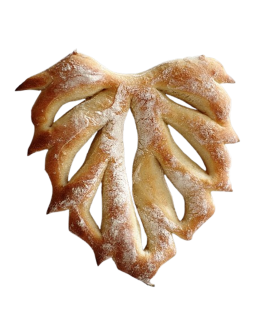
Serve very hot with country bread and Languedoc red wine
Chef’s tip: Preparing the day before and reheating slowly enhances tenderness and sauce cohesion
Meat: only beef chuck for brageoles; up to three meats allowed
Pasta: only macaroni
Sauce: reddish-brown, long simmer mandatory
Filling: sausage meat, garlic, parsley (alternatives: pancetta, hard-boiled egg)
Cheese: Parmesan + Pecorino Romano, never Gruyère
Meat core temperature ≥ 70 °C
Maintain cold chain
Storage: max 72 h at +3 °C
Recommended: red wine from Coteaux-du-Languedoc
Sauce too red = insufficient cooking
Chuck tolerates 2–3 h simmer without falling apart
Serve in pot or family dish
Garnish: green salad, grilled vegetables
Drinks: full-bodied Languedoc red wines, served at 16 °C
Energy: ~580 kcal
Fat: 20 g
Carbohydrates: 65 g
Protein: 30 g
Fiber: 5 g
Allergens: gluten, sulfites, possible traces of lactose
Gluten-free: rice or corn pasta
Vegetarian: eggplant and soy protein
Lactose-free: lactose-free cheese or omitted
Your review appreciation cannot be sent
Report comment
Report sent
Your report cannot be sent
Write your review
Review sent
Your review cannot be sent
Traditional Sète Macaronade Recipe
Simmered in the style of Sète port families
An iconic dish of Languedoc, rich in pasta, melting beef, and a tomato sauce flavored with herbs and red wine.
Beef Macaronade
Sète Macaronade
Macaronade (Occitan: macaronada setòria)
The Brotherhood of the Sète Macaronade safeguards the local culinary heritage.
Founded in the early 1990s, it ensures the transmission of this emblematic dish, born from the union of Italian traditions (Neapolitan maccheroni) and Languedoc culture. Each year, the World Macaronade Championship celebrates conviviality and Sète identity.
Members in costume participate in local festivals, preserving the recipe, training young chefs, and promoting the dish in restaurants and cooking workshops.
19th century: Italian workers arrive at Sète port, introducing macaroni and slow-cooked meat.
20th century: Adapted for family Sunday meals with local red wine and Mediterranean herbs.
Contemporary era: Lighter, vegetarian, or street-food versions (“macaronade bowl”), retaining its convivial nature.
Traditional Sète: Beef, tomato-red wine sauce, orange zest, long cooking with thickened sauce.
Biterroise: More tomato-forward sauce, addition of local sausages.
Contemporary chef (Michel Roux): Gratinated macaronis, shredded slow-cooked beef chuck, gourmet presentation.
Street food: Concentrated sauce, shredded meat, served in a “bowl.”
Legend tells of a Neapolitan fisherman who fell in love with a woman from Sète. One day he shared with her family a dish of macaroni from his native Italy. The pasta was adapted locally with slow-cooked meat, garlic, herbs, and Languedoc tomatoes. Thus, macaronade was born—a symbol of love, encounters, and Mediterranean fusion, still embodying today the convivial and fraternal spirit of Sète’s Occitan cuisine.
Country: France
Region: Occitanie (Hérault)
Status: Oral transmission – dish of Sète heritage
Codified recipe: No, but defended by the Brotherhood
Inventor: Italian-Sète community, 19th century
Specifications: Meat (chuck, sausage, pork), hollow macaroni, red wine, tomato sauce, garlic, herbs, slow cooking mandatory
Classic and contemporary:
Le Mas Bleu – Sète: Traditional family version with beef cheek
La Marine – Sète: Classic recipe with local red wine and slow cooking
Chez François – Sète: Oven-gratinated for texture
Maison Tarbouriech – Marseillan: Surf-and-turf adaptation around the Thau lagoon
Auberge du Vieux-Port – Mèze: Original revisit with meat and squid
Chef Michel Roux – Montpellier: Refined contemporary bistronomic interpretation
Local figures and transmission:
Jean Brunelin: Sète chef and author, former head of the Taste Macaronade Brotherhood, defender and codifier of the traditional recipe
Rudy Cerrato: Sète restaurateur promoting festive macaronade
Paul Chollet – Les Poêlées de Pépé: Illustrates contemporary attachment of Sète chefs to this identity dish
Appearance: deep red, generous sauce coating pasta and shredded meat
Texture: tender meat, soft pasta, lightly crisp surface
Aromas: sun-dried tomato, red wine, garlic, olive oil
Specialty: long simmer, pasta cooked separately, integrated into the sauce for aromatic intensity
Thick-bottomed pot or Dutch oven
Chef’s knife
Skimmer
Colander
Ladle
Wooden spoon
Meats:
6 slices beef chuck
500 g pork short rib (croustillous)
400 g sausage
120 g sausage meat
Vegetables and aromatics:
3 onions
5 cloves
3–4 garlic cloves
Fresh parsley
Sauce:
600–700 g fresh tomato coulis
1 glass of full-bodied red wine
Pasta:
500 g penne rigate or macaroni
Cheese (for serving):
Grated mix of Parmesan and Pecorino Romano, black pepper
Trim beef slices to ~1 cm thickness
Lay flat, season lightly with salt and pepper
Place a spoonful of filling (sausage meat, garlic, parsley) in the center
Roll into compact roulades, secure with toothpicks or kitchen twine
Chill until ready
Tip: Slightly fibrous chuck ensures melting texture after long cooking
Heat a drizzle of olive oil in a cast-iron pot
Sear brageoles on all sides until golden, then set aside
Sauté sliced onions until lightly caramelized
Add tomato coulis, allow to brown slightly
Deglaze with red wine, scraping up browned bits, let reduce
Return brageoles, add a whole onion studded with cloves and a little water, cover, simmer gently
Sear pork short rib pieces until golden
Add to pot, simmer 2 h on low, add water if needed
15 minutes before end, sear sausage and add
Expected result: reddish-brown sauce, tender, flavorful meat
Boil large pot salted water (10 g/L)
Cook macaroni or penne al dente
Drain and mix into the pot to coat with sauce
Gently combine, rest 5 min off heat
Adjust seasoning
Serve in a pot or family dish
Sprinkle with grated cheese, crack black pepper
Serve very hot with country bread and Languedoc red wine
Chef’s tip: Preparing the day before and reheating slowly enhances tenderness and sauce cohesion
Meat: only beef chuck for brageoles; up to three meats allowed
Pasta: only macaroni
Sauce: reddish-brown, long simmer mandatory
Filling: sausage meat, garlic, parsley (alternatives: pancetta, hard-boiled egg)
Cheese: Parmesan + Pecorino Romano, never Gruyère
Meat core temperature ≥ 70 °C
Maintain cold chain
Storage: max 72 h at +3 °C
Recommended: red wine from Coteaux-du-Languedoc
Sauce too red = insufficient cooking
Chuck tolerates 2–3 h simmer without falling apart
Serve in pot or family dish
Garnish: green salad, grilled vegetables
Drinks: full-bodied Languedoc red wines, served at 16 °C
Energy: ~580 kcal
Fat: 20 g
Carbohydrates: 65 g
Protein: 30 g
Fiber: 5 g
Allergens: gluten, sulfites, possible traces of lactose
Gluten-free: rice or corn pasta
Vegetarian: eggplant and soy protein
Lactose-free: lactose-free cheese or omitted
check_circle
check_circle