
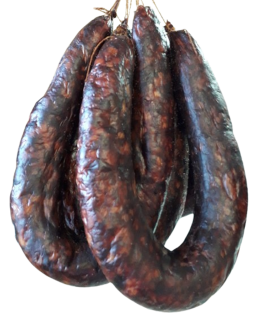
Rustic Pork Liver and Garlic Sausage
A traditional Corsican fresh sausage made from coarsely chopped pork liver, seasoned with garlic, pepper, and nepita. Ideal for slow cooking over a wood fire.
Figatellu
Figateddu (Corsican)
Traditional Corsican liver sausage
The Corsican figatellu originates from 17th-century mountain shepherds, who used it to preserve fresh pork liver from winter slaughter. Originally, it was a simple stuffing: liver, salt, and garlic, stuffed into natural casings and dried for a few days.
In the 19th century, the recipe gradually evolved: the addition of Corsican red wine (Nielluccio or Sciaccarellu) tenderized and flavored the mixture, while wild nepita added a distinctive island herb note.
By the 20th century, rural exodus had reduced artisanal production, threatening the tradition. The creation of the IGP Figatellu Corse in 2012 helped standardize production while preserving its rustic, authentic character.
Modern adaptations include:
Leaner versions with less pork fat
Naturally gluten-free versions
Vegetarian options using smoked tofu and chopped vegetables
Alcohol-free versions for bistronomy or street food
Nebbiu (Upper Corsica): Liver-dominant (~70%), marked fresh nepita, short drying (2 days) for soft, moist texture; cooked over maquis wood for subtle smoked flavor.
Sartenais (South Corsica): Added smoked pork belly (~30%), fattier and spiced stuffing, longer drying (4–5 days); grilled over chestnut wood for intense, woody notes.
Bozio (Central Corsica): Mix of pork and veal liver, intensified pink garlic, no wine; finer texture, ideal poached in aromatic broth.
Contemporary chef version (e.g., Fabio Bragato, Corte): Figatellu reinvented as breaded croquette or confit, plated bistronomically with nepita purée, Corsican wine reduction, and chestnut pieces; contrast of crunchy and melting textures.
Capo Corso (North): Myrtle infusion in the stuffing, thinner casings; slow cooking over embers, served with chestnut flour polenta.
Modern street-food: Mini grilled figatelli (~5 cm) on skewers with tangy myrtle sauce and polenta chips; portable packaging for festivals and Corsican events.
Discover the traditional Corsican figatellu, an emblematic island dish prized for its rustic character, garlic and nepita flavors, and pastoral authenticity.
Pork liver can be partially replaced with veal or lamb liver; pork belly can be substituted with pork jowl or fat to adjust richness.
Dish type: Charcuterie / Main dish
Service style: Brasserie, collective, family table
Yield: 10 portions (≈2 kg)
Skill level: Intermediate
Proverb:
"U figatellu hè u cori di a chjama corsa."
("Figatellu is the heart of the Corsican soul," referring to rustic conviviality)
Legend:
In the Corsican mountains, a Nebbiu shepherd pursued by bandits shared his fresh figatellu with hungry travelers. This act of generosity saved his life, making figatellu a symbol of mountain solidarity and island hospitality.
Geography & Status:
Country: France
Region: Corsica
Official status: IGP (Protected Geographical Indication)
Origin: Oral pastoral tradition
Codified recipe: Yes (IGP specifications)
Official standards: ≥50% fresh pork liver, coarse chop, garlic/pepper/salt seasoning, natural casings, drying 2–5 days, no chemical additives
Certifying body: INAO (via IGP Figatellu Corse)
17th century: Mountain pastures, preserving fresh pork liver from autumn slaughter.
Traditional peasant dish: Served with chestnut flour polenta.
Social context: Isolated pastoral life, village festivals, grape harvests.
Terroir influence: Wild nepita and Nustrale pigs.
20th century: Decline due to rural exodus; revival via IGP in 2012.
Cultural Influences:
Genoese: spices, casings
Italian: coarse chopping
Mediterranean trade: garlic and aromatic herbs
Technical evolution: artisanal smoking → standardized IGP production; mechanical mincers, sanitary controls
Culinary evolution: popular → gourmet via contemporary chefs (figatellu confit, croquettes, bistronomy)
Ferme-Auberge U Tavonu – Corte: Wood-fired figatellu, free-range Nustrale pigs
Auberge du Col de Bavella – Zonza: Nepita-dominant, served with polenta
Chez Jean-Luc – Porto-Vecchio: Smoked figatellu, South Corsica style with pork belly
La Rusta – Bastia: Mini figatellu as refined starter
Fattoria di l’Isula – Sartène: Organic, pure Corsican breed, traditionally dried
Auberge Sulana – Serra-di-Scopamène: Long drying, family tradition
Elevage U Casale – Balagne: Supplier of Nustrale pigs for artisanal figatellu
Ferme A Filetta – Cap Corse: Short drying, pasture-raised pigs with local herbs
Maison Pietri – Sartène: Confit and grilled, chestnut-fed rustic pigs
Elevage U Merghju – South Corsica: Traditional figatellu for restaurateurs
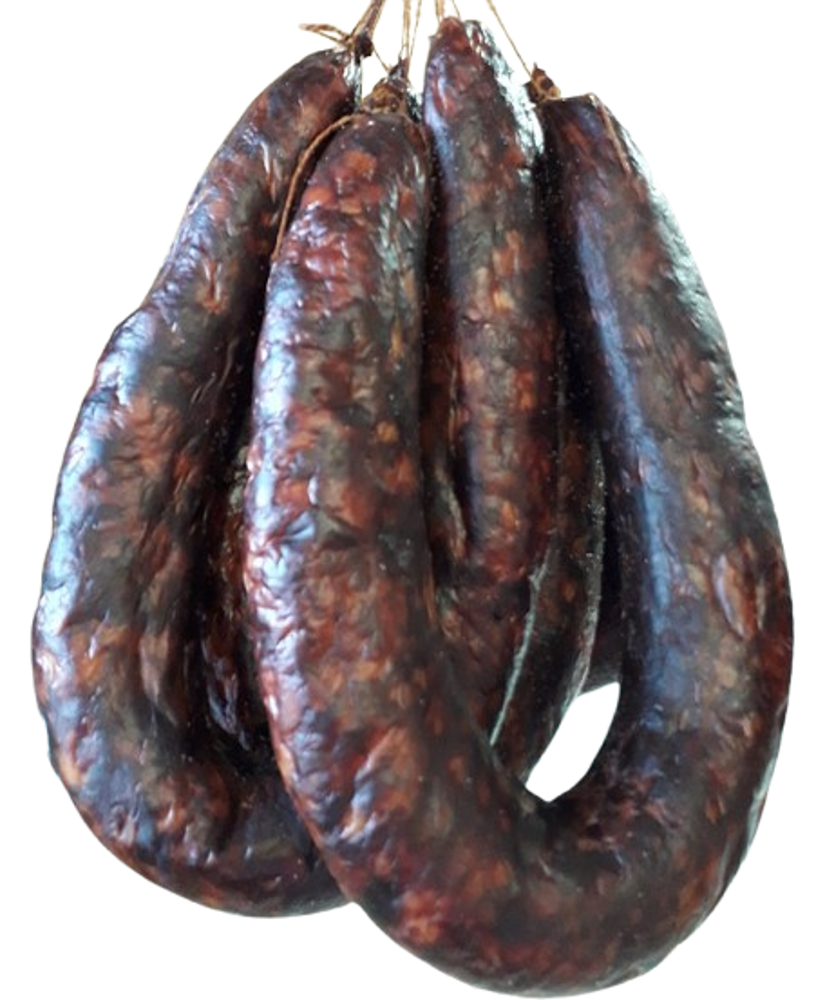
Appearance: Rustic brown sausages, shiny, 15–20 cm long
Texture: Soft, melting inside, slightly crisp on grilled surface
Aroma: Garlicky, herbaceous (nepita), peppery, meaty
Cooking Methods: Wood-fire grilling, gentle pan-frying
Key Techniques: Coarse chopping, manual stuffing, airy drying
Typical Ingredients: Fresh pork liver, Corsican garlic, nepita, red wine
Large-hole meat grinder
Manual sausage stuffer
Trimming knife
Butcher’s twine
Ventilated drying area
1.5 kg very fresh pork liver (deveined)
500 g pork belly/jowl
30 g fine salt (1.5%)
5 g cracked black pepper
4–6 cloves garlic, crushed
50 ml Corsican red wine (optional)
10 g chopped fresh nepita (optional)
Natural pork casings (28–32 mm)
Variants: Up to 20% veal liver, alcohol-free version
Prep time: 45 min
Cooking time: 20–30 min
Rest/Drying: 2–5 days
Setup:
Clean, disinfected workspace
Soak and rinse casings
Keep liver and pork cold (<4 °C)
Prepare seasonings
Prepping and Chopping:
Trim liver, remove green parts, veins, membranes
Cut liver and pork into 3 cm cubes
Coarsely grind through large holes (~8 mm)
Mix with salt, pepper, crushed garlic, nepita, wine
Rest 1–2 h at 0–3 °C
Stuffing, Drying, Cooking:
Stuff into casings, forming 15–20 cm sausages
Prick lightly to remove air pockets
Dry in ventilated, cool space (12–15 °C, 70–80% humidity) 2–5 days
Cook:
Wood fire: indirect heat, 20–30 min, turn regularly
Pan: lightly prick, cook gently with fat to 75 °C center
Other: oven, grill, plancha as per instructions
Finishing:
Rest sausages
Slice diagonally to show liver/fat marbling
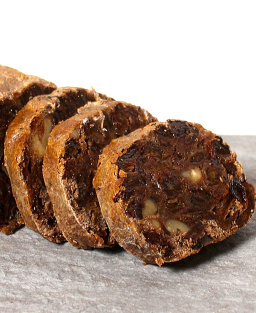
Serve on hot polenta, with roasted figs, potatoes, rustic bread
Optional: drizzle with reduced wine jus, garnish with fresh nepita
Chef Tips:
Use ultra-fresh liver (ideally same day of slaughter)
Add nepita 24 h before stuffing for stronger flavor
Monitor drying to maintain softness
Store 7 days at +3 °C after cooking
Wood fire, fireplace, barbecue, oven, pan, plancha
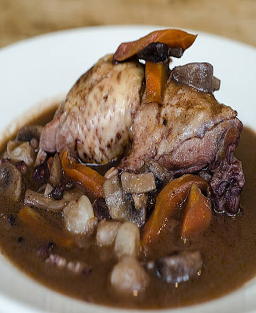
Integrate into Corsican dishes (stews, polenta)
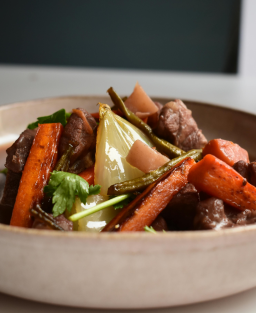
Traditional accompaniments: chestnut polenta, roasted potatoes, figs, rustic bread, Corsican red wine
Cold chain <4 °C until stuffing
Core temperature ≥75 °C
Blast chill -3 °C, shelf life 7 days at +3 °C
Clean equipment, gloves mandatory
Red wine: Patrimonio (Nielluccio, 16 °C)
Non-alcoholic: Myrtle water, Corsican beer Pietra
Energy: 450 kcal
Fat: 35 g
Carbs: 1 g
Protein: 28 g
Fiber: 0 g
Allergens: Sulfites (wine), possible traces of milk (if cultivated nepita used)
Naturally gluten-free
Vegetarian: smoked tofu + chopped vegetables
Alcohol-free: replace wine with garlic-infused water
Glossary:
Nepita: Corsican herb (wild peppermint)
Embossage: Sausage casing stuffing
Nustrale: Rustic Corsican pig breed
Rustic Pork Liver and Garlic Sausage
A traditional Corsican fresh sausage made from coarsely chopped pork liver, seasoned with garlic, pepper, and nepita. Ideal for slow cooking over a wood fire.
Figatellu
Figateddu (Corsican)
Traditional Corsican liver sausage
The Corsican figatellu originates from 17th-century mountain shepherds, who used it to preserve fresh pork liver from winter slaughter. Originally, it was a simple stuffing: liver, salt, and garlic, stuffed into natural casings and dried for a few days.
In the 19th century, the recipe gradually evolved: the addition of Corsican red wine (Nielluccio or Sciaccarellu) tenderized and flavored the mixture, while wild nepita added a distinctive island herb note.
By the 20th century, rural exodus had reduced artisanal production, threatening the tradition. The creation of the IGP Figatellu Corse in 2012 helped standardize production while preserving its rustic, authentic character.
Modern adaptations include:
Leaner versions with less pork fat
Naturally gluten-free versions
Vegetarian options using smoked tofu and chopped vegetables
Alcohol-free versions for bistronomy or street food
Nebbiu (Upper Corsica): Liver-dominant (~70%), marked fresh nepita, short drying (2 days) for soft, moist texture; cooked over maquis wood for subtle smoked flavor.
Sartenais (South Corsica): Added smoked pork belly (~30%), fattier and spiced stuffing, longer drying (4–5 days); grilled over chestnut wood for intense, woody notes.
Bozio (Central Corsica): Mix of pork and veal liver, intensified pink garlic, no wine; finer texture, ideal poached in aromatic broth.
Contemporary chef version (e.g., Fabio Bragato, Corte): Figatellu reinvented as breaded croquette or confit, plated bistronomically with nepita purée, Corsican wine reduction, and chestnut pieces; contrast of crunchy and melting textures.
Capo Corso (North): Myrtle infusion in the stuffing, thinner casings; slow cooking over embers, served with chestnut flour polenta.
Modern street-food: Mini grilled figatelli (~5 cm) on skewers with tangy myrtle sauce and polenta chips; portable packaging for festivals and Corsican events.
Discover the traditional Corsican figatellu, an emblematic island dish prized for its rustic character, garlic and nepita flavors, and pastoral authenticity.
Pork liver can be partially replaced with veal or lamb liver; pork belly can be substituted with pork jowl or fat to adjust richness.
Dish type: Charcuterie / Main dish
Service style: Brasserie, collective, family table
Yield: 10 portions (≈2 kg)
Skill level: Intermediate
Proverb:
"U figatellu hè u cori di a chjama corsa."
("Figatellu is the heart of the Corsican soul," referring to rustic conviviality)
Legend:
In the Corsican mountains, a Nebbiu shepherd pursued by bandits shared his fresh figatellu with hungry travelers. This act of generosity saved his life, making figatellu a symbol of mountain solidarity and island hospitality.
Geography & Status:
Country: France
Region: Corsica
Official status: IGP (Protected Geographical Indication)
Origin: Oral pastoral tradition
Codified recipe: Yes (IGP specifications)
Official standards: ≥50% fresh pork liver, coarse chop, garlic/pepper/salt seasoning, natural casings, drying 2–5 days, no chemical additives
Certifying body: INAO (via IGP Figatellu Corse)
17th century: Mountain pastures, preserving fresh pork liver from autumn slaughter.
Traditional peasant dish: Served with chestnut flour polenta.
Social context: Isolated pastoral life, village festivals, grape harvests.
Terroir influence: Wild nepita and Nustrale pigs.
20th century: Decline due to rural exodus; revival via IGP in 2012.
Cultural Influences:
Genoese: spices, casings
Italian: coarse chopping
Mediterranean trade: garlic and aromatic herbs
Technical evolution: artisanal smoking → standardized IGP production; mechanical mincers, sanitary controls
Culinary evolution: popular → gourmet via contemporary chefs (figatellu confit, croquettes, bistronomy)
Ferme-Auberge U Tavonu – Corte: Wood-fired figatellu, free-range Nustrale pigs
Auberge du Col de Bavella – Zonza: Nepita-dominant, served with polenta
Chez Jean-Luc – Porto-Vecchio: Smoked figatellu, South Corsica style with pork belly
La Rusta – Bastia: Mini figatellu as refined starter
Fattoria di l’Isula – Sartène: Organic, pure Corsican breed, traditionally dried
Auberge Sulana – Serra-di-Scopamène: Long drying, family tradition
Elevage U Casale – Balagne: Supplier of Nustrale pigs for artisanal figatellu
Ferme A Filetta – Cap Corse: Short drying, pasture-raised pigs with local herbs
Maison Pietri – Sartène: Confit and grilled, chestnut-fed rustic pigs
Elevage U Merghju – South Corsica: Traditional figatellu for restaurateurs
Appearance: Rustic brown sausages, shiny, 15–20 cm long
Texture: Soft, melting inside, slightly crisp on grilled surface
Aroma: Garlicky, herbaceous (nepita), peppery, meaty
Cooking Methods: Wood-fire grilling, gentle pan-frying
Key Techniques: Coarse chopping, manual stuffing, airy drying
Typical Ingredients: Fresh pork liver, Corsican garlic, nepita, red wine
Large-hole meat grinder
Manual sausage stuffer
Trimming knife
Butcher’s twine
Ventilated drying area
1.5 kg very fresh pork liver (deveined)
500 g pork belly/jowl
30 g fine salt (1.5%)
5 g cracked black pepper
4–6 cloves garlic, crushed
50 ml Corsican red wine (optional)
10 g chopped fresh nepita (optional)
Natural pork casings (28–32 mm)
Variants: Up to 20% veal liver, alcohol-free version
Prep time: 45 min
Cooking time: 20–30 min
Rest/Drying: 2–5 days
Setup:
Clean, disinfected workspace
Soak and rinse casings
Keep liver and pork cold (<4 °C)
Prepare seasonings
Prepping and Chopping:
Trim liver, remove green parts, veins, membranes
Cut liver and pork into 3 cm cubes
Coarsely grind through large holes (~8 mm)
Mix with salt, pepper, crushed garlic, nepita, wine
Rest 1–2 h at 0–3 °C
Stuffing, Drying, Cooking:
Stuff into casings, forming 15–20 cm sausages
Prick lightly to remove air pockets
Dry in ventilated, cool space (12–15 °C, 70–80% humidity) 2–5 days
Cook:
Wood fire: indirect heat, 20–30 min, turn regularly
Pan: lightly prick, cook gently with fat to 75 °C center
Other: oven, grill, plancha as per instructions
Finishing:
Rest sausages
Slice diagonally to show liver/fat marbling
Serve on hot polenta, with roasted figs, potatoes, rustic bread
Optional: drizzle with reduced wine jus, garnish with fresh nepita
Chef Tips:
Use ultra-fresh liver (ideally same day of slaughter)
Add nepita 24 h before stuffing for stronger flavor
Monitor drying to maintain softness
Store 7 days at +3 °C after cooking
Wood fire, fireplace, barbecue, oven, pan, plancha
Integrate into Corsican dishes (stews, polenta)
Traditional accompaniments: chestnut polenta, roasted potatoes, figs, rustic bread, Corsican red wine
Cold chain <4 °C until stuffing
Core temperature ≥75 °C
Blast chill -3 °C, shelf life 7 days at +3 °C
Clean equipment, gloves mandatory
Red wine: Patrimonio (Nielluccio, 16 °C)
Non-alcoholic: Myrtle water, Corsican beer Pietra
Energy: 450 kcal
Fat: 35 g
Carbs: 1 g
Protein: 28 g
Fiber: 0 g
Allergens: Sulfites (wine), possible traces of milk (if cultivated nepita used)
Naturally gluten-free
Vegetarian: smoked tofu + chopped vegetables
Alcohol-free: replace wine with garlic-infused water
Glossary:
Nepita: Corsican herb (wild peppermint)
Embossage: Sausage casing stuffing
Nustrale: Rustic Corsican pig breed