
Onigiri: The Ancestral Japanese Rice Ball
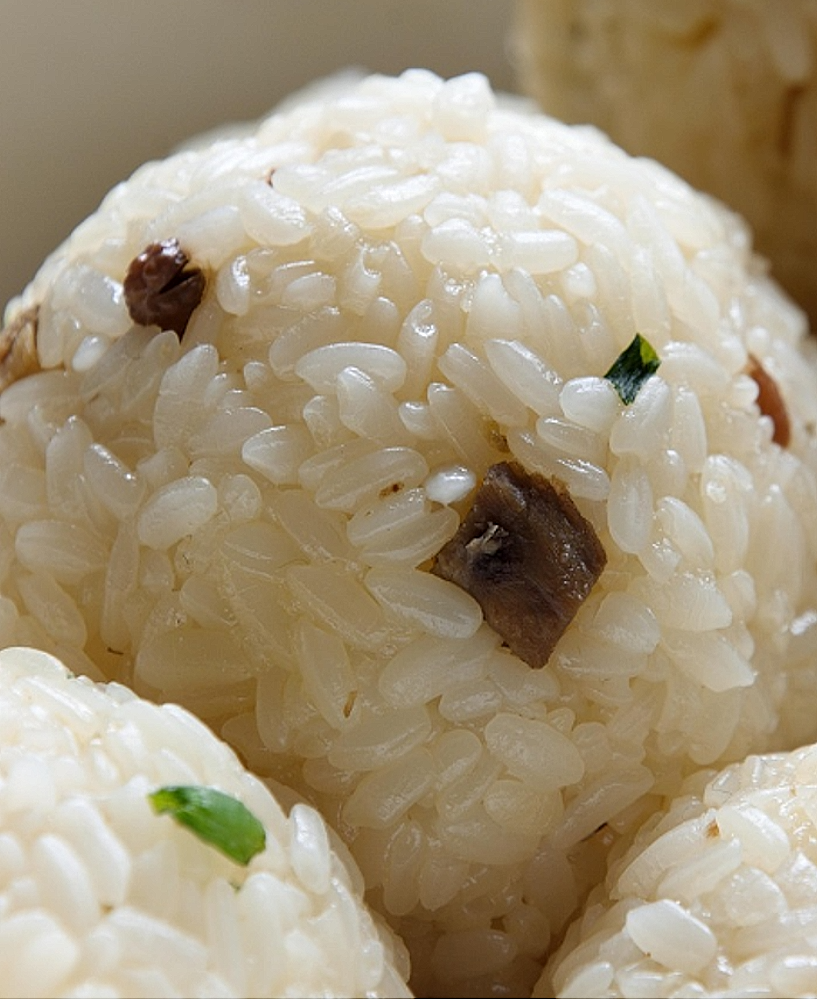
Traditional recipe for the Japanese triangular onigiri, a hand-shaped rice ball filled with fish, umeboshi, or pickled vegetables. A nomadic symbol of Japanese popular cuisine, it combines simplicity, authenticity, and portability.
Other Historical Names
Onigiri (おにぎり): Modern name, derived from the verb nigiru (“to press, to shape by hand”).
Nigiri-meshi (握り飯): Ancient term attested as early as the Nara period (8th century), meaning “pressed rice.”
Nigirimeshi (にぎり飯): Regional and spelling variant of Nigiri-meshi.
Tonjiki (屯食): Used during the Heian period for oval-shaped sticky rice, symbolic of travel rations.
Omusubi (おむすび): Modern synonym, mainly in Kansai, from the verb musubu (“to tie, to bind”), referring to the shape and gesture.
Regional Variants and Styles
Kantō (関東 style): Plain pressed rice, umeboshi filling, wrapped in nori, triangular shape (三角形).
Kansai (関西 style): Lightly seasoned rice, round shape, locally called omusubi.
Samurai – Kamakura: Compact rice for transport, salted fillings (dried fish, umeboshi), wrapped in shiso or primitive nori, oval shape (tonjiki).
Contemporary Street Food: Modern fillings (tuna-mayo, tempura shrimp, Spam musubi), nori served separately to stay crispy.
Gourmet: Subtly vinegared rice, premium fillings (uni, sujiko), cylindrical (tawara) or drum-shaped (taikokei).
Cultural and Historical Context
Japanese proverb:
「腹が減っては戦はできぬ」 (Hara ga hette wa ikusa wa dekinu) — “One cannot fight on an empty stomach.”
Origin of the dish:
Yayoi Period (400 BCE – 250 CE): Compact rice blocks as provisions.
Nara Era (710–794): Mentions of nigiri-ihi in the Hitachi no Kuni Fudoki.
Heian Era (794–1185): Tonjiki for aristocratic picnics.
Kamakura Era (1185–1333): Military rations for samurai.
Edo Era (1603–1868): Popularization, introduction of dried nori, standard triangular shapes.
21st Century: National symbol, premium innovations, global export.
Ingredients for 6 Onigiri
Japanese short-grain rice (Japonica): 600 g (uncooked)
Water: 720 ml
Fine non-iodized salt: 6 g
Fillings (choose 120 g): umeboshi, grilled salmon, kombu, tuna-mayo, tarako, okaka, tempura shrimp, teriyaki chicken, marinated tofu, avocado-shrimp, ground grilled meat
Nori: 3 sheets
Required Tools
Rice cooker or heavy-bottomed pot
Rice spatula (shamoji)
Large bowl or gastronorm tray
Plastic wrap (optional)
Rice Preparation
Rinse rice until water is clear.
Cooking:
Rice cooker / Autocooker: Add water and salt, cook on white rice setting, rest 10 min.
Pot: Boil 12–15 min, let rest 10 min.
Steaming: Soak 30 min, steam 20–25 min.
Boil & Rest (yutori 湯取り): Bring to boil, remove from heat, let steam 15–20 min.
Tip: Rice should remain soft and slightly sticky.
Professional Shaping
Prepare workstation: bowl of salted water, clean surface.
Portion: about 100 g rice per ball.
Shape: moisten hands, lightly salt, make a well for filling.
Fill: 10–20 g in the center, close gently.
Shape: triangle, ball, or stick.
Finish: wrap with ½ sheet of nori just before serving.
Variant: Serve nori separately for extra crispness; shiso leaf for herbal notes.
Serving Tips
Temperature: room temperature
Pairing: green tea, miso soup
Storage: up to 2 hours in the fridge if filled with fish
Hygiene: clean, salted hands
Nutritional Values (per piece)
Energy: ~190 kcal
Carbohydrates: 38 g
Protein: 4 g
Fat: 2 g
Fiber: 1.5 g
Allergens: fish, seaweed, soy depending on filling
Quick Glossary
Nori: dried seaweed
Umeboshi: salted, fermented Japanese plum
Shamoji: rice spatula
Onigiri: The Ancestral Japanese Rice Ball
Traditional recipe for the Japanese triangular onigiri, a hand-shaped rice ball filled with fish, umeboshi, or pickled vegetables. A nomadic symbol of Japanese popular cuisine, it combines simplicity, authenticity, and portability.
Other Historical Names
Onigiri (おにぎり): Modern name, derived from the verb nigiru (“to press, to shape by hand”).
Nigiri-meshi (握り飯): Ancient term attested as early as the Nara period (8th century), meaning “pressed rice.”
Nigirimeshi (にぎり飯): Regional and spelling variant of Nigiri-meshi.
Tonjiki (屯食): Used during the Heian period for oval-shaped sticky rice, symbolic of travel rations.
Omusubi (おむすび): Modern synonym, mainly in Kansai, from the verb musubu (“to tie, to bind”), referring to the shape and gesture.
Regional Variants and Styles
Kantō (関東 style): Plain pressed rice, umeboshi filling, wrapped in nori, triangular shape (三角形).
Kansai (関西 style): Lightly seasoned rice, round shape, locally called omusubi.
Samurai – Kamakura: Compact rice for transport, salted fillings (dried fish, umeboshi), wrapped in shiso or primitive nori, oval shape (tonjiki).
Contemporary Street Food: Modern fillings (tuna-mayo, tempura shrimp, Spam musubi), nori served separately to stay crispy.
Gourmet: Subtly vinegared rice, premium fillings (uni, sujiko), cylindrical (tawara) or drum-shaped (taikokei).
Cultural and Historical Context
Japanese proverb:
「腹が減っては戦はできぬ」 (Hara ga hette wa ikusa wa dekinu) — “One cannot fight on an empty stomach.”
Origin of the dish:
Yayoi Period (400 BCE – 250 CE): Compact rice blocks as provisions.
Nara Era (710–794): Mentions of nigiri-ihi in the Hitachi no Kuni Fudoki.
Heian Era (794–1185): Tonjiki for aristocratic picnics.
Kamakura Era (1185–1333): Military rations for samurai.
Edo Era (1603–1868): Popularization, introduction of dried nori, standard triangular shapes.
21st Century: National symbol, premium innovations, global export.
Ingredients for 6 Onigiri
Japanese short-grain rice (Japonica): 600 g (uncooked)
Water: 720 ml
Fine non-iodized salt: 6 g
Fillings (choose 120 g): umeboshi, grilled salmon, kombu, tuna-mayo, tarako, okaka, tempura shrimp, teriyaki chicken, marinated tofu, avocado-shrimp, ground grilled meat
Nori: 3 sheets
Required Tools
Rice cooker or heavy-bottomed pot
Rice spatula (shamoji)
Large bowl or gastronorm tray
Plastic wrap (optional)
Rice Preparation
Rinse rice until water is clear.
Cooking:
Rice cooker / Autocooker: Add water and salt, cook on white rice setting, rest 10 min.
Pot: Boil 12–15 min, let rest 10 min.
Steaming: Soak 30 min, steam 20–25 min.
Boil & Rest (yutori 湯取り): Bring to boil, remove from heat, let steam 15–20 min.
Tip: Rice should remain soft and slightly sticky.
Professional Shaping
Prepare workstation: bowl of salted water, clean surface.
Portion: about 100 g rice per ball.
Shape: moisten hands, lightly salt, make a well for filling.
Fill: 10–20 g in the center, close gently.
Shape: triangle, ball, or stick.
Finish: wrap with ½ sheet of nori just before serving.
Variant: Serve nori separately for extra crispness; shiso leaf for herbal notes.
Serving Tips
Temperature: room temperature
Pairing: green tea, miso soup
Storage: up to 2 hours in the fridge if filled with fish
Hygiene: clean, salted hands
Nutritional Values (per piece)
Energy: ~190 kcal
Carbohydrates: 38 g
Protein: 4 g
Fat: 2 g
Fiber: 1.5 g
Allergens: fish, seaweed, soy depending on filling
Quick Glossary
Nori: dried seaweed
Umeboshi: salted, fermented Japanese plum
Shamoji: rice spatula