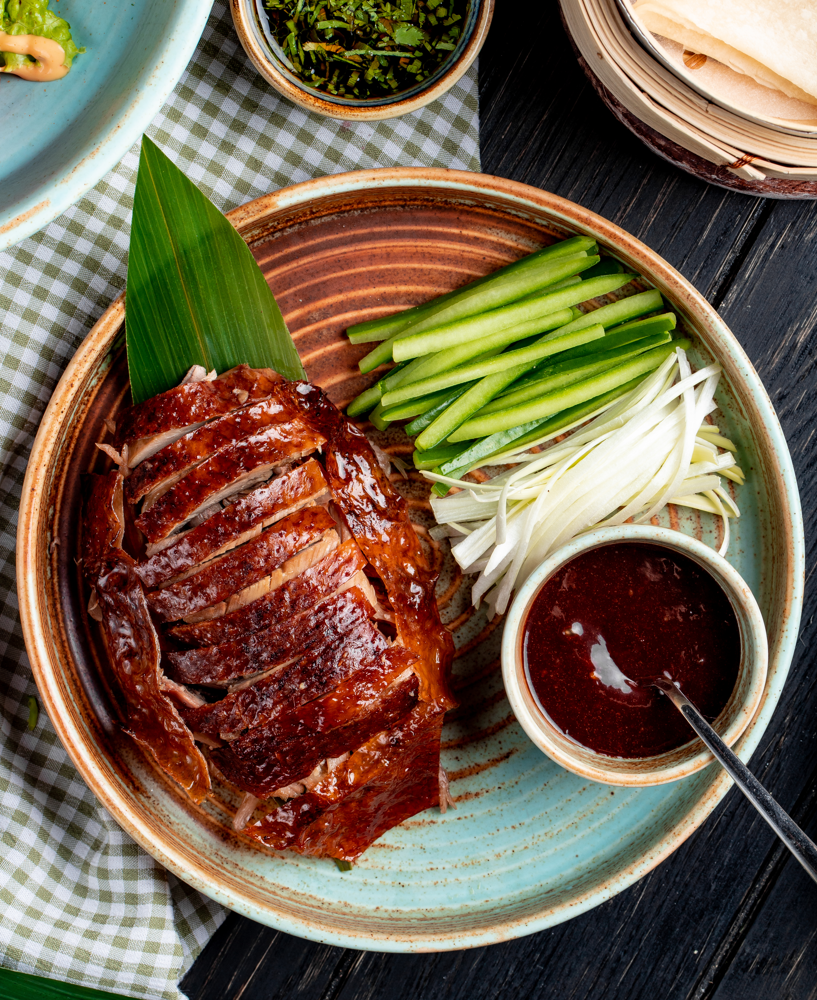

Vietnamese-Style Lacquered Duck – Vịt quay kiểu Việt Nam
Marinated with honey, fish sauce, and five-spice
Vịt quay kiểu Việt Nam is the Vietnamese interpretation of the famous Peking duck. Inherited from Sino-Vietnamese exchanges of the 19th century, this iconic dish was gradually adapted to local ingredients and Vietnamese tastes: fish sauce (nước mắm), honey, ginger, garlic, and fresh aromatics.
Less technical than Peking duck, vịt quay favors an accessible cooking method, juicy meat, and golden, crispy skin, in a generous, festive, family-style spirit. Today it is found both in home kitchens and in fine dining.
Vịt quay – roasted/lacquered duck
Vịt quay kiểu Việt Nam – Vietnamese-style version
Vịt nướng – roasted duck (generic term)
Vịt quay Tân Mã – iconic Saigon style
Vịt quay Lạng Sơn – spiced Northern version
Vietnamese lacquered duck
Vietnamese roasted duck
Vietnamese-style lacquered duck
Sino-Vietnamese lacquered duck
Flavor profile: sweet and savory, with notes of honey, ginger, garlic, and five-spice
Texture: crispy skin, tender and juicy meat
Cooking: oven, grill, or home rotisserie
Style: rustic to gastronomic, depending on presentation
Traditional accompaniments: jasmine rice, stir-fried vegetables, fresh herbs, sweet-and-sour nước mắm sauce
| Vịt quay (Vietnam) | Peking Duck |
|---|---|
| Honey–nước mắm marinade | Maltose, soy sauce, vinegar |
| Accessible technique | Complex technique (air pumping, long drying) |
| Juicy meat | Fine meat, skin served separately |
| Family-style service | Ritualized gastronomic service |
Herbal marinade with mắc mật leaves, star anise, and sesame oil. Drier, less sweet flavor. Served with sticky rice or rice cakes.
Richer, more caramelized version: generous honey, lemongrass, garlic, chili. Very popular in restaurants and street food.
Imperial influence: bolder spices (cinnamon, anise), rice vinegar, elegant plating, thin slices.
1 whole duck (1.5–2 kg)
3 tbsp honey
3 tbsp fish sauce (nước mắm)
2 tbsp light soy sauce
2 tbsp brown sugar
2 tbsp vegetable oil
4 garlic cloves, minced
3 cm fresh ginger, grated
1 tsp five-spice powder
½ tsp black pepper
100 ml water
Scallions and fresh cilantro
Clean and thoroughly dry the duck. Remove excess fat. Prick the skin without piercing the meat to allow fat to render.
Traditional tip
Brush the skin with a mixture of boiling water and rice vinegar, then dry immediately.
Mix honey, nước mắm, soy sauce, sugar, garlic, ginger, five-spice, and pepper.
Set aside one third for the final glazing.
Rub the duck inside and out. Cover and marinate 4–12 hours in the refrigerator.
Remove the duck from the fridge 2 hours before cooking. Place on a rack, uncovered, in a cool, ventilated place until the skin is completely dry.
Preheat oven to 160 °C (320 °F).
Place duck on a rack with a drip pan underneath (water + vinegar).
Roast for 1 hour 15 minutes, turning halfway.
Target internal temperature: 65 °C (149 °F).
Increase oven to 220 °C (425 °F), grill/broil setting.
Brush every 10 minutes with the reserved marinade, diluted if needed.
Finish with a glaze of warm pure honey.
Final temperature: 72–75 °C (162–167 °F).
Rest 15 minutes under loose foil.
Cut the skin into large pieces and slice the meat thinly.
Arrange on a warm platter, sprinkle with scallions and cilantro.
Serve with jasmine rice and sweet-and-sour nước mắm sauce.
Rượu nếp: soft and rounded, balances caramelization
Rượu gạo: dry and powerful, offsets the richness of the duck
Free-range or mule duck recommended
Insufficient drying = soft skin
Glazing too early = loss of crispness
A thermometer is essential to preserve juiciness
Energy: 650 kcal
Protein: 45 g
Fat: 42 g
Carbohydrates: 12 g
Salt: 2.8 g
“Ăn quả nhớ kẻ trồng cây”
When you eat the fruit, remember the one who planted the tree.
A celebratory dish, vịt quay embodies Vietnamese culinary transmission—between heritage, adaptation, and conviviality.
Vietnamese-Style Lacquered Duck – Vịt quay kiểu Việt Nam
Marinated with honey, fish sauce, and five-spice
Vịt quay kiểu Việt Nam is the Vietnamese interpretation of the famous Peking duck. Inherited from Sino-Vietnamese exchanges of the 19th century, this iconic dish was gradually adapted to local ingredients and Vietnamese tastes: fish sauce (nước mắm), honey, ginger, garlic, and fresh aromatics.
Less technical than Peking duck, vịt quay favors an accessible cooking method, juicy meat, and golden, crispy skin, in a generous, festive, family-style spirit. Today it is found both in home kitchens and in fine dining.
Vịt quay – roasted/lacquered duck
Vịt quay kiểu Việt Nam – Vietnamese-style version
Vịt nướng – roasted duck (generic term)
Vịt quay Tân Mã – iconic Saigon style
Vịt quay Lạng Sơn – spiced Northern version
Vietnamese lacquered duck
Vietnamese roasted duck
Vietnamese-style lacquered duck
Sino-Vietnamese lacquered duck
Flavor profile: sweet and savory, with notes of honey, ginger, garlic, and five-spice
Texture: crispy skin, tender and juicy meat
Cooking: oven, grill, or home rotisserie
Style: rustic to gastronomic, depending on presentation
Traditional accompaniments: jasmine rice, stir-fried vegetables, fresh herbs, sweet-and-sour nước mắm sauce
| Vịt quay (Vietnam) | Peking Duck |
|---|---|
| Honey–nước mắm marinade | Maltose, soy sauce, vinegar |
| Accessible technique | Complex technique (air pumping, long drying) |
| Juicy meat | Fine meat, skin served separately |
| Family-style service | Ritualized gastronomic service |
Herbal marinade with mắc mật leaves, star anise, and sesame oil. Drier, less sweet flavor. Served with sticky rice or rice cakes.
Richer, more caramelized version: generous honey, lemongrass, garlic, chili. Very popular in restaurants and street food.
Imperial influence: bolder spices (cinnamon, anise), rice vinegar, elegant plating, thin slices.
1 whole duck (1.5–2 kg)
3 tbsp honey
3 tbsp fish sauce (nước mắm)
2 tbsp light soy sauce
2 tbsp brown sugar
2 tbsp vegetable oil
4 garlic cloves, minced
3 cm fresh ginger, grated
1 tsp five-spice powder
½ tsp black pepper
100 ml water
Scallions and fresh cilantro
Clean and thoroughly dry the duck. Remove excess fat. Prick the skin without piercing the meat to allow fat to render.
Traditional tip
Brush the skin with a mixture of boiling water and rice vinegar, then dry immediately.
Mix honey, nước mắm, soy sauce, sugar, garlic, ginger, five-spice, and pepper.
Set aside one third for the final glazing.
Rub the duck inside and out. Cover and marinate 4–12 hours in the refrigerator.
Remove the duck from the fridge 2 hours before cooking. Place on a rack, uncovered, in a cool, ventilated place until the skin is completely dry.
Preheat oven to 160 °C (320 °F).
Place duck on a rack with a drip pan underneath (water + vinegar).
Roast for 1 hour 15 minutes, turning halfway.
Target internal temperature: 65 °C (149 °F).
Increase oven to 220 °C (425 °F), grill/broil setting.
Brush every 10 minutes with the reserved marinade, diluted if needed.
Finish with a glaze of warm pure honey.
Final temperature: 72–75 °C (162–167 °F).
Rest 15 minutes under loose foil.
Cut the skin into large pieces and slice the meat thinly.
Arrange on a warm platter, sprinkle with scallions and cilantro.
Serve with jasmine rice and sweet-and-sour nước mắm sauce.
Rượu nếp: soft and rounded, balances caramelization
Rượu gạo: dry and powerful, offsets the richness of the duck
Free-range or mule duck recommended
Insufficient drying = soft skin
Glazing too early = loss of crispness
A thermometer is essential to preserve juiciness
Energy: 650 kcal
Protein: 45 g
Fat: 42 g
Carbohydrates: 12 g
Salt: 2.8 g
“Ăn quả nhớ kẻ trồng cây”
When you eat the fruit, remember the one who planted the tree.
A celebratory dish, vịt quay embodies Vietnamese culinary transmission—between heritage, adaptation, and conviviality.