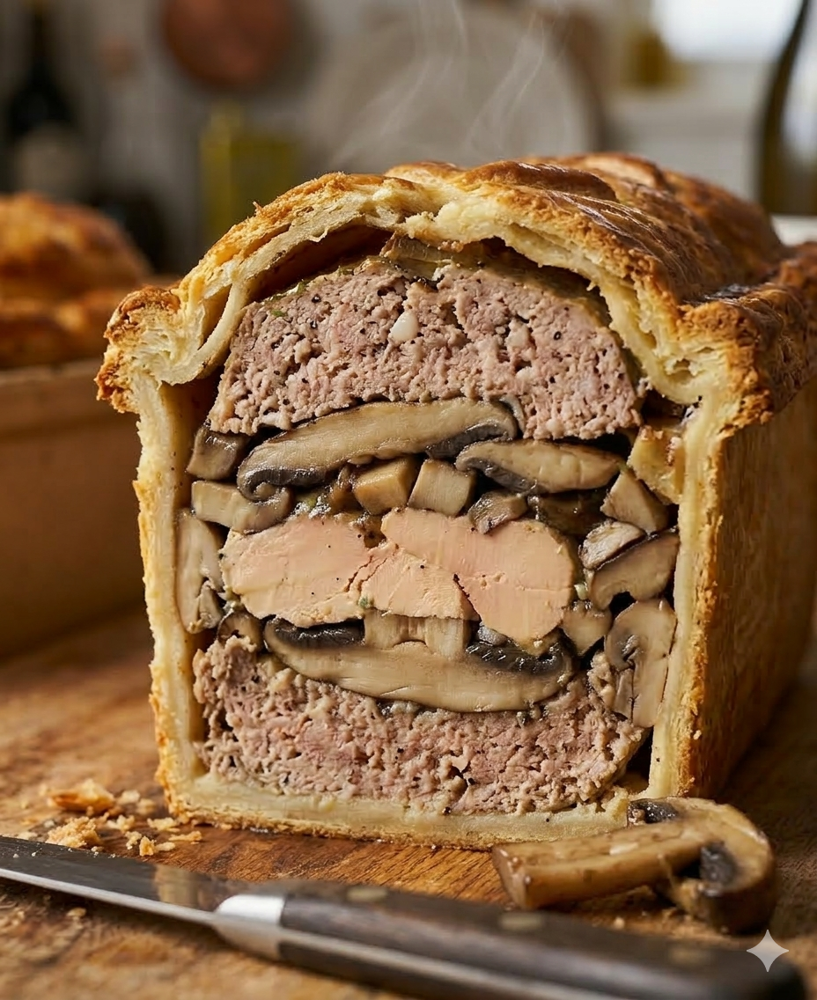

Technical recipe – Pâté en croûte competition standard
Yield: 6 servings
400 g minced veal (2–3 mm grind for a fine yet identifiable texture)
200 g raw duck foie gras, cut into escalopes
36 Burgundy snails, purged and rinsed
100 g minced poultry liver
400 g fresh cep mushrooms (porcini), cleaned and sliced
2 shallots, finely minced
100 g butter
30 cl sweet white wine (Montbazillac or Jurançon)
Fine salt
Freshly ground pepper
1 pâté dough or shortcrust pastry for the crust
40 cl light poultry or veal stock
10 cl sweet white wine
3 gelatin sheets (or 6 g powdered gelatin)
Fine salt
White pepper
Slice the cep mushrooms into regular pieces.
Melt 50 g of butter in a wide pan.
Add the shallots and sweat them until slightly translucent.
Add the mushrooms and cook over medium heat until their natural moisture has completely evaporated.
Season with salt and pepper, then refrigerate.
Grind the veal and poultry liver using a 2–3 mm grinder plate to obtain a fine but structured texture.
Combine in a large mixing bowl (cul-de-poule):
the minced veal
the snails
the minced poultry livers
Season with salt and pepper and mix gently.
Do not overmix the preparation: the filling should retain a slightly coarse texture.
The foie gras will provide richness and aromatic depth during cooking.
Preheat the oven to 160–165 °C (320–330 °F) with conventional heat.
Lightly butter a pâté en croûte mold or metal terrine.
Optionally line it with a thin strip of parchment paper to facilitate unmolding.
Roll the pâté pastry to 3 mm thickness.
Carefully line the mold.
Ensure to:
mark the corners well
avoid folds
leave 1–2 cm overlap for sealing.
Refrigerate for 10–15 minutes to firm the dough.
Place a 1.5 cm layer of snail filling at the bottom of the mold.
Compact it well using an offset spatula to eliminate air pockets.
This layer forms the structural base of the pâté.
Arrange:
a layer of well-drained sautéed cep mushrooms
several slices of foie gras
Distribute evenly without compressing in order to preserve a clear visual pattern when sliced.
Cover with 1–1.5 cm of filling.
Press lightly to bind the layers.
Create a central axis of foie gras:
align several pieces of foie gras lengthwise in the center of the pâté
arrange some cep mushrooms around them.
This technique ensures a visually structured slice when cut.
Add the remaining filling up to 1 cm below the top edge of the mold.
Always finish with a smooth layer of filling.
Tap the mold lightly on the work surface.
If necessary, run a thin blade between the filling and the pastry to release trapped air.
Roll a pastry lid 3 mm thick.
Moisten the edges.
Place the lid and seal carefully.
Pinch or crimp the edges.
Optionally create:
a lattice pattern
decorative leaves
or a classic pâté en croûte decoration.
Apply a first egg yolk glaze.
Refrigerate for 10 minutes, then apply a second glaze to obtain a shiny crust.
Pierce two chimneys in the center of the lid.
Insert small rolled parchment tubes to prevent them from closing during baking.
Bake for approximately 1 hour 30 minutes at 160–165 °C.
Midway through cooking, check the color.
If necessary, lightly cover with aluminum foil.
The pâté is ideally cooked when the core temperature reaches 68–70 °C (154–158 °F).
Remove from the oven and let rest 20–30 minutes.
This resting time allows:
redistribution of juices
stabilization of the filling.
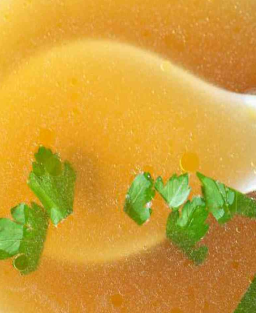
The jelly must be lukewarm (30–35 °C / 86–95 °F).
Pour slowly through the chimneys:
perform a first filling
wait 5 minutes
top up if necessary.
Repeat until the internal cavities are completely filled.
For perfect slicing:
allow the pâté to mature for 24 hours in the refrigerator
slice using a long knife with a warm blade.
The textures and aromas of cep mushrooms, snails, and foie gras will then be perfectly stabilized.
Serve cold or at room temperature.
Pear or apple–quince: melting texture and gentle acidity harmonizing with the sweet jelly and mushrooms.
Fig: slightly candied fruit paste echoing the aromas of sweet wine.
Avoid overly sweet preparations:
prefer 70–80% sugar, possibly with a touch of cider vinegar.
Fig and mango, with pomegranate or red onion
Pear and raisins, flavored with cardamom and cinnamon
Onion and fig, a classic marmalade served with foie gras and mushrooms
Recommended profile:
cider vinegar: 10–15 cl
brown sugar: 80 g for 500 g fruit
warm spices: ginger, four-spice blend
Montbazillac: 2015, 2016, 2018, 2019, 2020
Coteaux-du-Layon: 2014, 2015, 2018, 2019, 2021
Jurançon moelleux: 2015, 2017, 2018, 2019, 2020
These vintages offer concentration, balanced acidity, and notes of candied fruit and honey, ideal with foie gras and cep mushrooms.
Chablis Premier Cru: 2014, 2017, 2019, 2020, 2022
Oaked Chardonnay (White Burgundy or equivalent):
2016, 2018, 2019, 2020, 2021
These wines bring mineral tension and freshness, balancing the richness of the pâté.
Escalope
To cut into thin, regular slices ensuring even cooking.
2–3 mm grinder plate
Perforated plate used in a meat grinder producing a fine grind while preserving texture.
Cul-de-poule
Large hemispherical stainless-steel bowl used for mixing preparations.
Lining a mold
Covering the interior of a mold with pastry pressed firmly against the sides.
Chimney
Opening in the pastry lid allowing steam to escape and enabling jelly to be poured in.
Filling (farce)
Minced preparation forming the body of a pâté or terrine.
Jelly
Gelled preparation made from stock and wine used to fill cavities after cooking.
Drained gelatin
Gelatin soaked in cold water and squeezed to remove excess moisture.
Shrinkage
Natural contraction of the filling during cooking creating gaps filled with jelly.
Core temperature
Temperature measured at the center of the product using a cooking probe.
Purging snails
Cleaning and removing the digestive tract of snails before use.
Sweet wine
White wine produced from overripe grapes or noble rot, rich in residual sugars.
Technical recipe – Pâté en croûte competition standard
Yield: 6 servings
400 g minced veal (2–3 mm grind for a fine yet identifiable texture)
200 g raw duck foie gras, cut into escalopes
36 Burgundy snails, purged and rinsed
100 g minced poultry liver
400 g fresh cep mushrooms (porcini), cleaned and sliced
2 shallots, finely minced
100 g butter
30 cl sweet white wine (Montbazillac or Jurançon)
Fine salt
Freshly ground pepper
1 pâté dough or shortcrust pastry for the crust
40 cl light poultry or veal stock
10 cl sweet white wine
3 gelatin sheets (or 6 g powdered gelatin)
Fine salt
White pepper
Slice the cep mushrooms into regular pieces.
Melt 50 g of butter in a wide pan.
Add the shallots and sweat them until slightly translucent.
Add the mushrooms and cook over medium heat until their natural moisture has completely evaporated.
Season with salt and pepper, then refrigerate.
Grind the veal and poultry liver using a 2–3 mm grinder plate to obtain a fine but structured texture.
Combine in a large mixing bowl (cul-de-poule):
the minced veal
the snails
the minced poultry livers
Season with salt and pepper and mix gently.
Do not overmix the preparation: the filling should retain a slightly coarse texture.
The foie gras will provide richness and aromatic depth during cooking.
Preheat the oven to 160–165 °C (320–330 °F) with conventional heat.
Lightly butter a pâté en croûte mold or metal terrine.
Optionally line it with a thin strip of parchment paper to facilitate unmolding.
Roll the pâté pastry to 3 mm thickness.
Carefully line the mold.
Ensure to:
mark the corners well
avoid folds
leave 1–2 cm overlap for sealing.
Refrigerate for 10–15 minutes to firm the dough.
Place a 1.5 cm layer of snail filling at the bottom of the mold.
Compact it well using an offset spatula to eliminate air pockets.
This layer forms the structural base of the pâté.
Arrange:
a layer of well-drained sautéed cep mushrooms
several slices of foie gras
Distribute evenly without compressing in order to preserve a clear visual pattern when sliced.
Cover with 1–1.5 cm of filling.
Press lightly to bind the layers.
Create a central axis of foie gras:
align several pieces of foie gras lengthwise in the center of the pâté
arrange some cep mushrooms around them.
This technique ensures a visually structured slice when cut.
Add the remaining filling up to 1 cm below the top edge of the mold.
Always finish with a smooth layer of filling.
Tap the mold lightly on the work surface.
If necessary, run a thin blade between the filling and the pastry to release trapped air.
Roll a pastry lid 3 mm thick.
Moisten the edges.
Place the lid and seal carefully.
Pinch or crimp the edges.
Optionally create:
a lattice pattern
decorative leaves
or a classic pâté en croûte decoration.
Apply a first egg yolk glaze.
Refrigerate for 10 minutes, then apply a second glaze to obtain a shiny crust.
Pierce two chimneys in the center of the lid.
Insert small rolled parchment tubes to prevent them from closing during baking.
Bake for approximately 1 hour 30 minutes at 160–165 °C.
Midway through cooking, check the color.
If necessary, lightly cover with aluminum foil.
The pâté is ideally cooked when the core temperature reaches 68–70 °C (154–158 °F).
Remove from the oven and let rest 20–30 minutes.
This resting time allows:
redistribution of juices
stabilization of the filling.
The jelly must be lukewarm (30–35 °C / 86–95 °F).
Pour slowly through the chimneys:
perform a first filling
wait 5 minutes
top up if necessary.
Repeat until the internal cavities are completely filled.
For perfect slicing:
allow the pâté to mature for 24 hours in the refrigerator
slice using a long knife with a warm blade.
The textures and aromas of cep mushrooms, snails, and foie gras will then be perfectly stabilized.
Serve cold or at room temperature.
Pear or apple–quince: melting texture and gentle acidity harmonizing with the sweet jelly and mushrooms.
Fig: slightly candied fruit paste echoing the aromas of sweet wine.
Avoid overly sweet preparations:
prefer 70–80% sugar, possibly with a touch of cider vinegar.
Fig and mango, with pomegranate or red onion
Pear and raisins, flavored with cardamom and cinnamon
Onion and fig, a classic marmalade served with foie gras and mushrooms
Recommended profile:
cider vinegar: 10–15 cl
brown sugar: 80 g for 500 g fruit
warm spices: ginger, four-spice blend
Montbazillac: 2015, 2016, 2018, 2019, 2020
Coteaux-du-Layon: 2014, 2015, 2018, 2019, 2021
Jurançon moelleux: 2015, 2017, 2018, 2019, 2020
These vintages offer concentration, balanced acidity, and notes of candied fruit and honey, ideal with foie gras and cep mushrooms.
Chablis Premier Cru: 2014, 2017, 2019, 2020, 2022
Oaked Chardonnay (White Burgundy or equivalent):
2016, 2018, 2019, 2020, 2021
These wines bring mineral tension and freshness, balancing the richness of the pâté.
Escalope
To cut into thin, regular slices ensuring even cooking.
2–3 mm grinder plate
Perforated plate used in a meat grinder producing a fine grind while preserving texture.
Cul-de-poule
Large hemispherical stainless-steel bowl used for mixing preparations.
Lining a mold
Covering the interior of a mold with pastry pressed firmly against the sides.
Chimney
Opening in the pastry lid allowing steam to escape and enabling jelly to be poured in.
Filling (farce)
Minced preparation forming the body of a pâté or terrine.
Jelly
Gelled preparation made from stock and wine used to fill cavities after cooking.
Drained gelatin
Gelatin soaked in cold water and squeezed to remove excess moisture.
Shrinkage
Natural contraction of the filling during cooking creating gaps filled with jelly.
Core temperature
Temperature measured at the center of the product using a cooking probe.
Purging snails
Cleaning and removing the digestive tract of snails before use.
Sweet wine
White wine produced from overripe grapes or noble rot, rich in residual sugars.