
Recipe of Farçou Aveyronnais – Traditional Dish from Aveyron
Other names: Farçou (common), Traditional pancake of Aveyron
Discover the traditional recipe of Farçou Aveyronnais, an iconic dish from Aveyron, combining rusticity and authenticity of local products. This preparation made from green vegetables, eggs, and flour embodies the traditional culinary craftsmanship of the region.
“In the fields of Aubrac, farçou is the rest after a day of hard work and can also reveal the skill of a farm cook.”
(Original in Occitan: “Dins los camps de l’Aubrac, lo farçou es lo repaus dels jorns de travai dur, pòt tanben révelar la finesse d’un chef de fermo.”)
Historically, peasant families in Aveyron served farçou as a festive dish for Saint John’s Day and other major rural celebrations, symbolizing prosperity and abundance thanks to garden vegetables and fresh farm products.
Country: France
Region: Aveyron, Massif Central
Official Status: None
Recipe Inventor: Family oral transmission
Codified Recipe: No
Certification Body: N/A
Farçou is an ancestral dish from Aveyron, dating back to the Middle Ages, originating from rural and mountainous areas of the Massif Central. Originally, it was used to make use of garden greens and seasonal fresh herbs with eggs and a bit of flour to bind the mixture.
Over the centuries, farçou evolved from a simple peasant meal into a festive preparation, sometimes incorporating bacon, cheese, or specific herbs depending on the village. Trade in the region introduced mild spices like nutmeg, enhancing the aromas of this rustic dish.
The preparation method has evolved: previously cooked in a pot over a wood fire, today farçou is often prepared in a frying pan or oven to achieve a more uniform and golden texture.
Its versatility has inspired several regional chefs to reinterpret it for gourmet restaurants while respecting traditional foundations.
Michel Bras (Laguiole): Farçou revisited with fine herb emulsion
Marc Veyrat (Annecy / Haute-Savoie): Light version with gentle steam cooking
Christian Constant (Paris): Farçou presented as a gourmet starter with reduced broth
La Table de l’Aubrac (Aveyron): Traditional pan-cooked Farçou
Auberge du Viala (Viala-du-Tarn): Traditional Farçou with farmhouse bacon
Le Relais de l’Aubrac (Saint-Chély-d’Aubrac): Festive version with local AOP cheese
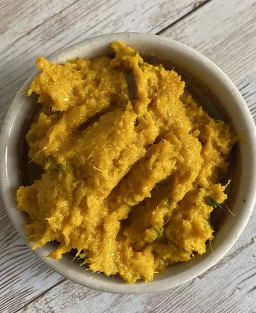
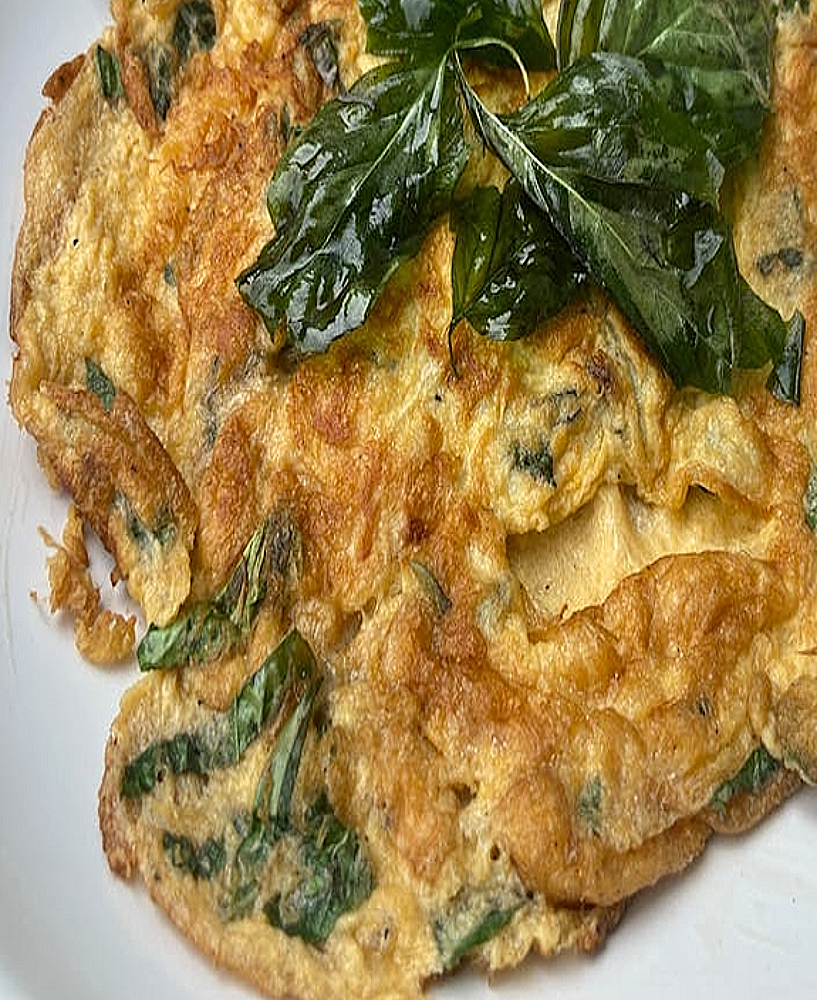
Dish presentation: Soft and lightly golden pancake, herbal and aromatic flavors, melting texture
Culinary particularities: Careful preparation and cooking to maintain lightness and moisture
Required utensils: Chef’s knife, cutting board, mixing bowl, whisk, non-stick frying pan, skimmer, spatula, serving plate
500 g fresh spinach or Swiss chard
4 whole eggs
100 g wheat flour (or half wheat / half buckwheat)
1 small onion finely chopped
50 g bacon lardons (optional)
20 cl milk
1 pinch nutmeg
Salt and freshly ground black pepper
Butter for cooking
Preparation time: 20 min
Cooking time: 20–25 min
Wash and finely chop the green vegetables.
In a bowl, beat the eggs with milk, add flour, nutmeg, salt, and pepper until a smooth batter forms.
Add the chopped vegetables and bacon (optional). Mix gently.
Heat a pan with a little butter.
Place portions of farçou and spread slightly. Cook 4–5 min on each side over medium heat until golden.
Drain on absorbent paper if needed and serve on plates.
Specific cuts: Finely chopped vegetables for uniform cooking.
Laguiole version: With grated Laguiole AOP cheese incorporated
Aubrac version: Bacon and wild herbs (chervil, parsley)
Contemporary version: Gentle steam cooking and presentation in mini-pancakes
Ségala version: Spinach and chard mix, lightly seasoned with muscadet
Festive version: Sautéed mushrooms and light cream incorporated
Cook over medium heat to avoid burning the outside before the inside is cooked.
Use well-drained vegetables to prevent the batter from becoming too wet.
Chef’s tip: Serve hot with a drizzle of walnut or hazelnut oil to enhance flavors.
Presentation style: Rustic or gourmet depending on portion and presentation
Serving: On individual plates or a family platter
Accompaniments: Baby leaf salad, steamed potatoes, or roasted root vegetables
Red wines: Marcillac AOC – 2018 or 2020, soft tannins and fruity
White wines: Viognier from Southern France, aromatic and light
Non-alcoholic alternatives: Artisanal apple juice, thyme or verbena infusion
Energy value: 210 kcal
Fats: 8 g
Carbohydrates: 18 g
Proteins: 10 g
Fiber: 4 g
Allergens: Eggs, milk, gluten (wheat flour)
Possible adaptations: Gluten-free (buckwheat flour), vegetarian (without bacon), vegan (replace eggs and milk with alternatives)
| Term | Definition |
|---|---|
| Blanching | Briefly boiling vegetables, then cooling quickly to preserve color, texture, and nutrients. |
| Chiffonade | Cutting leafy vegetables or herbs into thin ribbons. |
| Dredging | Lightly coating a food item with flour to bind ingredients. |
| Emulsion | Mixture of two immiscible liquids stabilized by whisking. |
| Lardons | Small strips or cubes of bacon, sometimes sautéed. |
| Mise en place | Preparation and organization of all ingredients and utensils before cooking. |
| Non-stick pan | Frying pan with a non-stick surface. |
| Skimming | Removing foam or impurities from liquid. |
| Whisking | Beating ingredients to incorporate air and smooth the mixture. |
| Golden brown | Desired color indicating proper caramelization. |
| Binding | Using eggs or flour to hold ingredients together. |
| Uniform cooking | Ensuring even cooking through careful cutting and heat control. |
| Portioning | Dividing the mixture into consistent servings. |
| Presentation | Final arrangement of the dish on the plate or platter. |