-
Food Industry Handbook
- Chapitre 4 : Gibier
-
Chapitre 1 : Viandes
- Glossaire complet de charcuterie : vocabulaire technique classé par ordre alphabétique (Mise à jour 02-2026)
- Glossaire Ultra Technique — Niveau BTM / BM Charcutier-Traiteur (Mise à jour 02-2026)
- GLOSSAIRE ULTRA TECHNIQUE — Niveau BTM / BM Charcutier-Traiteur (Mise à jour 02-2026)
- PRÉCIS COMPLET — Pâtes pour Pâté en Croûte, Croustade & Préparations Assimilées
- Le pâté, le pâté en croûte et les pâtés croûtes
- Précis sur le pâté, le pâté en croûte et les pâtés croûtes
- RÉFÉRENTIEL TECHNIQUE COMPLET – PÂTÉS & PÂTÉS EN CROÛTE
- Guide complet des pâtés : farces, proportions, techniques et sécurité alimentaire
- Farces en charcuterie : techniques, ingrédients, hygiène et spécialités régionales
- CALCULS ÉCONOMIQUES – PÂTÉS EN CROÛTE & TERRINES
- Guide complet des saucisses et saucissons : préparation, hygiène et sécurité alimentaire
- Histoire des Pâtés et des Pastissiers — De l'Antiquité à nos jours
- Chapitre 1 : Viandes
- PRÉCIS DES SCIENCES ET TECHNOLOGIES AGROALIMENTAIRES
- Chapitre 5 : Produits laitiers
- Chapitre 6 : Légumes
- Chapitre 7 : Céréales et panification
-
Chapitre 8 : Épices et plantes aromatiques
- GLOSSAIRE BOULANGER-PÂTISSIER COMPLET A–Z
- Calcul de la température de l’eau en boulangerie
- Référentiel Complet — Températures de Pâte en Fin de Pétrissage
- Hygiène, sécurité et risques en boulangerie-pâtisserie : Guide complet pour professionnels et apprentis
- Chapitre 8 : Épices et plantes aromatiques
- Chapitre 9 : Matières grasses
- Chapitre 10 : Sucres et glucides
- Chapitre 11 : Technologies de cuisson
- Chapitre 12 : Stérilisation et conservation
- Chapitre 13 : Produits condimentaires et sauces
- Chapitre 14 : Boissons et fermentations liquides
- Chapitre 15 : Biotechnologies alimentaires
- Chapitre 16 : Microbiologie alimentaire
- Chapitre 17 : Contaminants et risques chimiques
- Chapitre 18 : Analyse physico-chimique et de laboratoire
- Chapitre 19 : Nutrition et formulation
- Chapitre 20 : Analyse sensorielle
- Chapitre 21 : Génie des procédés agroalimentaires
- Chapitre 22 : Conditionnement et emballage
- Chapitre 23 : Automatisation et industrie 4.0
- Chapitre 24 : Logistique et chaîne d’approvisionnement
- Chapitre 21 : Génie des procédés agroalimentaires
- Chapitre 25 : Traçabilité, qualité et réglementation
- HANDBOOK OF AGROFOOD SCIENCES AND TECHNOLOGIES
- Cooking Bases
- Sauces
- Condiments
- Side dishes
- Pasta
- Vegetables
- Eggs
- Spices
-
Bakery
- Bases techniques universelles
- Fermentations & Levains
- Céréales & Farines du monde
- Techniques de cuisson
- Boulangerie Française
- Boulangerie Européenne
- Boulangerie Asiatique
- Boulangerie Amériques
- Boulangerie Afrique et Orient
- Viennoiserie & Pâtisserie sèche
- Pains plats & Grillés
- Sans Gluten & Spécialités
- Pains rapides
- Flavors of France
- Starters
- Street Food
- Burgers
- Bowls
- Meat Passion
- Marine Flavors
- Cured meats
- Dessert
- Drinks
Pork Stock Recipe – Rustic Regional Base for Traditional Dishes with Strong Flavor
Country / Region
Country: France
Region: Rural and popular regions (Southwest, Alsace, Auvergne, Brittany…)
Official status: None
Recipe originator: Oral transmission
Specification: None
Certification body: None
History
Origin and History
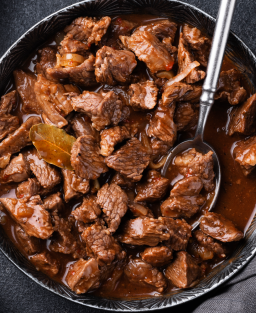
Pork stock is rarely used in classical French cuisine because pork releases a very strong flavor. However, it has its place in rustic regional recipes, where it serves as a base for stews, pot roasts, or thick sauces (e.g., lentils with salted pork, sausages with vegetables, cabbage dishes).
Evolution of the Recipe
Rarely taught in culinary schools, pork stock has remained mainly a family or regional preparation. Its popularity has slightly increased with the return to “terroir” cuisine and the valorization of less noble cuts.
Emblematic Recipes by Three Chefs
-
Jean-Pierre Coffe: advocate of popular cuisine, used pork stocks to enhance simple dishes.
-
Gilles Goujon: reinterpreted pork stock in some gastronomic creations.
-
Alexandre Mazzia: sometimes uses reduced pork stock in smoked or fermented dishes for its aromatic strength.
Legend or Anecdote
In some farms of the Massif Central, pork stock was called “pig juice” and was used in all the week’s soups after slaughter.
Recipe Description
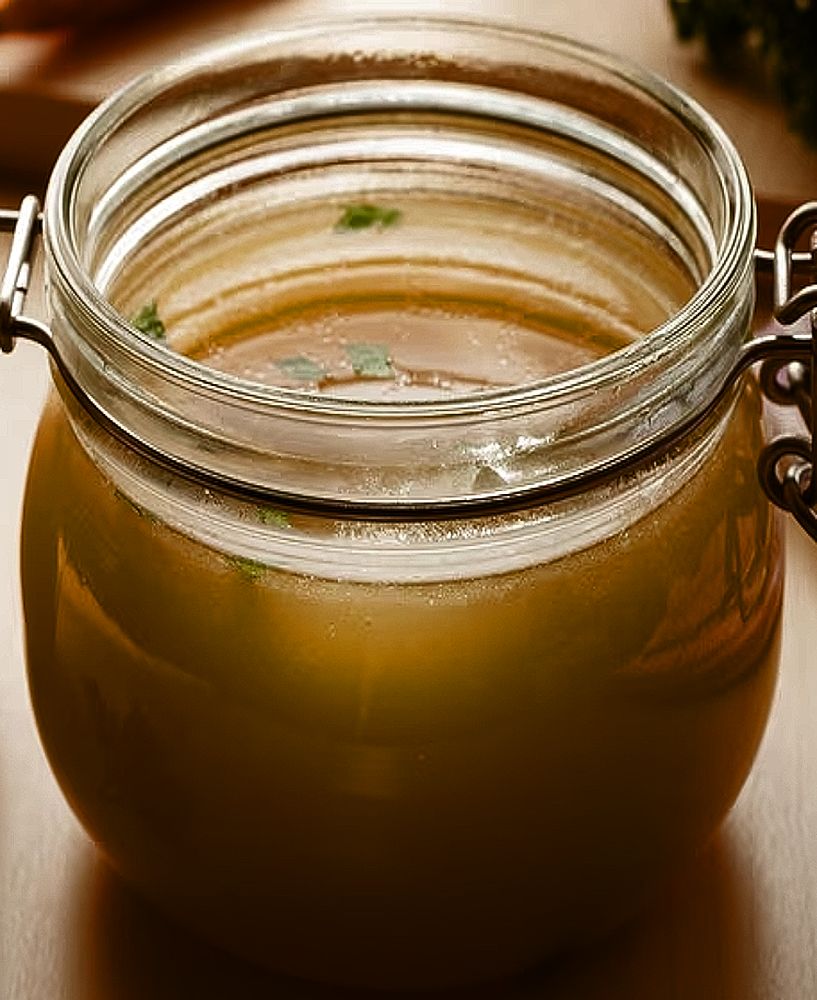
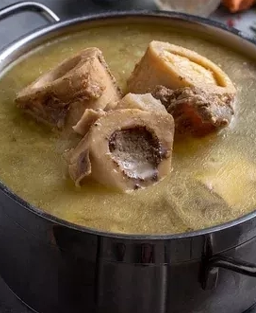
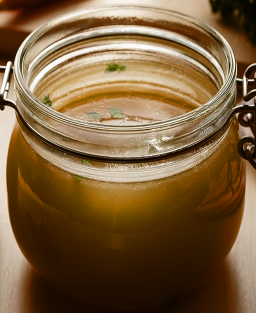
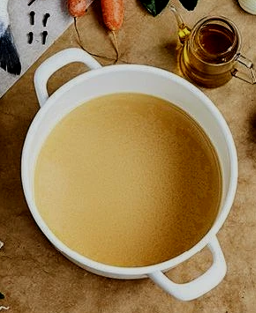
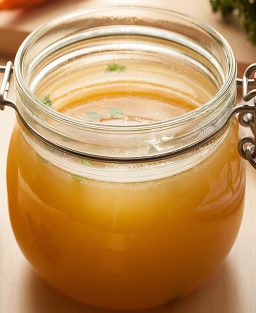
Pork stock is a broth made from pork bones and trimmings (feet, chops, shank, backbone), sometimes roasted, combined with vegetables and aromatics.
It is rich, slightly gelatinous, and has a stronger flavor than veal or poultry stock. Use sparingly in sauces or stews so as not to overpower other flavors.
Ingredients for approximately 3 liters
| Ingredient | Quantity | Approximate Weight |
|---|---|---|
| Pork bones (feet, trimmings, backbone) | 2 kg | 2000 g |
| Carrots | 2 | 100 g |
| Onion | 1 large | 80 g |
| Leek (white part) | 1 | 60 g |
| Celery stalk | 1 | 50 g |
| Garlic | 2 cloves | 10 g |
| Crushed tomatoes (optional) | 100 g | 100 g |
| Bouquet garni | 1 | 10 g |
| Cold water | 4 liters | 4000 g |
| Neutral oil or pork fat (lard) | 30 g | 30 g |
| Whole peppercorns | 10 g | 10 g |
Detailed Preparation
-
Brown the pork bones lightly in a large pot with a little oil or lard.
-
Add coarsely chopped vegetables (carrots, onion, leek, celery, garlic) and sweat them without browning.
-
Add crushed tomatoes if desired, then the bouquet garni.
-
Cover with cold water and bring to a boil.
-
Skim carefully, then reduce heat to maintain a gentle simmer.
-
Cook uncovered for 3 to 4 hours, skimming regularly.
-
Strain through a fine sieve or cheesecloth. Cool, degrease, and store in the refrigerator (3 days) or freeze.
Tips and Advice
-
Pork stock has a strong flavor: avoid using it pure in delicate sauces.
-
Perfect for rustic dishes: cassoulet, pot roasts, lentils, white beans.
-
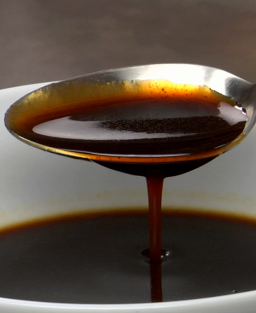
Can be reduced to make a syrupy stock; use sparingly.
-
Lard enhances richness but can be replaced with neutral oil.
-
Do not add too many strong aromatics (cloves, strong bay leaves) to avoid accentuating the “animal” taste.
Your review appreciation cannot be sent
Report comment
Report sent
Your report cannot be sent
Write your review
Review sent
Your review cannot be sent
16 other products in the same category:
Pork Stock Recipe – Rustic Regional Base for Traditional Dishes with Strong Flavor
Country / Region
Country: France
Region: Rural and popular regions (Southwest, Alsace, Auvergne, Brittany…)
Official status: None
Recipe originator: Oral transmission
Specification: None
Certification body: None
History
Origin and History
Pork stock is rarely used in classical French cuisine because pork releases a very strong flavor. However, it has its place in rustic regional recipes, where it serves as a base for stews, pot roasts, or thick sauces (e.g., lentils with salted pork, sausages with vegetables, cabbage dishes).
Evolution of the Recipe
Rarely taught in culinary schools, pork stock has remained mainly a family or regional preparation. Its popularity has slightly increased with the return to “terroir” cuisine and the valorization of less noble cuts.
Emblematic Recipes by Three Chefs
-
Jean-Pierre Coffe: advocate of popular cuisine, used pork stocks to enhance simple dishes.
-
Gilles Goujon: reinterpreted pork stock in some gastronomic creations.
-
Alexandre Mazzia: sometimes uses reduced pork stock in smoked or fermented dishes for its aromatic strength.
Legend or Anecdote
In some farms of the Massif Central, pork stock was called “pig juice” and was used in all the week’s soups after slaughter.
Recipe Description
Pork stock is a broth made from pork bones and trimmings (feet, chops, shank, backbone), sometimes roasted, combined with vegetables and aromatics.
It is rich, slightly gelatinous, and has a stronger flavor than veal or poultry stock. Use sparingly in sauces or stews so as not to overpower other flavors.
Ingredients for approximately 3 liters
| Ingredient | Quantity | Approximate Weight |
|---|---|---|
| Pork bones (feet, trimmings, backbone) | 2 kg | 2000 g |
| Carrots | 2 | 100 g |
| Onion | 1 large | 80 g |
| Leek (white part) | 1 | 60 g |
| Celery stalk | 1 | 50 g |
| Garlic | 2 cloves | 10 g |
| Crushed tomatoes (optional) | 100 g | 100 g |
| Bouquet garni | 1 | 10 g |
| Cold water | 4 liters | 4000 g |
| Neutral oil or pork fat (lard) | 30 g | 30 g |
| Whole peppercorns | 10 g | 10 g |
Detailed Preparation
-
Brown the pork bones lightly in a large pot with a little oil or lard.
-
Add coarsely chopped vegetables (carrots, onion, leek, celery, garlic) and sweat them without browning.
-
Add crushed tomatoes if desired, then the bouquet garni.
-
Cover with cold water and bring to a boil.
-
Skim carefully, then reduce heat to maintain a gentle simmer.
-
Cook uncovered for 3 to 4 hours, skimming regularly.
-
Strain through a fine sieve or cheesecloth. Cool, degrease, and store in the refrigerator (3 days) or freeze.
Tips and Advice
-
Pork stock has a strong flavor: avoid using it pure in delicate sauces.
-
Perfect for rustic dishes: cassoulet, pot roasts, lentils, white beans.
-
Can be reduced to make a syrupy stock; use sparingly.
-
Lard enhances richness but can be replaced with neutral oil.
-
Do not add too many strong aromatics (cloves, strong bay leaves) to avoid accentuating the “animal” taste.