

Vegetable Glace Recipe – Concentrated Vegetable Essences and Natural Sugars for Haute Cuisine
Country / Region
Country: France
Region: Contemporary gastronomy (Paris, Provence, Côte d’Azur…)
Official status: None
Inventor of the recipe: Contemporary transmission (inspired by the classical techniques of Escoffier)
Specification charter: None
Certification body: None
History
Origin and history:
Long overshadowed by meat glaces, vegetable glace has become essential with the rise of high-level vegetable cuisine. It is based on the same principle of extreme reduction, but uses the caramelization of the vegetables’ natural sugars (fructose, glucose) and their pectins to replace animal gelatin.
Evolution of the recipe:
Originally a simple reduced broth, it has become a complex technique often involving precise roasting of root vegetables to obtain an amber color and depth of flavor without bitterness. It responds to the growing demand for lighter, plant-based cuisine.
Emblematic recipe of three chefs:
Alain Passard: Master of vegetable cuisine, he treats vegetables as noble ingredients.
Alain Ducasse: In his concept of “Naturalité,” he uses these glaces to give power to cereals and vegetables.
René Redzepi: Although Danish, he applies French reduction techniques to highly concentrated vegetable extracts.
Legend or anecdote:
In palace kitchens, it is said that a perfect vegetable glace is more difficult to achieve than a meat glace: it forgives no temperature mistakes, because vegetable sugars pass from caramelized to burnt (bitter) in just a few seconds at the end of the reduction.
Recipe description
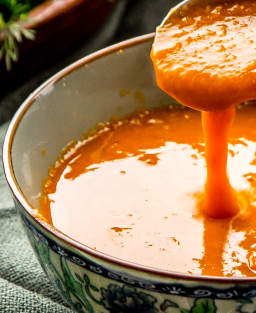
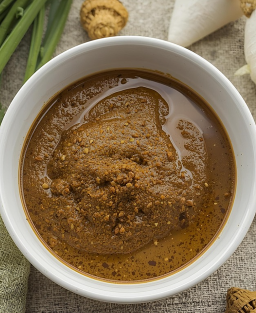
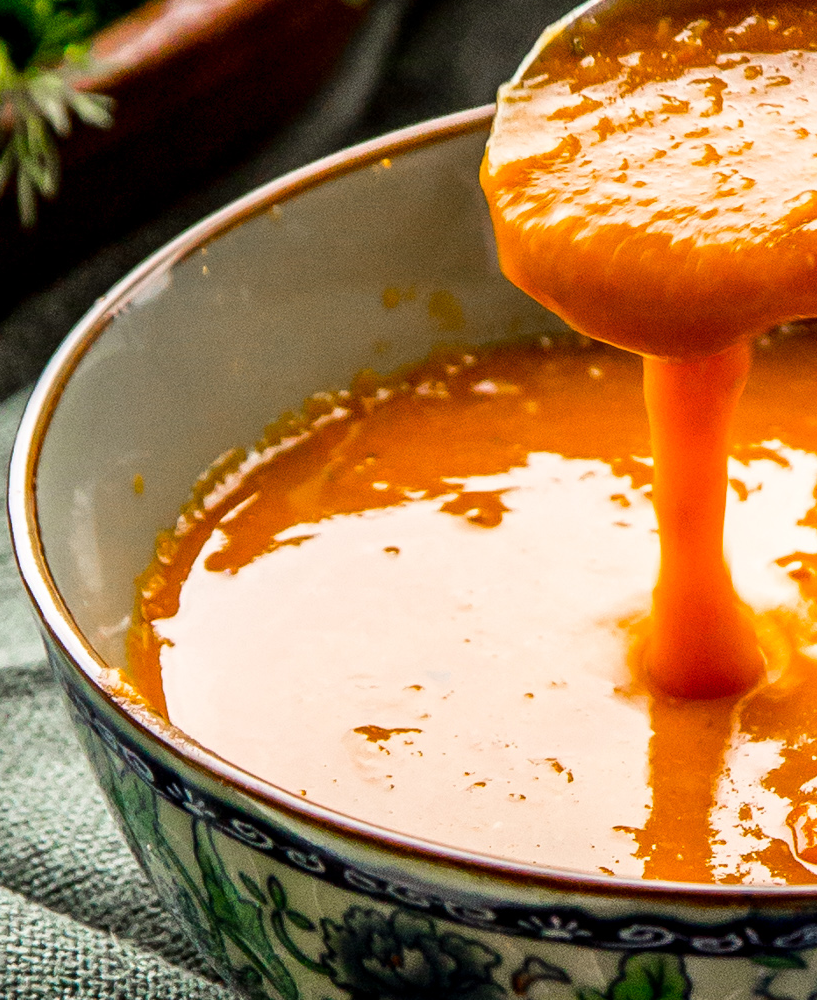
Vegetable glace is obtained by reducing an unsalted brown vegetable stock. Its texture is syrupy, almost oily, due to the concentration of sugars and mineral salts. It provides a vegetal “umami” power, exceptional shine, and a long finish characteristic of great terroir dishes. It contains no added binding agents.
Ingredients for approximately 0.5 liter
Ingredient name | Quantity | Approximate weight (g)
Brown vegetable stock (unsalted, rich in root vegetables) | 5 Liters | 5000 g
Patience and thermal precision | — | —
Detailed preparation
Initial filtration: Pass 5 liters of high-quality brown vegetable stock through a chinois lined with a fine cloth (muslin).
Reduction stage: Pour the stock into a wide sauté pan or a low rondeau to maximize the evaporation surface.
Cooking: Bring to a boil, then lower the heat. Maintain a constant but gentle simmer.
Skimming (Crucial): Even though there are fewer animal fats, the foams and vegetable impurities must be skimmed to guarantee clarity.
Successive transfers: As the reduction progresses, transfer the liquid into progressively smaller saucepans to prevent the walls from burning the concentrated sugars.
Nappe control: Reduce until approximately one tenth of the initial volume remains. The liquid must coat the spoon like a dense syrup.
Final filtration: Pass the finished glace once more through a very fine chinois.
Storage: Cool quickly. The texture will be that of a thick syrup or a viscous paste (it does not set like “rubber” as meat glaces do).
Types and variations of glaces (Variants)
Poultry Glace: Obtained by reducing a brown poultry stock. More delicate flavor, ideal for enriching light sauces.
Game Glace: Prepared from game stocks (deer, roe deer). Deep aromas, ideal for robust sauces.
Pork Glace: Produced from the reduction of a brown pork stock, it accompanies rustic stews and rich dishes.
Fish Glace: Concentrated reduction of a fish fumet. Adds marine intensity to shellfish sauces.
Veal Glace (or Blanched): Made from blanched veal bones. Lighter and less intense, for very refined sauces.
Beef/Veal Glace for Espagnole: Ultra-concentrated glaces used as a base for complex mother sauces.
Tips and advice
Salt: Absolute prohibition on salting before the end. The natural concentration of mineral salts in the vegetables is usually sufficient.
Balance: A touch of acidity (cider vinegar or sherry vinegar) at the end of the reduction helps balance the sugar concentration.
Use: Ideal for glazing roasted vegetables, finishing a cooking jus, or giving shine to a risotto.
Storage: Keeps for several weeks refrigerated thanks to the high concentration of natural sugars.
Your review appreciation cannot be sent
Report comment
Report sent
Your report cannot be sent
Write your review
Review sent
Your review cannot be sent
Vegetable Glace Recipe – Concentrated Vegetable Essences and Natural Sugars for Haute Cuisine
Country / Region
Country: France
Region: Contemporary gastronomy (Paris, Provence, Côte d’Azur…)
Official status: None
Inventor of the recipe: Contemporary transmission (inspired by the classical techniques of Escoffier)
Specification charter: None
Certification body: None
History
Origin and history:
Long overshadowed by meat glaces, vegetable glace has become essential with the rise of high-level vegetable cuisine. It is based on the same principle of extreme reduction, but uses the caramelization of the vegetables’ natural sugars (fructose, glucose) and their pectins to replace animal gelatin.
Evolution of the recipe:
Originally a simple reduced broth, it has become a complex technique often involving precise roasting of root vegetables to obtain an amber color and depth of flavor without bitterness. It responds to the growing demand for lighter, plant-based cuisine.
Emblematic recipe of three chefs:
Alain Passard: Master of vegetable cuisine, he treats vegetables as noble ingredients.
Alain Ducasse: In his concept of “Naturalité,” he uses these glaces to give power to cereals and vegetables.
René Redzepi: Although Danish, he applies French reduction techniques to highly concentrated vegetable extracts.
Legend or anecdote:
In palace kitchens, it is said that a perfect vegetable glace is more difficult to achieve than a meat glace: it forgives no temperature mistakes, because vegetable sugars pass from caramelized to burnt (bitter) in just a few seconds at the end of the reduction.
Recipe description
Vegetable glace is obtained by reducing an unsalted brown vegetable stock. Its texture is syrupy, almost oily, due to the concentration of sugars and mineral salts. It provides a vegetal “umami” power, exceptional shine, and a long finish characteristic of great terroir dishes. It contains no added binding agents.
Ingredients for approximately 0.5 liter
Ingredient name | Quantity | Approximate weight (g)
Brown vegetable stock (unsalted, rich in root vegetables) | 5 Liters | 5000 g
Patience and thermal precision | — | —
Detailed preparation
Initial filtration: Pass 5 liters of high-quality brown vegetable stock through a chinois lined with a fine cloth (muslin).
Reduction stage: Pour the stock into a wide sauté pan or a low rondeau to maximize the evaporation surface.
Cooking: Bring to a boil, then lower the heat. Maintain a constant but gentle simmer.
Skimming (Crucial): Even though there are fewer animal fats, the foams and vegetable impurities must be skimmed to guarantee clarity.
Successive transfers: As the reduction progresses, transfer the liquid into progressively smaller saucepans to prevent the walls from burning the concentrated sugars.
Nappe control: Reduce until approximately one tenth of the initial volume remains. The liquid must coat the spoon like a dense syrup.
Final filtration: Pass the finished glace once more through a very fine chinois.
Storage: Cool quickly. The texture will be that of a thick syrup or a viscous paste (it does not set like “rubber” as meat glaces do).
Types and variations of glaces (Variants)
Poultry Glace: Obtained by reducing a brown poultry stock. More delicate flavor, ideal for enriching light sauces.
Game Glace: Prepared from game stocks (deer, roe deer). Deep aromas, ideal for robust sauces.
Pork Glace: Produced from the reduction of a brown pork stock, it accompanies rustic stews and rich dishes.
Fish Glace: Concentrated reduction of a fish fumet. Adds marine intensity to shellfish sauces.
Veal Glace (or Blanched): Made from blanched veal bones. Lighter and less intense, for very refined sauces.
Beef/Veal Glace for Espagnole: Ultra-concentrated glaces used as a base for complex mother sauces.
Tips and advice
Salt: Absolute prohibition on salting before the end. The natural concentration of mineral salts in the vegetables is usually sufficient.
Balance: A touch of acidity (cider vinegar or sherry vinegar) at the end of the reduction helps balance the sugar concentration.
Use: Ideal for glazing roasted vegetables, finishing a cooking jus, or giving shine to a risotto.
Storage: Keeps for several weeks refrigerated thanks to the high concentration of natural sugars.
check_circle
check_circle