
Traditional Recipe for Pan de Muerto – Mexican Bread of the Dead
(Mexihcatl Pan de Muerto – Miquiztli tlacualiztli)
Other names: Pan de los Muertos
Discover the traditional recipe for Pan de Muerto – an iconic Mexican bread, combining authenticity, softness, and cultural symbolism.
"In Oaxaca, they ate Pan de Muerto to remember the loves that transcend life."
Long ago, in the heart of Mexico, there were good people skilled in language and good deeds, Toltec and Aztec, creators of beautiful new traditions. The Mexica people had many symbolic rituals, including offerings to honor the dead, guided by the wisdom of elders. Día de los Muertos, in their daily life, was about dance, joy, and bread representing life and ancestral connection.
According to tradition, Xochitl, a noble Nahua or Toltec woman, and Itzcuintli, a young man from an Aztec or Toltec family, faced the challenges of fate. In their world, family obligations and local alliances often determined the paths of young lovers, yet they sought new ways to celebrate life and love. This became part of the symbolic traditions that evolved into the Pan de Muerto.
Shortly before the Spanish conquest of Mexico in the early 16th century, the Aztecs dominated the Valley of Mexico, while Toltec traditions from previous centuries still influenced culture and rituals. Ceremonies and symbols connected to death were already highly codified. Día de los Muertos has its roots in these pre-Hispanic practices, where offerings and symbolic breads honored ancestors, though the current form of Pan de Muerto with wheat and sugar came after the arrival of the Spaniards.
According to Mexican tradition, Xochitl and Itzcuintli, two young lovers from noble indigenous families—likely Nahua or Toltec for Xochitl and Aztec or Toltec for Itzcuintli—were separated by fate. Their separation was caused by family obligations and political alliances, a common obstacle for young nobles on the eve of the Spanish conquest.
Xochitl, from Tlaxcala, was the daughter of a family of weavers known for their colorful fabrics and symbolic patterns. Her name means “flower” in Nahuatl, reflecting her beauty and gentleness, qualities that fascinated Itzcuintli. Sensitive and deeply attached to ancestral rites, she participated in Día de los Muertos ceremonies with devotion.
Itzcuintli, born near the ancient city of Teotihuacán, was the son of a skilled ceramic artisan. His name means “dog” in Nahuatl, an animal considered a protector and guide of souls in Mexican tradition, symbolizing loyalty and courage. He was known for his bravery and love for local legends, which brought him close to Xochitl.
They met during a procession honoring the dead, where their families came together to honor ancestors. Their emerging love was marked by symbols and traditions that would later inspire Pan de Muerto, which is why this bread still carries motifs evoking lovers and memories of the departed.
Despite their trials, their story lives on through Pan de Muerto, which each year recalls the cycle of life and death, faithful love, and respect for ancestors. The sugar and bone-shaped decorations symbolize the sweetness and permanence of memories.
The lives of Xochitl and Itzcuintli reflect the transition between indigenous traditions and European influences, explaining the fusion of ingredients (imported wheat, sugar) and symbolic motifs found in Pan de Muerto today.
Country: Mexico
Region: Oaxaca, Mexico City, Michoacán
Pan de Muerto originates from pre-Hispanic rites dedicated to the dead, where food offerings were made to spirits. With the arrival of the Spaniards, the dough was enriched with sugar and butter, resulting in the soft, fragrant bread we know today. Ghostly lover motifs appeared in the 19th century, linking local tragic love stories to Día de los Muertos celebrations.
Over time, the bread evolved technically: longer fermentation, addition of citrus zest and anise, and artistic decoration transformed a simple bread into a symbolic work of art. Some regions have developed variants with cocoa, dried fruits, or colored glazes.
Panadería La Tradición – Oaxaca: Artisan Pan de Muerto
Panadería El Horno de los Abuelos – Mexico City: Rich decorations, lover motifs
Chef José Luis Martínez – Guanajuato: Orange and anise-scented variants
Panadería La Catrina – Michoacán: Limited editions themed for lovers
Chef Carmen Sánchez – Puebla: Mini Pan de Muerto with colored glaze
Atelier Pan de los Espíritus – San Miguel de Allende: Hand-sculpted breads
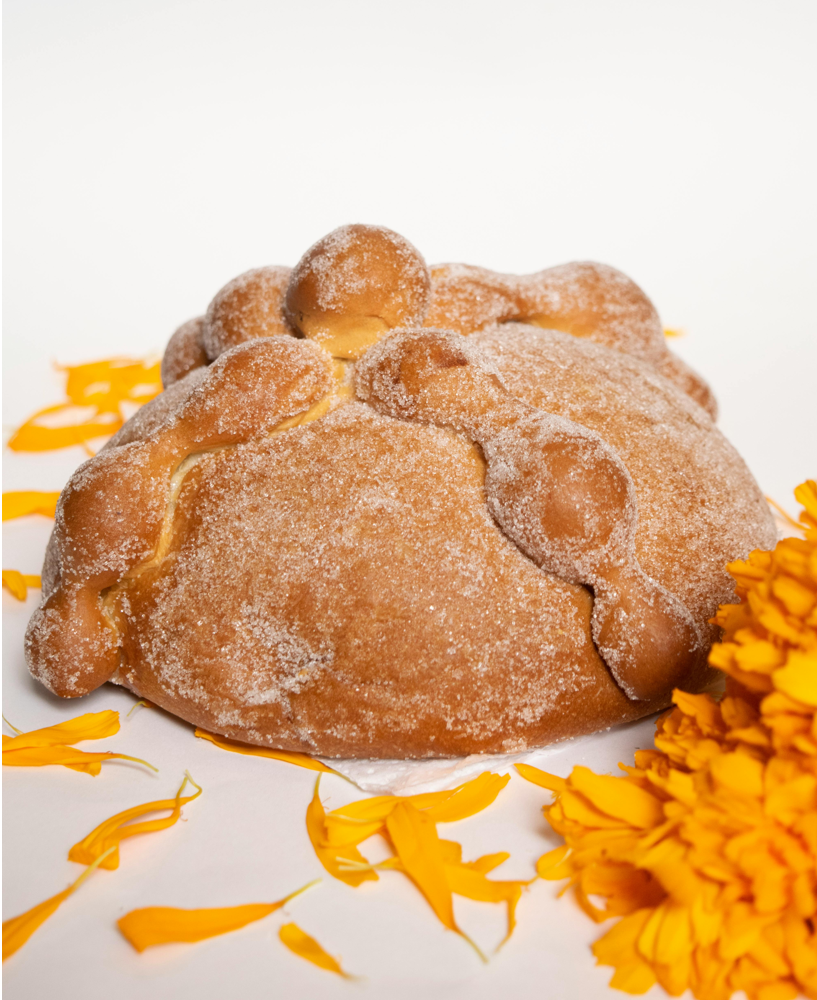
Dish presentation: Round or oval bread, decorated with crosses and bones, soft texture, aromas of butter, anise, and orange zest
Culinary specifics: Two-step rising, egg wash, symbolic decoration
Required tools: Bread molds, rolling pins, food brushes, cooling racks
Wheat flour: 500 g (tlacualiztli de xitomatl)
Sugar: 150 g (caxitl)
Softened butter: 150 g (nepantla tlacualiztli)
Eggs: 2 (ayotl)
Warm milk: 120 mL (atl tlapoyah)
Dry yeast: 10 g (tlatlacolli)
Salt: a pinch (chilli atl)
Orange zest: 1 (xocoyolli)
Ground anise: 1 tsp (tlapalli anis)
Decoration: powdered or colored sugar, reserved dough for bones and crosses (caxitl toyaxtli, tlacualiztli para tzontecomatl u tzoncomatl)
Prep time: 90 min
Cooking time: 25–30 min
Baking temperature: 180 °C
Steps
Activate yeast: Dissolve fresh or dry yeast in warm milk (30–35 °C) and let sit 10 min until foamy.
Mix dry ingredients and fats: Sift flour in a mixer bowl. Add sugar, salt, butter pieces, eggs, citrus zest, and anise. Mix slowly until uniform.
Add liquid and knead: Add milk with activated yeast. Knead 10–12 min until smooth, flexible, and slightly elastic.
First fermentation: Place dough in lightly floured bowl, cover, and let rise 1 h until doubled.
Divide and shape: Punch down dough, divide into 80–100 g balls for individual breads. Set aside portions for decoration strips (bones and crosses).
Assemble and decorate: Place strips on breads following traditional arrangement: bones in a cross with a central circle.
Second fermentation: Let shaped breads rise 30 min at room temperature.
Egg wash: Brush breads with egg-milk mixture.
Bake: Bake at 180 °C for 25–30 min until golden and fully cooked.
Finish: Cool on a rack and sprinkle with powdered or colored sugar.
Oaxaca: Soft bread, pronounced anise flavor, minimal decoration
Mexico City: Rich decoration, sculpted lover motifs
Puebla: Mini breads with colored glaze
Michoacán: Orange and cocoa flavor
Contemporary fusion: Dried fruits or chocolate
Respect rising times for softness and volume.
Avoid over-kneading to prevent dense dough.
Chef’s tip: Generously brush with egg-milk mixture for a shiny crust.
Style: Rustic or family-style
Presentation: Platter or individual plate
Pairings: Mexican hot chocolate, café de olla, atole, or tejate
Wines: Sweet Mexican wine or light dessert wine, young vintage
Non-alcoholic alternatives: Cinnamon infusions, fresh orange juice, hot chocolate
Energy: 430 kcal / 1800 kJ
Fat: 15 g
Carbs: 65 g
Protein: 7 g
Fiber: 2 g
Allergens: Egg, gluten, milk
Possible adaptations: Vegan (substitute butter and eggs), gluten-free (alternative flour)
Traditional Recipe for Pan de Muerto – Mexican Bread of the Dead
(Mexihcatl Pan de Muerto – Miquiztli tlacualiztli)
Other names: Pan de los Muertos
Discover the traditional recipe for Pan de Muerto – an iconic Mexican bread, combining authenticity, softness, and cultural symbolism.
"In Oaxaca, they ate Pan de Muerto to remember the loves that transcend life."
Long ago, in the heart of Mexico, there were good people skilled in language and good deeds, Toltec and Aztec, creators of beautiful new traditions. The Mexica people had many symbolic rituals, including offerings to honor the dead, guided by the wisdom of elders. Día de los Muertos, in their daily life, was about dance, joy, and bread representing life and ancestral connection.
According to tradition, Xochitl, a noble Nahua or Toltec woman, and Itzcuintli, a young man from an Aztec or Toltec family, faced the challenges of fate. In their world, family obligations and local alliances often determined the paths of young lovers, yet they sought new ways to celebrate life and love. This became part of the symbolic traditions that evolved into the Pan de Muerto.
Shortly before the Spanish conquest of Mexico in the early 16th century, the Aztecs dominated the Valley of Mexico, while Toltec traditions from previous centuries still influenced culture and rituals. Ceremonies and symbols connected to death were already highly codified. Día de los Muertos has its roots in these pre-Hispanic practices, where offerings and symbolic breads honored ancestors, though the current form of Pan de Muerto with wheat and sugar came after the arrival of the Spaniards.
According to Mexican tradition, Xochitl and Itzcuintli, two young lovers from noble indigenous families—likely Nahua or Toltec for Xochitl and Aztec or Toltec for Itzcuintli—were separated by fate. Their separation was caused by family obligations and political alliances, a common obstacle for young nobles on the eve of the Spanish conquest.
Xochitl, from Tlaxcala, was the daughter of a family of weavers known for their colorful fabrics and symbolic patterns. Her name means “flower” in Nahuatl, reflecting her beauty and gentleness, qualities that fascinated Itzcuintli. Sensitive and deeply attached to ancestral rites, she participated in Día de los Muertos ceremonies with devotion.
Itzcuintli, born near the ancient city of Teotihuacán, was the son of a skilled ceramic artisan. His name means “dog” in Nahuatl, an animal considered a protector and guide of souls in Mexican tradition, symbolizing loyalty and courage. He was known for his bravery and love for local legends, which brought him close to Xochitl.
They met during a procession honoring the dead, where their families came together to honor ancestors. Their emerging love was marked by symbols and traditions that would later inspire Pan de Muerto, which is why this bread still carries motifs evoking lovers and memories of the departed.
Despite their trials, their story lives on through Pan de Muerto, which each year recalls the cycle of life and death, faithful love, and respect for ancestors. The sugar and bone-shaped decorations symbolize the sweetness and permanence of memories.
The lives of Xochitl and Itzcuintli reflect the transition between indigenous traditions and European influences, explaining the fusion of ingredients (imported wheat, sugar) and symbolic motifs found in Pan de Muerto today.
Country: Mexico
Region: Oaxaca, Mexico City, Michoacán
Pan de Muerto originates from pre-Hispanic rites dedicated to the dead, where food offerings were made to spirits. With the arrival of the Spaniards, the dough was enriched with sugar and butter, resulting in the soft, fragrant bread we know today. Ghostly lover motifs appeared in the 19th century, linking local tragic love stories to Día de los Muertos celebrations.
Over time, the bread evolved technically: longer fermentation, addition of citrus zest and anise, and artistic decoration transformed a simple bread into a symbolic work of art. Some regions have developed variants with cocoa, dried fruits, or colored glazes.
Panadería La Tradición – Oaxaca: Artisan Pan de Muerto
Panadería El Horno de los Abuelos – Mexico City: Rich decorations, lover motifs
Chef José Luis Martínez – Guanajuato: Orange and anise-scented variants
Panadería La Catrina – Michoacán: Limited editions themed for lovers
Chef Carmen Sánchez – Puebla: Mini Pan de Muerto with colored glaze
Atelier Pan de los Espíritus – San Miguel de Allende: Hand-sculpted breads
Dish presentation: Round or oval bread, decorated with crosses and bones, soft texture, aromas of butter, anise, and orange zest
Culinary specifics: Two-step rising, egg wash, symbolic decoration
Required tools: Bread molds, rolling pins, food brushes, cooling racks
Wheat flour: 500 g (tlacualiztli de xitomatl)
Sugar: 150 g (caxitl)
Softened butter: 150 g (nepantla tlacualiztli)
Eggs: 2 (ayotl)
Warm milk: 120 mL (atl tlapoyah)
Dry yeast: 10 g (tlatlacolli)
Salt: a pinch (chilli atl)
Orange zest: 1 (xocoyolli)
Ground anise: 1 tsp (tlapalli anis)
Decoration: powdered or colored sugar, reserved dough for bones and crosses (caxitl toyaxtli, tlacualiztli para tzontecomatl u tzoncomatl)
Prep time: 90 min
Cooking time: 25–30 min
Baking temperature: 180 °C
Steps
Activate yeast: Dissolve fresh or dry yeast in warm milk (30–35 °C) and let sit 10 min until foamy.
Mix dry ingredients and fats: Sift flour in a mixer bowl. Add sugar, salt, butter pieces, eggs, citrus zest, and anise. Mix slowly until uniform.
Add liquid and knead: Add milk with activated yeast. Knead 10–12 min until smooth, flexible, and slightly elastic.
First fermentation: Place dough in lightly floured bowl, cover, and let rise 1 h until doubled.
Divide and shape: Punch down dough, divide into 80–100 g balls for individual breads. Set aside portions for decoration strips (bones and crosses).
Assemble and decorate: Place strips on breads following traditional arrangement: bones in a cross with a central circle.
Second fermentation: Let shaped breads rise 30 min at room temperature.
Egg wash: Brush breads with egg-milk mixture.
Bake: Bake at 180 °C for 25–30 min until golden and fully cooked.
Finish: Cool on a rack and sprinkle with powdered or colored sugar.
Oaxaca: Soft bread, pronounced anise flavor, minimal decoration
Mexico City: Rich decoration, sculpted lover motifs
Puebla: Mini breads with colored glaze
Michoacán: Orange and cocoa flavor
Contemporary fusion: Dried fruits or chocolate
Respect rising times for softness and volume.
Avoid over-kneading to prevent dense dough.
Chef’s tip: Generously brush with egg-milk mixture for a shiny crust.
Style: Rustic or family-style
Presentation: Platter or individual plate
Pairings: Mexican hot chocolate, café de olla, atole, or tejate
Wines: Sweet Mexican wine or light dessert wine, young vintage
Non-alcoholic alternatives: Cinnamon infusions, fresh orange juice, hot chocolate
Energy: 430 kcal / 1800 kJ
Fat: 15 g
Carbs: 65 g
Protein: 7 g
Fiber: 2 g
Allergens: Egg, gluten, milk
Possible adaptations: Vegan (substitute butter and eggs), gluten-free (alternative flour)