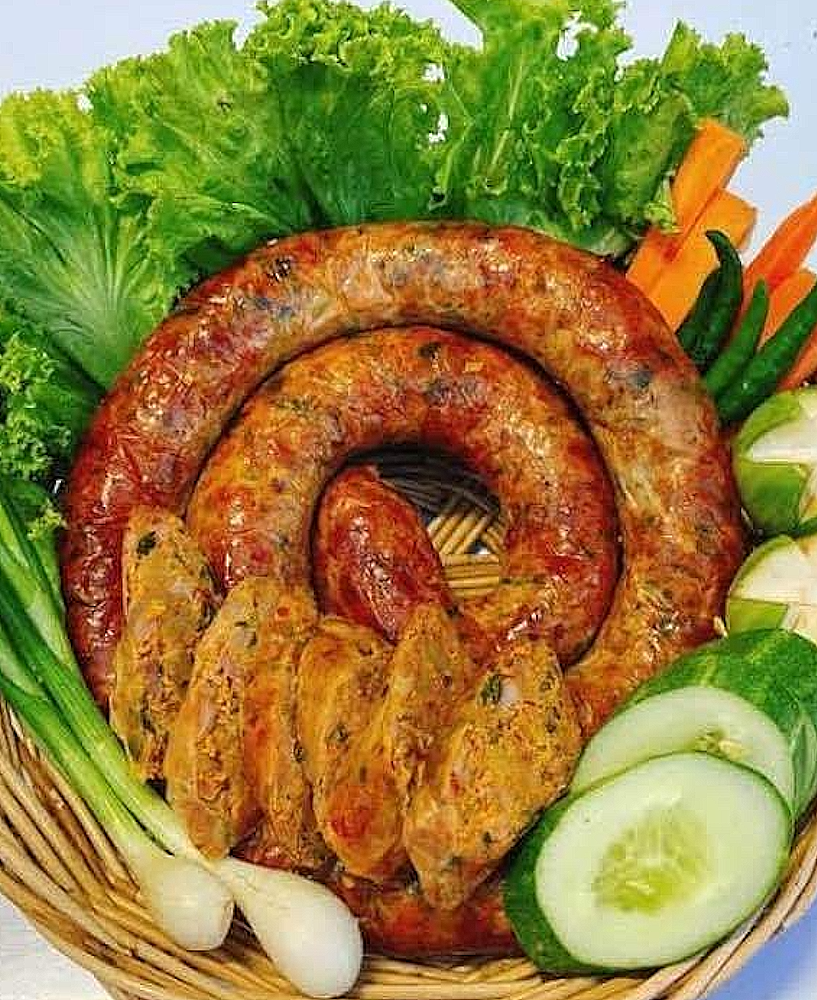

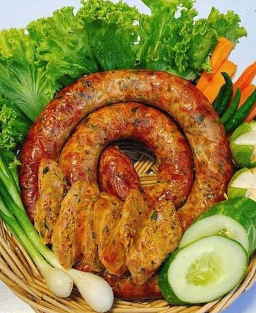
Authentic Northern Thai Sai Oua recipe: pork filling flavored with lemongrass, galangal, and kapi, steamed then grilled until crispy, as in Chiang Mai.
Sai Oua (สายอุ๊า)
Sai Ua (ไส้อว้า)
Sai Oea (สายโอะอา)
Northern Lanna dialectal variants.
The main regional variant of Sai Oua is the traditional Chiang Mai version, the heart of the Lanna culture in northern Thailand. It is distinguished by its strong herbal aroma, obtained from a combination of fresh chopped lemongrass, grated galangal, coriander roots, and kapi. The fine and tender texture results from first steaming the sausage, followed by grilling over smoked charcoal, typical of the Lanna method.
Traditional Chiang Mai: Lemongrass dominant (4–5 stalks per 500 g of meat), fresh coriander roots, minced garlic, kaffir lime leaves, grilled over charcoal. Long sausages (12–15 cm).
Lampang: Sweeter thanks to palm sugar, more pronounced galangal, less spicy. Extended steaming for extreme tenderness, typical of local festivals.
Lao version (bordering Isan): Increased fresh chili (5–10 g), double fish sauce, strong kapi. Short sausages (8–10 cm), pan-fried juicy, no steaming.
Contemporary chefs: Herbs infused 24–48 h in cold, precise steaming (10 min at 100 °C) then cloche grilling (160 °C). Coriander roots and kaffir lime for enhanced aroma.
Chiang Mai street food: Thinly sliced (1–2 cm) over fried sticky rice or som tam, or wok patties without casing for speed.
Food industry (Sing Quang Yin, EU export): French pork shoulder, mustard/licorice powder (2–3 g), no nitrites, ready-to-cook vacuum pack.
Other rare local variants: Nan, fried shallots incorporated; Mae Hong Son, turmeric added for an orange hue.
Poultry (chicken/turkey): Lighter (10–15% fat), finely chopped, healthy street food version.
Beef: Firm texture, gastronomic fusion.
Smoked tofu: Vegetarian, emulsified with kapi, for hotels/tourism.
Dish type: Main dish / Starter
Service: Fine dining / Brasserie / Catering / Collective
Number of servings: 4 (~500 g)
Skill level: Intermediate
Saying: «สายอุ๊า อาหารเหนือ กลิ่นหอมยั่วยวน» – Sai Oua, northern food, captivating and irresistible aroma
Legend: In Chiang Mai, Sai Oua was said to originate from a merchant feeding royal elephants during Yi Peng festivals; a symbol of rice-field prosperity, with abundant herbs honoring Buddhist ancestors
Proverb: «ข้าวใหม่ปลามัน» (Khao mai pla man) – “New rice, fatty fish”
Meaning: Honeymoon period of a couple, symbolizing freshness, abundance, and excitement. Rice represents prosperity and shared happiness.
Country: Thailand
Region: North (Chiang Mai, Lampang)
Official status: Oral transmission (potential UNESCO STG)
Inventor: Lanna peasant oral tradition
Codified recipe: No
Meat: Fresh minced pork, ≥ 20% fat
Mandatory fresh aromatics: Lemongrass and galangal (≥ 4% of filling), preferred coriander roots, garlic, onion/shallot
Spices and condiments: Salt, palm or refined sugar, pepper, kapi or fish sauce
Additives: No added nitrites
Casings: Natural, soaked before use; plastic film possible for casing-free versions
Cooking techniques: Filling set by steaming before grilling, barbecue, or pan; internal temperature ≥ 70 °C
Hygiene and safety standards: Cold chain ≤ 4 °C, controlled internal temperature, cross-contamination prevention
Certification body: N/A
Origin: 14th century, Lanna kingdom, peasant cuisine against malaria (digestive herbs); revived by tourism in the 1980s
Influences: Lao-Burmese (galangal), Chinese (palm sugar), Cambodian (kapi), post-colonial spices
Evolution: From popular to gastronomic, mechanical mincers, vacuum packaging for export; EU adaptations and plant-based versions
Sing Quang Yin – Paris: Industrial version with French pork
Kuang Sang Market – Chiang Mai: Grilled and spicy street food
Chef Somchai Chaiyasit – Chiang Mai: 48-hour herb infusion
Chef Niran Prasert – Bangkok: Sai Oua wagyu burger fusion
Blue Elephant – Bangkok: Traditional dishes revisited, cooking school
Chef Thomas Singthong – Lyon: Franco-Thai adaptation
David Thompson – Nahm, London: Global reference
Appearance: Uniform golden and glossy, 2–3 cm slices, visible green herbs
Texture: Soft and juicy at the core, thin crispy crust
Dominant aromas: Herbal (lemongrass/galangal), kapi umami, lightly sweet-spicy
Cooking methods: Steaming, grilling/pan/barbecue
Key techniques: Fine chopping (4–8 mm), kneading for natural binder, filling with bubble pinching
Typical ingredients: Pork shoulder, lemongrass, sticky rice as garnish
Technical note: Knead cold for binder without emulsifier
Chef/utility knife, HACCP board, stainless steel bowl, industrial mincer, sausage stuffer, natural casings, plastic film, pan/wok, steamer, barbecue, probe thermometer, spatula/maryse/tongs.
Pork shoulder: 500 g (15–20% fat, 8 mm minced)
Chopped lemongrass: 20 g (4–5 stalks, 4 mm brunoise)
Crushed garlic: 6 g (2–3 cloves)
Onion/shallot: 40 g (fine brunoise)
Grated galangal: 15 g
Salt: 3–5 g
Sugar (palm/refined): 2–3 g
Ground black pepper: 1–2 g
Shrimp paste (kapi)/fish sauce: 5 g
Fresh chili, chopped: 2 g
Chopped coriander: 5 g (roots preferred)
Grated coconut: 10 g
Natural pork casing: 1 m (soak 30 min)
Yield: 500 g sausages / 4 servings (125 g/serving)
Scaling: x2.5 for 10 servings (1.25 kg pork, 50 g lemongrass)
Time: Prep 20–30 min; Cook 15–20 min; Rest 1–2 h
Mise en place: Wash aromatics, clean mincer/HACCP board, pork < 4 °C, soaked casings
Cutting/preparation: Fine chop aromatics (4 mm) and meat (8 mm); weigh spices
Mixing/kneading: 5–10 min by robot/hand, gradually incorporate salt/sugar
Filling: Casings 12 cm, pinch air bubbles
Rest: Wrap and refrigerate 1–2 h
Cooking: Steam 10 min at 100 °C; grill pan/wok 5–10 min at 160–180 °C (core ≥ 70–75 °C)
Finishing/plating: Brown, slice, serve with sticky rice 100 g/serv., herbs 10 g, green papaya 50 g
Cold chain: ≤ 4 °C prep/raw; blast chill -3 °C/90 min if stored
Core cooking temperature: ≥ 70 °C (75 °C EU pork)
Shelf life: Raw 2 days, cooked 3 days, freezer -18 °C 1 month
Hygiene: Dedicated station, hand wash 20 s, cross-contamination prevention
Ultra-fresh herbs for optimal aroma
Knead cold for perfect binder
Steaming sets the filling
Charcoal grilling for authenticity
Avoid loose filling, overcooking, coarse herbs
Test a small cooked ball before filling
Presentation: Rustic bistro, individual plate or family style
Garnishes: Sticky rice 100 g/serv., som tam salad 50 g, herbs 10 g, chili sauce
Pairings:
Wines: Dry Riesling Alsace, semi-dry Gewurztraminer
Non-alcoholic: Thai green tea with lemongrass, sparkling lime-ginger water
Energy: 280–320 kcal
Fat: 20–22 g
Carbohydrates: 4–6 g
Protein: 16–18 g
Fiber: 1–2 g
Gluten-free: Native
Vegetarian: Tofu or green lentils chopped
Vegan: Same + no kapi (replace with miso)
Low-salt: Reduce salt by 50%, palm sugar to maintain flavor
Authentic Northern Thai Sai Oua recipe: pork filling flavored with lemongrass, galangal, and kapi, steamed then grilled until crispy, as in Chiang Mai.
Sai Oua (สายอุ๊า)
Sai Ua (ไส้อว้า)
Sai Oea (สายโอะอา)
Northern Lanna dialectal variants.
The main regional variant of Sai Oua is the traditional Chiang Mai version, the heart of the Lanna culture in northern Thailand. It is distinguished by its strong herbal aroma, obtained from a combination of fresh chopped lemongrass, grated galangal, coriander roots, and kapi. The fine and tender texture results from first steaming the sausage, followed by grilling over smoked charcoal, typical of the Lanna method.
Traditional Chiang Mai: Lemongrass dominant (4–5 stalks per 500 g of meat), fresh coriander roots, minced garlic, kaffir lime leaves, grilled over charcoal. Long sausages (12–15 cm).
Lampang: Sweeter thanks to palm sugar, more pronounced galangal, less spicy. Extended steaming for extreme tenderness, typical of local festivals.
Lao version (bordering Isan): Increased fresh chili (5–10 g), double fish sauce, strong kapi. Short sausages (8–10 cm), pan-fried juicy, no steaming.
Contemporary chefs: Herbs infused 24–48 h in cold, precise steaming (10 min at 100 °C) then cloche grilling (160 °C). Coriander roots and kaffir lime for enhanced aroma.
Chiang Mai street food: Thinly sliced (1–2 cm) over fried sticky rice or som tam, or wok patties without casing for speed.
Food industry (Sing Quang Yin, EU export): French pork shoulder, mustard/licorice powder (2–3 g), no nitrites, ready-to-cook vacuum pack.
Other rare local variants: Nan, fried shallots incorporated; Mae Hong Son, turmeric added for an orange hue.
Poultry (chicken/turkey): Lighter (10–15% fat), finely chopped, healthy street food version.
Beef: Firm texture, gastronomic fusion.
Smoked tofu: Vegetarian, emulsified with kapi, for hotels/tourism.
Dish type: Main dish / Starter
Service: Fine dining / Brasserie / Catering / Collective
Number of servings: 4 (~500 g)
Skill level: Intermediate
Saying: «สายอุ๊า อาหารเหนือ กลิ่นหอมยั่วยวน» – Sai Oua, northern food, captivating and irresistible aroma
Legend: In Chiang Mai, Sai Oua was said to originate from a merchant feeding royal elephants during Yi Peng festivals; a symbol of rice-field prosperity, with abundant herbs honoring Buddhist ancestors
Proverb: «ข้าวใหม่ปลามัน» (Khao mai pla man) – “New rice, fatty fish”
Meaning: Honeymoon period of a couple, symbolizing freshness, abundance, and excitement. Rice represents prosperity and shared happiness.
Country: Thailand
Region: North (Chiang Mai, Lampang)
Official status: Oral transmission (potential UNESCO STG)
Inventor: Lanna peasant oral tradition
Codified recipe: No
Meat: Fresh minced pork, ≥ 20% fat
Mandatory fresh aromatics: Lemongrass and galangal (≥ 4% of filling), preferred coriander roots, garlic, onion/shallot
Spices and condiments: Salt, palm or refined sugar, pepper, kapi or fish sauce
Additives: No added nitrites
Casings: Natural, soaked before use; plastic film possible for casing-free versions
Cooking techniques: Filling set by steaming before grilling, barbecue, or pan; internal temperature ≥ 70 °C
Hygiene and safety standards: Cold chain ≤ 4 °C, controlled internal temperature, cross-contamination prevention
Certification body: N/A
Origin: 14th century, Lanna kingdom, peasant cuisine against malaria (digestive herbs); revived by tourism in the 1980s
Influences: Lao-Burmese (galangal), Chinese (palm sugar), Cambodian (kapi), post-colonial spices
Evolution: From popular to gastronomic, mechanical mincers, vacuum packaging for export; EU adaptations and plant-based versions
Sing Quang Yin – Paris: Industrial version with French pork
Kuang Sang Market – Chiang Mai: Grilled and spicy street food
Chef Somchai Chaiyasit – Chiang Mai: 48-hour herb infusion
Chef Niran Prasert – Bangkok: Sai Oua wagyu burger fusion
Blue Elephant – Bangkok: Traditional dishes revisited, cooking school
Chef Thomas Singthong – Lyon: Franco-Thai adaptation
David Thompson – Nahm, London: Global reference
Appearance: Uniform golden and glossy, 2–3 cm slices, visible green herbs
Texture: Soft and juicy at the core, thin crispy crust
Dominant aromas: Herbal (lemongrass/galangal), kapi umami, lightly sweet-spicy
Cooking methods: Steaming, grilling/pan/barbecue
Key techniques: Fine chopping (4–8 mm), kneading for natural binder, filling with bubble pinching
Typical ingredients: Pork shoulder, lemongrass, sticky rice as garnish
Technical note: Knead cold for binder without emulsifier
Chef/utility knife, HACCP board, stainless steel bowl, industrial mincer, sausage stuffer, natural casings, plastic film, pan/wok, steamer, barbecue, probe thermometer, spatula/maryse/tongs.
Pork shoulder: 500 g (15–20% fat, 8 mm minced)
Chopped lemongrass: 20 g (4–5 stalks, 4 mm brunoise)
Crushed garlic: 6 g (2–3 cloves)
Onion/shallot: 40 g (fine brunoise)
Grated galangal: 15 g
Salt: 3–5 g
Sugar (palm/refined): 2–3 g
Ground black pepper: 1–2 g
Shrimp paste (kapi)/fish sauce: 5 g
Fresh chili, chopped: 2 g
Chopped coriander: 5 g (roots preferred)
Grated coconut: 10 g
Natural pork casing: 1 m (soak 30 min)
Yield: 500 g sausages / 4 servings (125 g/serving)
Scaling: x2.5 for 10 servings (1.25 kg pork, 50 g lemongrass)
Time: Prep 20–30 min; Cook 15–20 min; Rest 1–2 h
Mise en place: Wash aromatics, clean mincer/HACCP board, pork < 4 °C, soaked casings
Cutting/preparation: Fine chop aromatics (4 mm) and meat (8 mm); weigh spices
Mixing/kneading: 5–10 min by robot/hand, gradually incorporate salt/sugar
Filling: Casings 12 cm, pinch air bubbles
Rest: Wrap and refrigerate 1–2 h
Cooking: Steam 10 min at 100 °C; grill pan/wok 5–10 min at 160–180 °C (core ≥ 70–75 °C)
Finishing/plating: Brown, slice, serve with sticky rice 100 g/serv., herbs 10 g, green papaya 50 g
Cold chain: ≤ 4 °C prep/raw; blast chill -3 °C/90 min if stored
Core cooking temperature: ≥ 70 °C (75 °C EU pork)
Shelf life: Raw 2 days, cooked 3 days, freezer -18 °C 1 month
Hygiene: Dedicated station, hand wash 20 s, cross-contamination prevention
Ultra-fresh herbs for optimal aroma
Knead cold for perfect binder
Steaming sets the filling
Charcoal grilling for authenticity
Avoid loose filling, overcooking, coarse herbs
Test a small cooked ball before filling
Presentation: Rustic bistro, individual plate or family style
Garnishes: Sticky rice 100 g/serv., som tam salad 50 g, herbs 10 g, chili sauce
Pairings:
Wines: Dry Riesling Alsace, semi-dry Gewurztraminer
Non-alcoholic: Thai green tea with lemongrass, sparkling lime-ginger water
Energy: 280–320 kcal
Fat: 20–22 g
Carbohydrates: 4–6 g
Protein: 16–18 g
Fiber: 1–2 g
Gluten-free: Native
Vegetarian: Tofu or green lentils chopped
Vegan: Same + no kapi (replace with miso)
Low-salt: Reduce salt by 50%, palm sugar to maintain flavor