
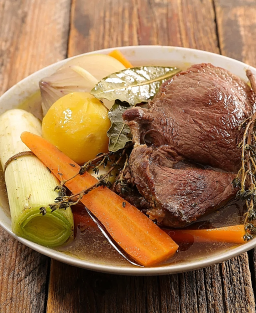
The Grand Pot-au-Feu of Dodin Bouffant according to Marcel Rouff
Traditional French Recipe: The Grand Pot-au-Feu of Dodin Bouffant – Gourmet Recipe for 8 People
Discover the traditional recipe of the Grand Pot-au-Feu of Dodin Bouffant – an iconic dish of French cuisine, combining refinement, the nobility of ingredients, and exceptional culinary expertise.
Anecdote / Saying:
“Long ago, the people of Castelnaudary said that cooking veal and beef together brought good fortune to the house.”
Geographical origin and status
Country: France
Region: Bresse and Paris
Codified recipe: Yes
Official specifications: Use Bresse poultry, veal shank, beef chuck, and traditional vegetables; slow cooking in an aromatic broth; glaze the vegetables.
Famous chefs and their contributions
Marcel Rouff (1877‑1936)
Codification and promotion of the Grand Pot-au-Feu in La Cuisine et les Vins de France (1929‑1930)
Highlighted noble meats and precise cooking techniques
Auguste Escoffier (1846‑1935)
Standardized slow-cooking and poaching methods for meats
Developed gastronomic plating and Russian-style presentation
Fernand Point (1897‑1955)
Refined the broth by carefully selecting ingredients and aromatics
Emphasized harmony of textures and flavors in meat and vegetable dishes
Paul Bocuse (1926‑2018)
Modernized the dish while respecting tradition
Promoted seasonal vegetables and glazing techniques
Joël Robuchon (1945‑2018)
Precise finishing, harmonious cutting, and plating of meats and vegetables
Developed sauces and reductions to enhance the broth
Alain Ducasse (1956‑)
Contemporary interpretation using exceptional products
Emphasis on visual refinement and flavor balance
Raymond Blanc (1949‑)
Focus on ingredient origin and excellence of regional meats
Developed aromatic herbs for the broth
Michel Guérard (1933‑)
Influence of luxury light cuisine: gentle cooking, respecting natural flavors
Highlighted vegetables and reduced fat while preserving aromatic richness
Anne-Sophie Pic (1969‑)
Refined textures and sauces, emphasized presentation
Innovated food and wine pairings, harmonizing tradition and modernity
Guy Savoy (1953‑)
Focus on structure and technical precision
Enhanced the broth and meat through slow cooking and reduction
Éric Fréchon (1963‑)
Created refined garnishes and glazed vegetables
Promoted the role of pot-au-feu in contemporary luxury gastronomy
Presentation of the dish
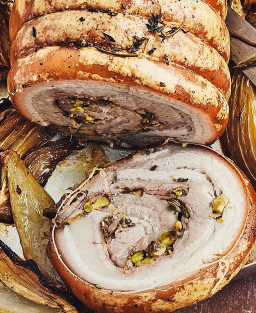
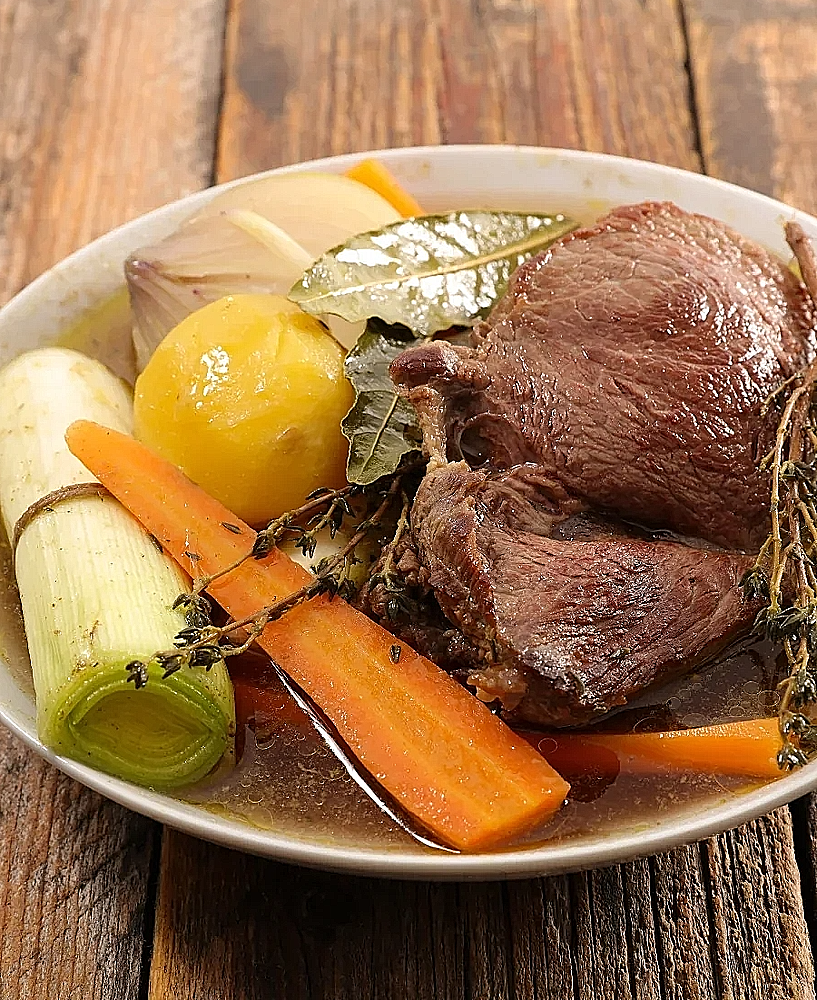
Appearance: Stuffed poultry, roasted meats, glazed vegetables, visually harmonious colors
Texture: Tender meat, clear and aromatic broth, vegetables soft but firm
Dominant aromas: Aromatic herbs (tarragon, thyme, mint), roasted poultry, goose liver
Culinary specifics: Low-temperature poaching of meats, insertion of goose liver under the skin, glazing vegetables
Required utensils:
Cast iron casserole
Large saucepan
Fine sieve or chinois
Sauté pan
Paring knife and chef’s knife
Cutting board
Whisk
Spatula
Cooking thermometer
Ingredients (for 8 people)
Poularde broth:
1 Bresse poularde
1 carrot
1 leek
1 celery stalk
1 charred onion studded with cloves
1 onion, halved
1 large shallot
1 bouquet garni: bay leaf, thyme, savory, tarragon
3 garlic cloves
1 sachet of peppercorns, coriander, allspice
Meats:
1 kg boneless veal shank
1 bunch of mint
1 bunch of savory
1 kg beef chuck
1 slice of Colonnata lard
Saltpeter (optional)
1 bunch of tarragon
1 fresh goose liver
1 glass of Chambertin wine
Salt and pepper
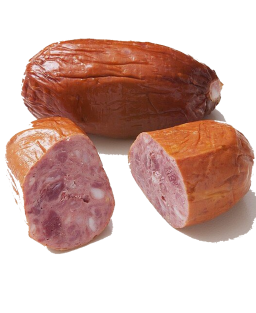
1 Judru (pork and veal sausage for cooking)
Vegetables:
1 bunch of carrots
1 bunch of turnips
1 bunch of Boule d’or turnips
1 bunch of small swedes
1 kg small potatoes
Fresh butter
Sugar, salt, and pepper
Preparation and method
Preparation time: 120 min
Cooking time: 4–5 hours for broth, 3 hours for meats
Yield: 6–8 servings
1. Poularde broth
Preparation of the poultry:
Pluck and gut the poularde. Remove legs and head. Keep offal for later use (sauce, stuffing, or stock).
Separate thighs, cut the breast, remove the keel bone. Cut carcasses into even pieces for optimal flavor extraction.
Optional: Roast pieces at 180 °C for 5 min to lightly caramelize and enhance aromas.
Making the broth:
Place carcass, drumsticks, wings, and neck in a large pot. Cover with cold water to extract proteins and collagen gradually.
Slowly bring to a simmer (80–90 °C). Skim regularly for a clear broth.
Add aromatic vegetables cut into mirepoix (carrots, leeks, celery, onions, shallots) and crushed garlic. Add bouquet garni.
Simmer gently for 4–5 hours. Avoid vigorous boiling.
Strain through a fine sieve, degrease while cold for a clear, pure broth.
Professional tips:
Reserve broth to cool and degrease before poaching meats.
Optional: Clarify with egg white for an ultra-clear, high-end presentation.
2. Meat preparation
Veal shank:
Tie into a cylindrical roast for even cooking.
Season with a dry mix of mint and savory.
Let rest in the fridge for flavors to penetrate.
Beef chuck:
Make small incisions to insert Colonnata lard brunoise (contisage technique).
Tie chuck to hold the stuffing.
Season with saltpeter (optional) and tarragon.
Goose liver:
Cut into thin escalopes, lightly salt.
Sear quickly over high heat for a golden crust while keeping interior tender.
Degrease pan, deglaze with Chambertin, reduce to a glaze, and coat the escalope. Cool before contisage.
Poularde contisage:
Lift the skin gently, insert goose liver escalope, tie to hold.
Provides rich flavor and luxurious presentation.
3. Cooking the meats
Poaching:
Bring filtered, degreased broth to 80 °C.
Poach veal, beef, poultry, and Judru separately.
Drain and rinse in clear broth to remove impurities.
Cook veal, beef, and Judru in broth at 80 °C for 3 hours.
Adding poultry:
Add poularde breast 30 min before the end to preserve juiciness.
Technical tips:
Keep meat partially submerged to avoid drying.
Ensure internal temperature > 75 °C.
4. Vegetable preparation and finishing
Wash, peel, and shape carrots, turnips, Boule d’or turnips, swedes, and potatoes.
Cook separately in broth with butter and a pinch of sugar.
Reduce completely to concentrate flavor.
Glaze with cooking juice for shine and elegance.
Keep vegetables al dente for finishing at the table.
5. Plating and service
Preheat serving dish, vegetable dish, and sauceboat to 60 °C.
Slice meats: veal and beef in regular slices, poularde into breasts and thighs. Arrange harmoniously.
Place vegetables in a separate dish. Serve broth in a sauceboat.
Accompaniments: mustard, horseradish, marrow-rubbed bread, Soubise puree, or pickles.
Food safety:
Respect cold chain and cooking temperatures.
Meat internal temperature > 75 °C.
Handle offal according to hygiene standards.
Regional variations:
Niçoise version: no goose liver, local vegetables only
Escoffier version: with potatoes and green beans
Contemporary version: seasonal vegetables, gourmet presentation
Tips and advice:
Cook meat at low temperature to preserve tenderness.
Glaze vegetables for shine and perfect texture.
Avoid over-salting the broth at the start.
Chef’s tip: insert goose liver under the skin just before final cooking.
Service and accompaniments:
Plating style: Gourmet, banquet, or à la carte
Presentation: Serving platter for meats, separate vegetable dish, broth in a sauceboat
Traditional accompaniments: Mustard, horseradish, marrow bread, Soubise puree, pickles
Recommended wines and drinks
Red wines – classic pairings:
Chambertin Grand Cru (Burgundy, 2015–2018)
Aromas: ripe red fruits (blackcurrant, cherry), mild spices, slight woody note
Character: fine tannins, good acidity, long finish
Serve 16–17 °C, decant 1 hour before
Côte de Nuits Villages (Burgundy, 2016–2019)
Aromas: red and black fruits, slight pepper and licorice
Medium to full-bodied, tannin/acidity balance ideal for poached meat and rich broth
Classic Burgundy red (Pinot Noir, 2015–2018)
Aromas: raspberry, cherry, floral notes
Soft, elegant character for glazed vegetables and delicate broth
White wines – aromatic and fresh alternatives:
Meursault or Puligny-Montrachet (Burgundy, 2016–2018)
Aromas: hazelnut, butter, white fruits
Temperature: 12–14 °C
Chardonnay from Jura or Chablis Premier Cru
Marked acidity, fine minerality, balances richness of goose liver
Non-alcoholic options:
Herbal infusions: thyme, tarragon, rosemary, lightly sweetened
Fermented apple juice (mild cider, non-sparkling)
Aromatic broths: mini broths served warm as amuse-bouche
Serving tips:
Decant young red wines 1 hour before, serve 16–17 °C
White wines: cool but not icy
Non-alcoholic: serve slightly warm or at room temperature
Glossary:
Broth: Aromatic liquid from slow cooking of meat and vegetables
Low-temperature poaching: Gentle cooking (~80 °C) to preserve tenderness
Fardage: Inserting stuffing (goose liver) in poultry or meat before cooking
Vegetable glazing: Cooking vegetables with butter and sugar for a shiny surface
Contisage: Inserting goose liver under poultry skin
Caramelization: Browning in oven or pan to enhance flavor
Chinois or fine sieve: Strain broth for clarity
Clarification: Using egg white to make broth clear
Skimming: Removing floating impurities or fat
Cylindrical roast: Tying meat for uniform cooking
Poularde de Bresse: Noble poultry, tender and flavorful
Colonnata lard: Aromatic Italian lard for stuffing
Judru: Cooked pork and veal sausage
Java pepper: Exotic spice for broth
Mirepoix: Evenly diced vegetables for cooking in broth
Simmer: Gentle cooking below boiling
Internal temperature: Meat > 75 °C
Reduction: Concentrating broth or juices
The Grand Pot-au-Feu of Dodin Bouffant according to Marcel Rouff
Traditional French Recipe: The Grand Pot-au-Feu of Dodin Bouffant – Gourmet Recipe for 8 People
Discover the traditional recipe of the Grand Pot-au-Feu of Dodin Bouffant – an iconic dish of French cuisine, combining refinement, the nobility of ingredients, and exceptional culinary expertise.
Anecdote / Saying:
“Long ago, the people of Castelnaudary said that cooking veal and beef together brought good fortune to the house.”
Geographical origin and status
Country: France
Region: Bresse and Paris
Codified recipe: Yes
Official specifications: Use Bresse poultry, veal shank, beef chuck, and traditional vegetables; slow cooking in an aromatic broth; glaze the vegetables.
Famous chefs and their contributions
Marcel Rouff (1877‑1936)
Codification and promotion of the Grand Pot-au-Feu in La Cuisine et les Vins de France (1929‑1930)
Highlighted noble meats and precise cooking techniques
Auguste Escoffier (1846‑1935)
Standardized slow-cooking and poaching methods for meats
Developed gastronomic plating and Russian-style presentation
Fernand Point (1897‑1955)
Refined the broth by carefully selecting ingredients and aromatics
Emphasized harmony of textures and flavors in meat and vegetable dishes
Paul Bocuse (1926‑2018)
Modernized the dish while respecting tradition
Promoted seasonal vegetables and glazing techniques
Joël Robuchon (1945‑2018)
Precise finishing, harmonious cutting, and plating of meats and vegetables
Developed sauces and reductions to enhance the broth
Alain Ducasse (1956‑)
Contemporary interpretation using exceptional products
Emphasis on visual refinement and flavor balance
Raymond Blanc (1949‑)
Focus on ingredient origin and excellence of regional meats
Developed aromatic herbs for the broth
Michel Guérard (1933‑)
Influence of luxury light cuisine: gentle cooking, respecting natural flavors
Highlighted vegetables and reduced fat while preserving aromatic richness
Anne-Sophie Pic (1969‑)
Refined textures and sauces, emphasized presentation
Innovated food and wine pairings, harmonizing tradition and modernity
Guy Savoy (1953‑)
Focus on structure and technical precision
Enhanced the broth and meat through slow cooking and reduction
Éric Fréchon (1963‑)
Created refined garnishes and glazed vegetables
Promoted the role of pot-au-feu in contemporary luxury gastronomy
Presentation of the dish
Appearance: Stuffed poultry, roasted meats, glazed vegetables, visually harmonious colors
Texture: Tender meat, clear and aromatic broth, vegetables soft but firm
Dominant aromas: Aromatic herbs (tarragon, thyme, mint), roasted poultry, goose liver
Culinary specifics: Low-temperature poaching of meats, insertion of goose liver under the skin, glazing vegetables
Required utensils:
Cast iron casserole
Large saucepan
Fine sieve or chinois
Sauté pan
Paring knife and chef’s knife
Cutting board
Whisk
Spatula
Cooking thermometer
Ingredients (for 8 people)
Poularde broth:
1 Bresse poularde
1 carrot
1 leek
1 celery stalk
1 charred onion studded with cloves
1 onion, halved
1 large shallot
1 bouquet garni: bay leaf, thyme, savory, tarragon
3 garlic cloves
1 sachet of peppercorns, coriander, allspice
Meats:
1 kg boneless veal shank
1 bunch of mint
1 bunch of savory
1 kg beef chuck
1 slice of Colonnata lard
Saltpeter (optional)
1 bunch of tarragon
1 fresh goose liver
1 glass of Chambertin wine
Salt and pepper
1 Judru (pork and veal sausage for cooking)
Vegetables:
1 bunch of carrots
1 bunch of turnips
1 bunch of Boule d’or turnips
1 bunch of small swedes
1 kg small potatoes
Fresh butter
Sugar, salt, and pepper
Preparation and method
Preparation time: 120 min
Cooking time: 4–5 hours for broth, 3 hours for meats
Yield: 6–8 servings
1. Poularde broth
Preparation of the poultry:
Pluck and gut the poularde. Remove legs and head. Keep offal for later use (sauce, stuffing, or stock).
Separate thighs, cut the breast, remove the keel bone. Cut carcasses into even pieces for optimal flavor extraction.
Optional: Roast pieces at 180 °C for 5 min to lightly caramelize and enhance aromas.
Making the broth:
Place carcass, drumsticks, wings, and neck in a large pot. Cover with cold water to extract proteins and collagen gradually.
Slowly bring to a simmer (80–90 °C). Skim regularly for a clear broth.
Add aromatic vegetables cut into mirepoix (carrots, leeks, celery, onions, shallots) and crushed garlic. Add bouquet garni.
Simmer gently for 4–5 hours. Avoid vigorous boiling.
Strain through a fine sieve, degrease while cold for a clear, pure broth.
Professional tips:
Reserve broth to cool and degrease before poaching meats.
Optional: Clarify with egg white for an ultra-clear, high-end presentation.
2. Meat preparation
Veal shank:
Tie into a cylindrical roast for even cooking.
Season with a dry mix of mint and savory.
Let rest in the fridge for flavors to penetrate.
Beef chuck:
Make small incisions to insert Colonnata lard brunoise (contisage technique).
Tie chuck to hold the stuffing.
Season with saltpeter (optional) and tarragon.
Goose liver:
Cut into thin escalopes, lightly salt.
Sear quickly over high heat for a golden crust while keeping interior tender.
Degrease pan, deglaze with Chambertin, reduce to a glaze, and coat the escalope. Cool before contisage.
Poularde contisage:
Lift the skin gently, insert goose liver escalope, tie to hold.
Provides rich flavor and luxurious presentation.
3. Cooking the meats
Poaching:
Bring filtered, degreased broth to 80 °C.
Poach veal, beef, poultry, and Judru separately.
Drain and rinse in clear broth to remove impurities.
Cook veal, beef, and Judru in broth at 80 °C for 3 hours.
Adding poultry:
Add poularde breast 30 min before the end to preserve juiciness.
Technical tips:
Keep meat partially submerged to avoid drying.
Ensure internal temperature > 75 °C.
4. Vegetable preparation and finishing
Wash, peel, and shape carrots, turnips, Boule d’or turnips, swedes, and potatoes.
Cook separately in broth with butter and a pinch of sugar.
Reduce completely to concentrate flavor.
Glaze with cooking juice for shine and elegance.
Keep vegetables al dente for finishing at the table.
5. Plating and service
Preheat serving dish, vegetable dish, and sauceboat to 60 °C.
Slice meats: veal and beef in regular slices, poularde into breasts and thighs. Arrange harmoniously.
Place vegetables in a separate dish. Serve broth in a sauceboat.
Accompaniments: mustard, horseradish, marrow-rubbed bread, Soubise puree, or pickles.
Food safety:
Respect cold chain and cooking temperatures.
Meat internal temperature > 75 °C.
Handle offal according to hygiene standards.
Regional variations:
Niçoise version: no goose liver, local vegetables only
Escoffier version: with potatoes and green beans
Contemporary version: seasonal vegetables, gourmet presentation
Tips and advice:
Cook meat at low temperature to preserve tenderness.
Glaze vegetables for shine and perfect texture.
Avoid over-salting the broth at the start.
Chef’s tip: insert goose liver under the skin just before final cooking.
Service and accompaniments:
Plating style: Gourmet, banquet, or à la carte
Presentation: Serving platter for meats, separate vegetable dish, broth in a sauceboat
Traditional accompaniments: Mustard, horseradish, marrow bread, Soubise puree, pickles
Recommended wines and drinks
Red wines – classic pairings:
Chambertin Grand Cru (Burgundy, 2015–2018)
Aromas: ripe red fruits (blackcurrant, cherry), mild spices, slight woody note
Character: fine tannins, good acidity, long finish
Serve 16–17 °C, decant 1 hour before
Côte de Nuits Villages (Burgundy, 2016–2019)
Aromas: red and black fruits, slight pepper and licorice
Medium to full-bodied, tannin/acidity balance ideal for poached meat and rich broth
Classic Burgundy red (Pinot Noir, 2015–2018)
Aromas: raspberry, cherry, floral notes
Soft, elegant character for glazed vegetables and delicate broth
White wines – aromatic and fresh alternatives:
Meursault or Puligny-Montrachet (Burgundy, 2016–2018)
Aromas: hazelnut, butter, white fruits
Temperature: 12–14 °C
Chardonnay from Jura or Chablis Premier Cru
Marked acidity, fine minerality, balances richness of goose liver
Non-alcoholic options:
Herbal infusions: thyme, tarragon, rosemary, lightly sweetened
Fermented apple juice (mild cider, non-sparkling)
Aromatic broths: mini broths served warm as amuse-bouche
Serving tips:
Decant young red wines 1 hour before, serve 16–17 °C
White wines: cool but not icy
Non-alcoholic: serve slightly warm or at room temperature
Glossary:
Broth: Aromatic liquid from slow cooking of meat and vegetables
Low-temperature poaching: Gentle cooking (~80 °C) to preserve tenderness
Fardage: Inserting stuffing (goose liver) in poultry or meat before cooking
Vegetable glazing: Cooking vegetables with butter and sugar for a shiny surface
Contisage: Inserting goose liver under poultry skin
Caramelization: Browning in oven or pan to enhance flavor
Chinois or fine sieve: Strain broth for clarity
Clarification: Using egg white to make broth clear
Skimming: Removing floating impurities or fat
Cylindrical roast: Tying meat for uniform cooking
Poularde de Bresse: Noble poultry, tender and flavorful
Colonnata lard: Aromatic Italian lard for stuffing
Judru: Cooked pork and veal sausage
Java pepper: Exotic spice for broth
Mirepoix: Evenly diced vegetables for cooking in broth
Simmer: Gentle cooking below boiling
Internal temperature: Meat > 75 °C
Reduction: Concentrating broth or juices