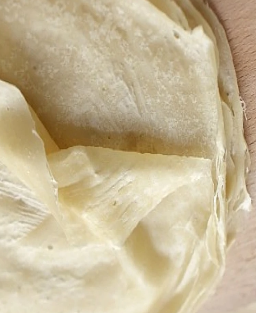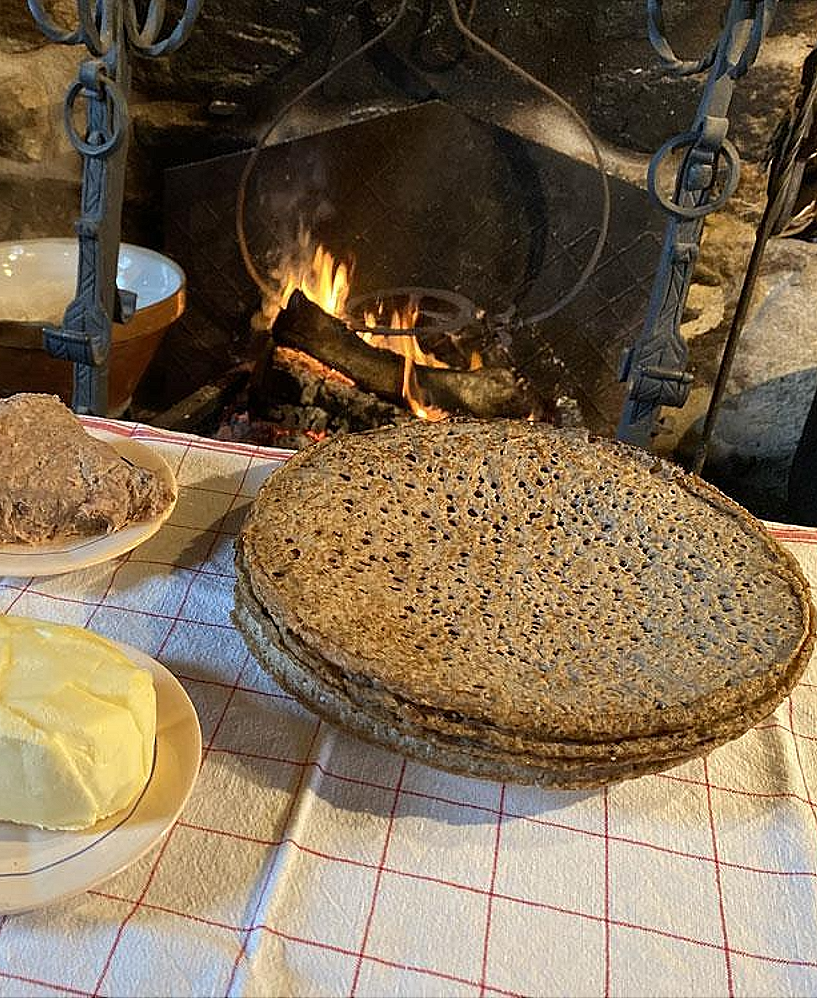

A thick, yeast-leavened buckwheat flatbread from the Massif Central, traditionally used as a rustic farmhouse bread.
The galetou is a thick buckwheat cake leavened with baker’s yeast, a rural specialty of the Limousin region historically served with stews and game dishes.
Discover the traditional galetou recipe, an emblematic specialty of Limousin cuisine, known for its rural heritage, its function as bread, and its distinctive fermented buckwheat texture.
Tourtou (Lower Limousin, mainly Corrèze)
Galetou (Upper Limousin: Haute-Vienne, Creuse)
Bourriol (Haute-Auvergne and Rouergue: Cantal, Aveyron)
Pompe (Limousin highlands and northern Cantal)
Begnis (Puy-de-Dôme, Tauves / Saint-Sauves area)
Buckwheat tourte (documented French-language forms)
Pascade (Aveyron)
100% buckwheat or predominantly buckwheat
Fairly thick (approx. 1.5–2 cm)
Cooked in a cast-iron pan
Served warm alongside sauced dishes
Buckwheat / wheat flour blend more common
More flexible dough
Sometimes prepared as one large shared flatbread
Denser cake
Longer fermentation
Pan-seared, sometimes finished briefly in the oven (marginal practice)
More rustic and often thicker
Distinct local name
Not to be confused with apple “pompes” (sweet apple pastries)
Traditionally made with whey
Historically eaten plain, without filling
Texture differs from Limousin versions
Cooked on one side only
Highly localized variation
Distinct Aveyron-style variant
Characteristic texture and shape
Partial substitution of buckwheat with wheat flour
Shorter fermentation
Served as an appetizer or occasional dish
Miniaturized formats
Rolled or cut into shapes
Filled with farmhouse cheeses, rillettes, fermented vegetables
Galetou/tourtou variations are structured according to:
Geographic area
Local naming
Technical adaptations (flour blends, fermentation, cooking methods)
Contemporary reinterpretations
They form a regional continuum of buckwheat flatbreads with closely related yet distinct practices.
Estimated emergence: 17th–18th century, in a wheat-poor rural economy
Early ingredients: water, buckwheat flour, sourdough or baking yeast
Later additions: wheat flour (19th century), standardized baker’s yeast
No official codification
Modern adaptations:
lighter textures
appetizer formats
gluten-free experiments (outside tradition)
T65 wheat flour possible (home and restaurant use)
Sourdough possible but not standardized
Incompatible with any future strict certification
Dish type: Other (bread / flatbread)
Service: Traditional, catering
Yield: 8 portions
Technical level: Intermediate
Country: France
Region: Limousin (Haute-Vienne, Creuse, Corrèze)
Official status: None
Origin: Oral rural transmission
Codified recipe: No
Rustic, thick flatbread
Soft, airy crumb
Toasted cereal aromas
Yeasted buckwheat batter
Direct pan cooking
Used as a bread accompaniment
Stainless steel mixing bowl
Whisk or spatula
Cast-iron skillet
Wide spatula
Buckwheat flour: 800 g
Wheat flour (T65): 200 g
Lukewarm water: 900 ml
Fresh baker’s yeast: 20 g
Fine salt: 18 g
Yield: 8 galetous (180–200 g each)
Setup: 15 minutes
Active preparation: 20 minutes
Fermentation: 1 hour
Cooking: 5 minutes per piece
Serving temperature: 55–60 °C (warm)
Flexible crumb with fine, even air pockets
Fully cooked interior without over-browning
Consistent diameter and thickness
Follow hygiene procedures
Weigh and prepare all ingredients
Organize work zones: mixing, fermentation, cooking, finishing
Dissolve yeast in part of the liquid (25–30 °C)
Combine flours and salt
Add liquid and mix until smooth, slightly thick batter
Target batter temperature: 24–26 °C
Cover and ferment 1 hour at 24–26 °C
Signs: slight rise, fine surface bubbles
Stir gently before cooking
Preheat lightly greased cast-iron skillet
Ladle batter without spreading too thin
Cook until golden underneath, then flip
Maintain consistent portioning and timing
Cool briefly on rack under cloth
Keep warm without drying out
Serve plain or filled
Batter temperature
Proper fermentation development
Even cooking
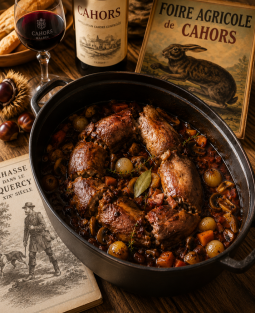
Traditional: game stew, ragout, fricassee
Modern: rillettes, fresh cheese
Beverages: light red wine, dry cider
Gluten (if wheat flour included; buckwheat may contain traces)
Buckwheat: hardy pseudocereal
Galetou: leavened flatbread used as bread substitute
Institut d’Estudis Occitans dau Lemosin (2021): ethnolinguistic research on buckwheat traditions
La Biaça: Occitan oral heritage archives
1970s oral testimonies on perpetual sourdough practice
Albert Goursaud – La société rurale traditionnelle en Limousin
Lemouzi journal, issue 169 bis (2004)
Noël Graveline – Recettes traditionnelles du Limousin
Jean-Pierre Poulain & Yves Guimbail – Le Limousin gourmand
General Inventory of Cultural Heritage (Nouvelle-Aquitaine)
TV program Des Racines et des Ailes (2014)
General works on Limousin cuisine

A thick, yeast-leavened buckwheat flatbread from the Massif Central, traditionally used as a rustic farmhouse bread.
The galetou is a thick buckwheat cake leavened with baker’s yeast, a rural specialty of the Limousin region historically served with stews and game dishes.
Discover the traditional galetou recipe, an emblematic specialty of Limousin cuisine, known for its rural heritage, its function as bread, and its distinctive fermented buckwheat texture.
Tourtou (Lower Limousin, mainly Corrèze)
Galetou (Upper Limousin: Haute-Vienne, Creuse)
Bourriol (Haute-Auvergne and Rouergue: Cantal, Aveyron)
Pompe (Limousin highlands and northern Cantal)
Begnis (Puy-de-Dôme, Tauves / Saint-Sauves area)
Buckwheat tourte (documented French-language forms)
Pascade (Aveyron)
100% buckwheat or predominantly buckwheat
Fairly thick (approx. 1.5–2 cm)
Cooked in a cast-iron pan
Served warm alongside sauced dishes
Buckwheat / wheat flour blend more common
More flexible dough
Sometimes prepared as one large shared flatbread
Denser cake
Longer fermentation
Pan-seared, sometimes finished briefly in the oven (marginal practice)
More rustic and often thicker
Distinct local name
Not to be confused with apple “pompes” (sweet apple pastries)
Traditionally made with whey
Historically eaten plain, without filling
Texture differs from Limousin versions
Cooked on one side only
Highly localized variation
Distinct Aveyron-style variant
Characteristic texture and shape
Partial substitution of buckwheat with wheat flour
Shorter fermentation
Served as an appetizer or occasional dish
Miniaturized formats
Rolled or cut into shapes
Filled with farmhouse cheeses, rillettes, fermented vegetables
Galetou/tourtou variations are structured according to:
Geographic area
Local naming
Technical adaptations (flour blends, fermentation, cooking methods)
Contemporary reinterpretations
They form a regional continuum of buckwheat flatbreads with closely related yet distinct practices.
Estimated emergence: 17th–18th century, in a wheat-poor rural economy
Early ingredients: water, buckwheat flour, sourdough or baking yeast
Later additions: wheat flour (19th century), standardized baker’s yeast
No official codification
Modern adaptations:
lighter textures
appetizer formats
gluten-free experiments (outside tradition)
T65 wheat flour possible (home and restaurant use)
Sourdough possible but not standardized
Incompatible with any future strict certification
Dish type: Other (bread / flatbread)
Service: Traditional, catering
Yield: 8 portions
Technical level: Intermediate
Country: France
Region: Limousin (Haute-Vienne, Creuse, Corrèze)
Official status: None
Origin: Oral rural transmission
Codified recipe: No
Rustic, thick flatbread
Soft, airy crumb
Toasted cereal aromas
Yeasted buckwheat batter
Direct pan cooking
Used as a bread accompaniment
Stainless steel mixing bowl
Whisk or spatula
Cast-iron skillet
Wide spatula
Buckwheat flour: 800 g
Wheat flour (T65): 200 g
Lukewarm water: 900 ml
Fresh baker’s yeast: 20 g
Fine salt: 18 g
Yield: 8 galetous (180–200 g each)
Setup: 15 minutes
Active preparation: 20 minutes
Fermentation: 1 hour
Cooking: 5 minutes per piece
Serving temperature: 55–60 °C (warm)
Flexible crumb with fine, even air pockets
Fully cooked interior without over-browning
Consistent diameter and thickness
Follow hygiene procedures
Weigh and prepare all ingredients
Organize work zones: mixing, fermentation, cooking, finishing
Dissolve yeast in part of the liquid (25–30 °C)
Combine flours and salt
Add liquid and mix until smooth, slightly thick batter
Target batter temperature: 24–26 °C
Cover and ferment 1 hour at 24–26 °C
Signs: slight rise, fine surface bubbles
Stir gently before cooking
Preheat lightly greased cast-iron skillet
Ladle batter without spreading too thin
Cook until golden underneath, then flip
Maintain consistent portioning and timing
Cool briefly on rack under cloth
Keep warm without drying out
Serve plain or filled
Batter temperature
Proper fermentation development
Even cooking
Traditional: game stew, ragout, fricassee
Modern: rillettes, fresh cheese
Beverages: light red wine, dry cider
Gluten (if wheat flour included; buckwheat may contain traces)
Buckwheat: hardy pseudocereal
Galetou: leavened flatbread used as bread substitute
Institut d’Estudis Occitans dau Lemosin (2021): ethnolinguistic research on buckwheat traditions
La Biaça: Occitan oral heritage archives
1970s oral testimonies on perpetual sourdough practice
Albert Goursaud – La société rurale traditionnelle en Limousin
Lemouzi journal, issue 169 bis (2004)
Noël Graveline – Recettes traditionnelles du Limousin
Jean-Pierre Poulain & Yves Guimbail – Le Limousin gourmand
General Inventory of Cultural Heritage (Nouvelle-Aquitaine)
TV program Des Racines et des Ailes (2014)
General works on Limousin cuisine