
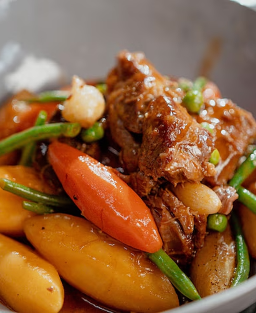
Navarin d'Agneau Printanier
Traditional French Spring Lamb Navarin with New Vegetables
Traditional Navarin d’Agneau Recipe: the classic French spring lamb stew with new-season vegetables
Original name: Navarin d’agneau (French)
Etymology: Contested — two main theories coexist. One links the term to the French word for turnip (navet → navarin), a key vegetable in the recipe. The other refers to the Battle of Navarino (1827). The vegetable-based hypothesis, supported by the first 19th‑century gastronomic dictionaries, is the most widely accepted.
Slow-braised lamb stew with spring vegetables — French covered‑casserole braising technique — a heritage dish from France’s pastoral terroirs
Discover the traditional recipe for navarin d’agneau, an emblematic specialty of French country cooking, renowned for its pastoral heritage and its slow-simmered method with new spring vegetables.
Name in original language: Navarin d’agneau — French
Attested dialectal variants:
“Haricot de mouton” (historic name, 18th century, designating the same dish made with mutton and turnips)
“Navarin printanier” (codified version with new-season vegetables)
Lexicographic sources: Littré (1873), Larousse Gastronomique (1938), Carême, Escoffier.
Main variants
Île‑de‑France / classic version:
Lamb from the salt meadows or Rambouillet, Pardailhan or Nantes turnips, Charlotte potatoes, Nantes carrots, fresh peas, brown veal stock. No tomato in the earliest versions. Served in a cocotte or small casserole.
Languedoc version:
Sisteron lamb, white coco beans replacing part of the turnips, thyme and bay from the South, olive oil instead of butter. Deeper coloration, more reduced sauce.
Normandy version:
Cotentin or Normandy salt‑meadow lamb, crème fraîche added at the end of cooking, dry cider replacing part of the white wine. Rounder, creamier sauce.
Family diaspora version:
Turnips replaced by potatoes only, frozen lamb, cumin and coriander added (Maghrebi influence), pressure cooker used to reduce cooking times.
Contemporary gastronomic version:
Pink‑roasted rack of lamb, vegetables turned and glazed separately, reduced glossy lamb jus finished with butter, plated individually in deep dishes, fresh herbs to finish.
No PGI or PDO label exists for navarin d’agneau as a dish. The lamb used may carry geographical indications (PGI): Agneau de Sisteron, Agneau du Périgord, Agneau de Lozère, or quality mentions such as Agneau de Pauillac.
Estimated appearance: mid‑19th century. The term “navarin” emerges between 1830 and 1850. The recipe previously existed under the name “haricot de mouton”.
Ingredients that have disappeared:
Mutton (replaced by lamb in the 20th century)
No tomato originally (introduced after 1850)
Homemade veal stock often replaced by industrial bouillons in institutional catering
Added ingredients:
Tomato paste (late 19th century)
New potatoes (spring version codified by Escoffier, 1903)
Standardisation: no official product specification for navarin itself. The “printanier” version is precisely described in Escoffier’s Guide Culinaire.
Modern adaptations: lighter versions, possible plant‑forward interpretations, gluten‑free option (cornstarch), organic ingredients available for all components.
Domestic use:
Shoulder can be replaced with neck or shank. Veal stock can be replaced with chicken stock. White wine can be replaced with apple juice or stock.
Foodservice use:
Approved frozen lamb, professional powdered veal stock, frozen vegetables outside peak season.
PGI incompatibilities:
Using uncertified or frozen lamb is incompatible with mentioning “Agneau de Sisteron PGI” (or any other PGI) on the menu.
Dish type: Main course
Service: Traditional / Fine dining / Institutional catering (simplified version)
Portions: 4 to 6 depending on portioning
Technical level: Intermediate
Target audience: General public / Professionals / Vocational training (CAP–BEP–Vocational baccalaureate in cookery)
Country: France
Region / micro‑terroir: No single region. A national dish of French bourgeois and country cooking. Regions of excellence: Provence‑Alpes‑Côte d’Azur (Sisteron), Normandy (Cotentin), Languedoc, Île‑de‑France.
Official status: No PGI or PDO for the dish itself. A classic recipe codified in French gastronomic literature.
Year of codification:
First precise written description: 1867 (Urbain Dubois, Cuisine classique).
Definitive codification: 1903 (Escoffier, Le Guide culinaire).
Confrérie: No brotherhood devoted specifically to navarin. Lamb from certain regions is defended by local breeders’ unions (for example, the Sisteron lamb producers’ union).
Codified recipe: Yes — Escoffier’s Guide Culinaire (1903) and Larousse Gastronomique.
Traditional required products: lamb (shoulder or neck), turnips, carrots, onions, bouquet garni.
Traditional required techniques: browning the meat, dusting with flour, deglazing and moistening with brown stock, slow covered cooking.
Traditional prohibitions:
Boiled meat without prior browning, absence of a proper cooking stock, vegetables thrown in at the start of cooking.
Saying
“At Easter, lamb comes to the table as it comes into the world: tender and defenceless.” Pastoral proverb from southern France, oral tradition, undated.
Legend or symbolic tale
In the Alpilles, they say that the shepherdess who prepared the first spring navarin never added all the vegetables at once, but slipped them into the pot one by one, “the way you sit children at the table — each in their own time”. This gesture, they say, guaranteed the tenderness of the meat and the generosity of the coming season. Oral tradition collected in Provence, not officially dated.
Origin of the dish
Navarin d’agneau has its roots in early 19th‑century French country cooking. At that time, mutton — not lamb — was the standard farm animal, slaughtered late in life after it had provided wool or milk. The old recipe, known as “haricot de mouton”, contained no beans but turnips; the term derives from old French halicot, meaning “meat stew”. This modest dish was designed to use the less noble cuts — neck, breast, shoulder — made tender by long simmering in a flavoured stock.
Navarin’s place in the agricultural calendar is closely tied to spring. As winter ends and the first new vegetables appear in the kitchen garden, the dish reaches its most accomplished form. Lambs born at the start of the year are ready for slaughter at Easter, the festival of renewal. In essence, navarin d’agneau is an Easter dish, celebrating renewed abundance and the change of season.
In the 18th century, “haricot de mouton” appears in bourgeois cookbooks. In the 19th century, under the influence of rising Parisian gastronomy, the dish becomes more refined and lighter, adopts young lamb and gradually abandons tough old mutton. The name “navarin” stabilises around 1850.
Cultural exchanges and influences
Navarin spread across France along the great pastoral routes — transhumance between northern plains and southern uplands — and with rural migration towards industrial cities in the 19th century. Ladies’ maids and cooks travelling with bourgeois Parisian households carried their regional recipes with them, adapting them to whatever the Paris food markets could offer.
The introduction of tomato paste from the late 19th century slightly changed the colour and aromatic depth of the sauce. Potato, already well established since Parmentier, naturally found its place in the springtime version. Green vegetables reinforced the seasonal identity of the dish.
Abroad, related dishes exist: Irish stew in Ireland, Lancashire hotpot in England, agnello in umido in Italy. These stews share the same logic of slowly simmering inexpensive cuts, but did not directly influence navarin, which emerged from a separate French gastronomic tradition.
Technical and culinary evolution
The shift from open hearth to cast‑iron range in the 19th century profoundly changed the way navarin was cooked. The cast‑iron cocotte allowed better temperature control, more even heat distribution and more efficient covered braising.
In Le Guide Culinaire (1903), Escoffier codifies two distinct versions: the ordinary navarin (brown stock, root vegetables) and the spring navarin (new vegetables glazed separately, assembled at the last minute). This distinction marks the dish’s entry into restaurant cuisine.
In the 20th century, large‑scale catering adopted navarin, often at the expense of quality: overcooking, mushy vegetables, meat pre‑boiled without browning. In reaction, the chefs of the 1970s–1980s, driven by Nouvelle Cuisine, shortened cooking times, glazed vegetables separately, and served the meat just cooked through. Today, contemporary chefs work on the texture of each component separately before combining them, while preserving the spirit of the dish: generosity, warmth and a celebration of spring.
Michelin‑starred chefs
Alain Ducasse — Le Louis XV, Monaco / Plaza Athénée, Paris: pared‑down pan‑roasted version, glossy lamb jus, individually glazed turned vegetables.
Guy Savoy — Restaurant Guy Savoy, Paris: revisited navarin with Pyrenean milk‑fed lamb, concentrated broth, served in copper cocottes.
Michel Guérard — Les Prés d’Eugénie, Eugénie‑les‑Bains (3★): “cuisine minceur” version, lean lamb, steamed vegetables, reduced sauce without flour.
Georges Blanc — Vonnas (3★): Bresse‑style Easter lamb navarin, garden vegetables, served in a traditional soup tureen.
Éric Fréchon — Épicure, Hôtel Le Bristol, Paris (3★): grand‑hotel version, pink‑roasted rack of lamb, spring vegetables, tarragon‑scented jus.
Pierre Gagnaire — Paris (3★): deconstructed navarin in three successive services — meat, vegetables, broth.
Anne‑Sophie Pic — Maison Pic, Valence (3★): delicate aromatic version, Sisteron lamb, vegetables perfumed with lavender blossom and lemon thyme.
Régis Marcon — Régis & Jacques Marcon, Saint‑Bonnet‑le‑Froid (3★): local lamb, wild mushrooms, deeply rooted in the Haute‑Loire terroir.
Local and regional chefs
Michel Portos — Le Saint‑James, Bordeaux: Pauillac lamb, vegetables from the Marché des Capucins, gourmet bistro style.
Élise Gourmelen — Auberge de la Fontaine, Vaucluse: spring navarin in the Provençal tradition, Sisteron lamb, wild herbs.
Laurent Petit — Clos des Sens, Annecy (2★): Alpine lamb, lakeside vegetables, infusion of Alpine plants in the broth.
Jean‑Luc Rabanel — L’Atelier de Jean‑Luc Rabanel, Arles (2★): Crau lamb, organic vegetables, herb sauce from the Camargue.
Hélène Darroze — Paris / London: Gascon‑inspired navarin, Périgord lamb, haricots tarbais, pink Lautrec garlic.
Thierry Marx — Sur Mesure by Thierry Marx, Paris (2★): molecular approach, navarin jelly, low‑temperature confit lamb, pea emulsion.
Popular traditional establishments
Chez Denise — La Tour de Montlhéry, Paris 1st: navarin on the menu since 1951, served in cast‑iron cocottes, hearty and rustic.
Le Pot‑au‑Feu, Paris: an institution of Parisian bourgeois cooking, spring navarin served every Tuesday from March to June.
Auberge du Vieux Moulin, Chartres: navarin from the Beauce plain, local lamb, Sunday set menu since the 1960s.
Brasserie Lipp, Paris 6th: brasserie‑style navarin, generous, thickened sauce, classic garnish.
L’Auberge d’Oc, Montpellier: Languedoc‑style navarin with white beans, garrigue lamb, family tradition over three generations.
La Mère Brazier, Lyon: haricot de mouton and Lyon‑style navarin, homemade veal stock, terrine service.
Presentation
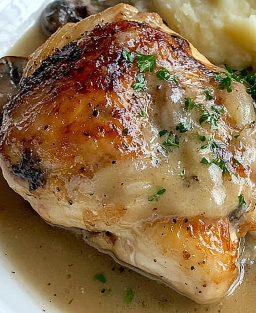
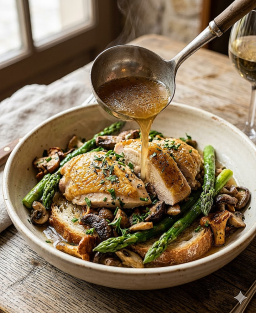
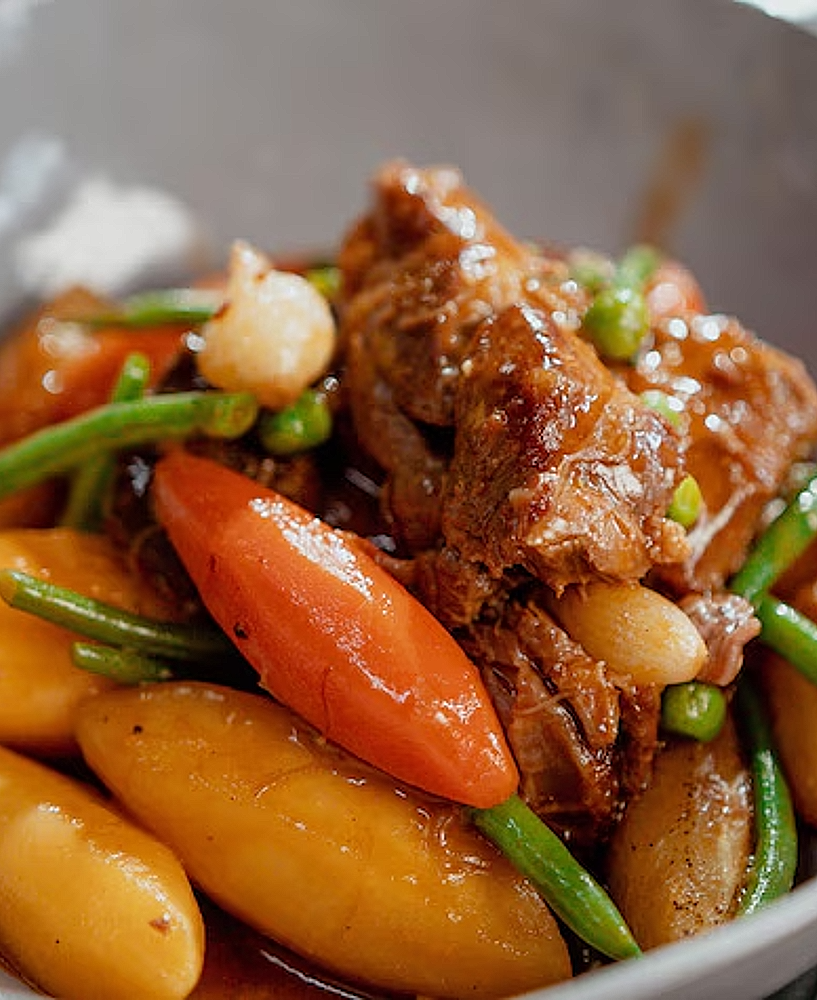
Appearance: amber‑brown stew served in a cocotte or small casserole. Irregular chunks of meat (60–80 g), colourful vegetables (orange carrots, creamy white turnips, green peas and beans), glossy coating sauce.
Texture: melting but intact pieces of lamb, vegetables tender yet holding their shape, syrupy sauce lightly thickened by flour and the lamb’s natural collagen.
Dominant aromas: herbal (thyme, bay, parsley), fatty (lamb fat), earthy (turnips, carrots), slightly sweet (glazed vegetables), with a deep umami backbone from the lamb juices and bones.
Culinary specifics
Main cooking method: covered braising in a cocotte over low heat, 1½ to 2 hours.
Key techniques: high‑heat browning, dusting with flour (to thicken the sauce), gradual moistening, staggered addition of vegetables according to their cooking time.
Signature ingredients: lamb shoulder or neck, turnips, carrots, bouquet garni, brown stock.
Essential equipment
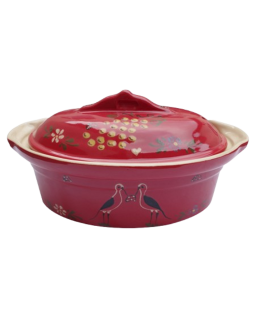
Enamelled cast‑iron cocotte (or high‑sided sauté pan) — essential.
Chef’s knife and cutting board.
Fine sieve or strainer for the stock.
Probe thermometer.
Skimmer / kitchen tongs.
Meat
Boned lamb shoulder, cut into 60–80 g pieces: 1.5 kg
Accepted variants: neck, shank, boned leg.
Traditional prohibition: minced meat or pre‑cooked lamb.
Vegetables
New carrots: 4 (300 g)
New turnips: 4 (300 g)
Fresh or frozen peas: 200 g
Fine green beans: 200 g
Baby potatoes: 500 g
Yellow onions: 2 (200 g)
Garlic: 4 cloves
Stock and thickening
Brown veal stock (homemade or professional): 500 ml
Dry white wine (Muscadet, Mâcon): 200 ml
Tomato paste: 2 tbsp
All‑purpose wheat flour: 2 tbsp (replace with cornstarch for a gluten‑free version)
Olive oil or clarified butter: 3 tbsp
Seasoning
Bouquet garni (thyme, bay leaf, parsley stems): 1
Caster sugar: 1 tsp
Fine salt, freshly ground black pepper
Total yield: approx. 2.4 kg — 6 servings of 400 g (120 g meat + 200 g vegetables + 80 g sauce).
General information
Mise en place: 30 min
Active prep: 40 min
Cooking time: 1 h 45 to 2 h
Total time: 2 h 30 to 2 h 45
Yield: 6 servings / 2.4 kg
Weight per serving: 400 g
Serving temperature: 75–80 °C
Technical objectives
Final texture: melting lamb, syrupy coating sauce, tender vegetables that are not overcooked.
Meat doneness: cooked through to about 85 °C at the core, collagen fully gelatinised.
Regularity: lamb pieces calibrated at 60–80 g, evenly cut vegetables, homogeneous sauce.
Step‑by‑step method
Mise en place
Remove the lamb from the fridge 30 minutes before cooking. Cut the vegetables: carrots into 3 mm “sifflets”, turnips into quarters, onions finely chopped, garlic crushed. Prepare all ingredients in full mise en place. Preheat the cast‑iron cocotte over medium‑high heat (around 200–220 °C).
Browning and aromatics
Oil the cocotte. Season the lamb pieces with salt and pepper. Brown in 2–3 batches without crowding the pan: 3–4 minutes per side until deep golden brown on all faces. Set aside. In the same cocotte, pour off two‑thirds of the fat, then gently sauté the onions and garlic for 3 minutes. Add the sugar and let it caramelise for 1 minute. Return the lamb to the pot. Sprinkle with the flour (to “singer”) and stir over high heat for 2 minutes to cook out the raw flour.
Deglazing and braising
Stir in the tomato paste. Deglaze with white wine, scraping the bottom to dissolve the browned bits. Add the hot veal stock. Drop in the bouquet garni. Bring to a gentle simmer. Cover and reduce the heat (85–90 °C). Simmer gently for about 45 minutes.
Adding root vegetables
Add carrots, turnips and baby potatoes. Continue cooking, covered, for a further 30 minutes.
Finishing with green vegetables
Add green beans and peas. Cook uncovered for about 10 minutes. Adjust seasoning. Remove the bouquet garni. If desired, finish the sauce off the heat with a small knob of cold butter.
Plating and service
Serve in the cooking cocotte or in pre‑warmed deep plates (about 65 °C). Distribute meat and vegetables evenly. Spoon over the sauce. Finish with chopped flat‑leaf parsley and, if wished, a pinch of fleur de sel.
Core meat temperature: minimum 85 °C at the end of braising.
Meat coloration: deep golden crust, no grey, boiled‑looking patches.
Sauce texture: light coating consistency — a streak drawn with the finger on the back of a spoon should hold for about 3 seconds.
Root vegetables: tender, knife tip slides in with no resistance.
Green vegetables: al dente, bright green, not overcooked.
Tolerances and corrections
Sauce too thin → reduce uncovered for 10–15 minutes; if needed, lightly thicken with 1 tsp cornstarch diluted in cold water.
Sauce too thick → loosen with hot stock, never with water.
Meat too firm → continue covered cooking for a further 20 minutes.
Vegetables overcooked → replace with a fresh batch cooked separately.
Navarin sauce
Type: lightly thickened brown stew sauce — brown stock bound with flour and reduced by evaporation.
Base technique: in‑pot brown roux (dusting with flour) plus natural reduction.
Critical parameters: flour‑to‑liquid ratio: 2 tbsp flour for around 700 ml liquid; concentration by gentle reduction.
Adjustments: too thick → gradually add hot stock; too thin → further reduction or a touch of diluted starch; too bitter → a pinch of sugar plus a small knob of butter.
Traditional condiments
Dijon mustard (served on the side, never in the sauce): classic acidic counterpoint.
Fine gherkins: acidity and crunch.
Country sourdough bread: essential for soaking up the juices.
Storage
Shelf life: 3 days in the fridge at +4 °C; up to 3 months in the freezer.
Packaging: surface covered with cling film, airtight jar or vacuum bag.
Risks: jelly‑like set when cold (normal — gently reheat with a splash of stock).
Serving temperature: 75–80 °C — about 80 ml sauce per serving.
Cold chain
Lamb delivery temperature: ≤ +4 °C — checked with a probe on receipt.
Storage: refrigerated at +2/+4 °C, separate from vegetables and dairy.
Use‑by dates: labels checked systematically.
Core‑temperature cooking
Regulatory minimum: +63 °C at the core (French restaurant regulations).
Minimum holding time: 3 minutes at +63 °C.
Method: calibrated probe in the thickest part of the meat.
CCP (HACCP): critical limit +63 °C — if not reached, continue cooking.
Cooling
Rapid cooling: from +63 °C to +10 °C in under 2 hours (blast chiller).
Storage: ≤ +4 °C — shelf life after cooling: 3 days.
Reheating: back up to +63 °C at the core in under 1 hour — only one reheating allowed.
Records: mandatory monitoring sheet.
Cross‑contamination prevention
Colour‑coded equipment: red = raw lamb; green = vegetables; white = cooked foods.
Preparation order: from the “cleanest” to the “dirtiest”.
Allergens: specific protocol, dedicated utensils, clear labelling.
Gluten (wheat) — PRESENT (flour used to thicken).
Milk — POTENTIALLY PRESENT (optional butter).
Mustard — PRESENT (as a traditional table condiment).
Sulphites — POTENTIALLY PRESENT (industrial stocks, white wine).
Celery, peanuts, tree nuts, soya, eggs, fish, crustaceans, molluscs, sesame, lupin — ABSENT.
Always check technical sheets for industrial stocks and bouillons for possible sulphites.
Common mistakes
Overcrowded cocotte → grey, boiled meat: always brown in batches.
Flour not properly cooked → raw flour taste: dust over high heat and stir well for 2 minutes before adding liquid.
Green vegetables added too early → dull yellow colour, mushy texture: add peas and beans only for the last 10 minutes.
Heat too high → sauce reduced before the meat is tender: keep at a gentle simmer, never a rolling boil.
Lamb too cold → poor browning: bring to room temperature 30 minutes before cooking.
Texture tips
Melting meat: shoulder and neck are rich in collagen that gelatinises after about 1½ hours at around 85 °C — do not cut the cooking time short.
Coating sauce: natural collagen plus flour create a stable liaison — do not over‑thicken.
Al dente vegetables: add green vegetables last and cook uncovered to preserve colour and bite.
Flavour tips
Aromatics base: stock quality accounts for roughly 40% of the final flavour.
Natural flavour enhancers: a few celery leaves in the bouquet garni boost earthy notes.
Timing: bouquet garni at the start for depth, chopped parsley at the end for freshness.
Sauce too sweet: reduce tomato paste and sugar; rebalance with a few drops of red wine vinegar.
Chef’s advice
Signature technique: decant the cooking juices halfway through, skim off the fat, reduce by half separately, then return to the stew — for a more concentrated, glossy sauce.
Trade secret: navarin is always better reheated the next day — ideal for professional service.
Seasonal twists: in summer, replace turnips with courgettes and yellow beans; in autumn, add button mushrooms or chanterelles.
Consistency: weigh the flour, measure stock with a jug — ratios are key to reproducible results.
Essential: enamelled cast‑iron cocotte (without it, heat distribution is compromised).
Recommended: probe thermometer, blast chiller in professional kitchens.
Home alternative: high‑sided sauté pan with a tight‑fitting lid if no cast‑iron cocotte is available.
Service and plating
Plates: deep plates, pre‑warmed to at least 65 °C.
Serving temperature: 75–80 °C.
Traditional service: in a cocotte placed in the centre of the table.
Fine‑dining plating: lamb arranged first, vegetables neatly placed, sauce served from a sauceboat, finely chopped herbs, crisp bread tuile as garnish.
Traditional sides: country bread, jar of mustard, gherkins.
Contemporary sides: potato mousseline, turnip crisps, parsley oil.
Wine pairings
Main appellation: AOC Saint‑Joseph Rouge (Northern Rhône) — Syrah with herbal, peppery, lightly spicy profile, a classic match with lamb.
Ideal vintage: 2019 — ripe tannins, black‑fruit and violet notes.
Accessible vintage: 2021 — fruit‑driven, less concentrated, to be drunk young.
Cellar vintage: 2015 — tight when young, fully open at 10 years.
Serving temperature: 16–17 °C — Burgundy‑shaped glass.
Other Rhône: Crozes‑Hermitage, Cornas, Gigondas.
Loire alternatives: Saumur‑Champigny, Bourgueil (Cabernet Franc) — lighter, suits the spring version.
Languedoc alternatives: Pic Saint‑Loup, Corbières — ideal with lamb from the garrigue.
Beers and ciders
Style: amber Märzen‑style lager or malty brown ale — toasted, lightly sweet profile.
Serving temperature: 10–12 °C.
Alcohol‑free options
Juice: artisanal non‑fermented dark grape juice (light tannins) or beetroot‑apple juice (earthy notes echoing the turnip).
Tea: lightly brewed Pu‑erh (about 3 minutes) — earthy, umami notes, excellent pairing.
Water: still water with moderate mineral content — avoid very sparkling waters.
Regional and heritage pairings
Cheeses: Tomme de Savoie, Ossau‑Iraty (echo with Basque lamb), farmhouse Saint‑Nectaire.
Bread: country sourdough, herb‑flavoured fougasse, garlic bread.
Starter ideas: country terrine, lamb rillettes from the Pyrenees.
Values based on the standard recipe for 6 servings.
Regulatory block (EU 1169/2011)
Energy: 485 kcal / 2 030 kJ
Total fat: 22 g
of which saturates: 8.5 g
monounsaturates: 9.2 g
polyunsaturates: 2.1 g
Total carbohydrates: 28 g
of which sugars: 6.5 g
Protein: 38 g
Dietary fibre: 5.2 g
Sodium: 620 mg
Salt equivalent (NaCl): 1.58 g
Energy distribution: Fat 41% / Carbohydrates 23% / Protein 31% / Fibre 5%.
Extended block
Cholesterol: 95 mg
Omega‑3 (ALA): 180 mg — Omega‑6 (LA): 640 mg
Estimated glycaemic index (GI): ≈ 45 (low, thanks to protein and fibre).
Calcium: 48 mg — Iron: 3.8 mg (good source).
Zinc: 5.2 mg — Magnesium: 42 mg — Potassium: 810 mg.
Vitamin B12: 2.8 µg (excellent source).
Overall: high nutritional density, favourable protein‑to‑calorie ratio, rich in micronutrients.
Gluten‑free: use cornstarch or rice flour to thicken. Always check labels on industrial stocks.
Lactose‑free: omit butter entirely, use only olive oil.
Vegetarian: replace lamb with whole roasted cauliflower or shiitake mushrooms plus chickpeas; use vegetable stock.
Vegan: same as vegetarian plus fully plant‑based umami stock enriched with kombu and miso.
Low‑salt: halve the salt content, boost flavour with fresh herbs, lemon juice, orange zest.
Lighter version: trim visible fat from the meat, halve the fat used for browning, omit the final butter enrichment, choose leg of lamb.
Braising: slow cooking in a small amount of liquid in a covered cocotte over low heat, allowing collagen to gelatinise and tough fibres to soften.
To dust with flour (singer): to sprinkle browned ingredients with flour so the sauce thickens during cooking.
Browning (rissolage): searing meat in very hot fat to trigger the Maillard reaction and develop flavour.
Bouquet garni: small bundle of herbs (thyme, bay, parsley) tied together and infused in the cooking liquid.
Brown veal stock: concentrated broth made by roasting veal bones and trimmings, then simmering and reducing — the base of classic brown sauces.
Haricot de mouton: historic name (17th–19th century) of navarin, unrelated to beans; from old French halicot = stew.
Navarin printanier: springtime version of navarin with new vegetables, codified by Escoffier.
Deglazing: pouring liquid into a hot pan to dissolve and lift caramelised cooking juices.
Finishing with butter (monter au beurre): emulsifying small knobs of cold butter into a sauce off the heat to enrich and give shine.
After the initial browning on the stovetop, navarin can be finished in the oven.
Mode: fan‑assisted heat.
Temperature: 160 °C.
Humidity / steam: 0% (tightly covered cocotte).
Duration: 1 h 30 to 1 h 45 depending on portion size.
Core temperature: 85 °C (with built‑in probe for combi ovens).
Resting time after cooking: 10 minutes with the lid off before serving.
Combi oven (RATIONAL type): “cocotte”‑style programme — 160 °C hot‑air mode, 0% humidity, probe at 85 °C.
Standard oven: preheat for 20 minutes; check core temperature manually at the end.
Primary sources
ESCOFFIER, Auguste. Le Guide Culinaire. Flammarion, 1903 (2001 reprint). Codifies the definitive versions of ordinary and spring navarin.
DUBOIS, Urbain & BERNARD, Émile. La Cuisine classique. E. Dentu, 1867. First precise description of navarin as a lamb stew.
CARÊME, Marie‑Antoine. L’Art de la cuisine française au XIXe siècle. 1833–1835. Mentions haricot de mouton as ancestor of navarin.
MONTAGNE, Prosper. Larousse Gastronomique. Larousse, 1938. Entry “Navarin”, with etymology and recipe.
Academic and institutional sources
ANSES — CIQUAL 2020: French food composition table.
INAO — PGI specifications for Agneau de Sisteron, Agneau du Périgord, Agneau de Lozère.
EU Hygiene Package (Regulations EC 852/2004 and 853/2004).
French restaurant Good Hygiene Practice guides.
Contemporary reference works
BOCUSE, Paul. La Cuisine du marché. Flammarion, 1976.
ROBUCHON, Joël. Le Grand Livre de cuisine. Larousse, 2012.
THIS, Hervé. La Cuisine note à note. Belin, 2012 — physico‑chemical analysis of collagen gelatinisation and Maillard reactions.
COLLECTIVE. Les Classiques de la cuisine française. Le Cordon Bleu, 2018.
Navarin d'Agneau Printanier
Traditional French Spring Lamb Navarin with New Vegetables
Traditional Navarin d’Agneau Recipe: the classic French spring lamb stew with new-season vegetables
Original name: Navarin d’agneau (French)
Etymology: Contested — two main theories coexist. One links the term to the French word for turnip (navet → navarin), a key vegetable in the recipe. The other refers to the Battle of Navarino (1827). The vegetable-based hypothesis, supported by the first 19th‑century gastronomic dictionaries, is the most widely accepted.
Slow-braised lamb stew with spring vegetables — French covered‑casserole braising technique — a heritage dish from France’s pastoral terroirs
Discover the traditional recipe for navarin d’agneau, an emblematic specialty of French country cooking, renowned for its pastoral heritage and its slow-simmered method with new spring vegetables.
Name in original language: Navarin d’agneau — French
Attested dialectal variants:
“Haricot de mouton” (historic name, 18th century, designating the same dish made with mutton and turnips)
“Navarin printanier” (codified version with new-season vegetables)
Lexicographic sources: Littré (1873), Larousse Gastronomique (1938), Carême, Escoffier.
Main variants
Île‑de‑France / classic version:
Lamb from the salt meadows or Rambouillet, Pardailhan or Nantes turnips, Charlotte potatoes, Nantes carrots, fresh peas, brown veal stock. No tomato in the earliest versions. Served in a cocotte or small casserole.
Languedoc version:
Sisteron lamb, white coco beans replacing part of the turnips, thyme and bay from the South, olive oil instead of butter. Deeper coloration, more reduced sauce.
Normandy version:
Cotentin or Normandy salt‑meadow lamb, crème fraîche added at the end of cooking, dry cider replacing part of the white wine. Rounder, creamier sauce.
Family diaspora version:
Turnips replaced by potatoes only, frozen lamb, cumin and coriander added (Maghrebi influence), pressure cooker used to reduce cooking times.
Contemporary gastronomic version:
Pink‑roasted rack of lamb, vegetables turned and glazed separately, reduced glossy lamb jus finished with butter, plated individually in deep dishes, fresh herbs to finish.
No PGI or PDO label exists for navarin d’agneau as a dish. The lamb used may carry geographical indications (PGI): Agneau de Sisteron, Agneau du Périgord, Agneau de Lozère, or quality mentions such as Agneau de Pauillac.
Estimated appearance: mid‑19th century. The term “navarin” emerges between 1830 and 1850. The recipe previously existed under the name “haricot de mouton”.
Ingredients that have disappeared:
Mutton (replaced by lamb in the 20th century)
No tomato originally (introduced after 1850)
Homemade veal stock often replaced by industrial bouillons in institutional catering
Added ingredients:
Tomato paste (late 19th century)
New potatoes (spring version codified by Escoffier, 1903)
Standardisation: no official product specification for navarin itself. The “printanier” version is precisely described in Escoffier’s Guide Culinaire.
Modern adaptations: lighter versions, possible plant‑forward interpretations, gluten‑free option (cornstarch), organic ingredients available for all components.
Domestic use:
Shoulder can be replaced with neck or shank. Veal stock can be replaced with chicken stock. White wine can be replaced with apple juice or stock.
Foodservice use:
Approved frozen lamb, professional powdered veal stock, frozen vegetables outside peak season.
PGI incompatibilities:
Using uncertified or frozen lamb is incompatible with mentioning “Agneau de Sisteron PGI” (or any other PGI) on the menu.
Dish type: Main course
Service: Traditional / Fine dining / Institutional catering (simplified version)
Portions: 4 to 6 depending on portioning
Technical level: Intermediate
Target audience: General public / Professionals / Vocational training (CAP–BEP–Vocational baccalaureate in cookery)
Country: France
Region / micro‑terroir: No single region. A national dish of French bourgeois and country cooking. Regions of excellence: Provence‑Alpes‑Côte d’Azur (Sisteron), Normandy (Cotentin), Languedoc, Île‑de‑France.
Official status: No PGI or PDO for the dish itself. A classic recipe codified in French gastronomic literature.
Year of codification:
First precise written description: 1867 (Urbain Dubois, Cuisine classique).
Definitive codification: 1903 (Escoffier, Le Guide culinaire).
Confrérie: No brotherhood devoted specifically to navarin. Lamb from certain regions is defended by local breeders’ unions (for example, the Sisteron lamb producers’ union).
Codified recipe: Yes — Escoffier’s Guide Culinaire (1903) and Larousse Gastronomique.
Traditional required products: lamb (shoulder or neck), turnips, carrots, onions, bouquet garni.
Traditional required techniques: browning the meat, dusting with flour, deglazing and moistening with brown stock, slow covered cooking.
Traditional prohibitions:
Boiled meat without prior browning, absence of a proper cooking stock, vegetables thrown in at the start of cooking.
Saying
“At Easter, lamb comes to the table as it comes into the world: tender and defenceless.” Pastoral proverb from southern France, oral tradition, undated.
Legend or symbolic tale
In the Alpilles, they say that the shepherdess who prepared the first spring navarin never added all the vegetables at once, but slipped them into the pot one by one, “the way you sit children at the table — each in their own time”. This gesture, they say, guaranteed the tenderness of the meat and the generosity of the coming season. Oral tradition collected in Provence, not officially dated.
Origin of the dish
Navarin d’agneau has its roots in early 19th‑century French country cooking. At that time, mutton — not lamb — was the standard farm animal, slaughtered late in life after it had provided wool or milk. The old recipe, known as “haricot de mouton”, contained no beans but turnips; the term derives from old French halicot, meaning “meat stew”. This modest dish was designed to use the less noble cuts — neck, breast, shoulder — made tender by long simmering in a flavoured stock.
Navarin’s place in the agricultural calendar is closely tied to spring. As winter ends and the first new vegetables appear in the kitchen garden, the dish reaches its most accomplished form. Lambs born at the start of the year are ready for slaughter at Easter, the festival of renewal. In essence, navarin d’agneau is an Easter dish, celebrating renewed abundance and the change of season.
In the 18th century, “haricot de mouton” appears in bourgeois cookbooks. In the 19th century, under the influence of rising Parisian gastronomy, the dish becomes more refined and lighter, adopts young lamb and gradually abandons tough old mutton. The name “navarin” stabilises around 1850.
Cultural exchanges and influences
Navarin spread across France along the great pastoral routes — transhumance between northern plains and southern uplands — and with rural migration towards industrial cities in the 19th century. Ladies’ maids and cooks travelling with bourgeois Parisian households carried their regional recipes with them, adapting them to whatever the Paris food markets could offer.
The introduction of tomato paste from the late 19th century slightly changed the colour and aromatic depth of the sauce. Potato, already well established since Parmentier, naturally found its place in the springtime version. Green vegetables reinforced the seasonal identity of the dish.
Abroad, related dishes exist: Irish stew in Ireland, Lancashire hotpot in England, agnello in umido in Italy. These stews share the same logic of slowly simmering inexpensive cuts, but did not directly influence navarin, which emerged from a separate French gastronomic tradition.
Technical and culinary evolution
The shift from open hearth to cast‑iron range in the 19th century profoundly changed the way navarin was cooked. The cast‑iron cocotte allowed better temperature control, more even heat distribution and more efficient covered braising.
In Le Guide Culinaire (1903), Escoffier codifies two distinct versions: the ordinary navarin (brown stock, root vegetables) and the spring navarin (new vegetables glazed separately, assembled at the last minute). This distinction marks the dish’s entry into restaurant cuisine.
In the 20th century, large‑scale catering adopted navarin, often at the expense of quality: overcooking, mushy vegetables, meat pre‑boiled without browning. In reaction, the chefs of the 1970s–1980s, driven by Nouvelle Cuisine, shortened cooking times, glazed vegetables separately, and served the meat just cooked through. Today, contemporary chefs work on the texture of each component separately before combining them, while preserving the spirit of the dish: generosity, warmth and a celebration of spring.
Michelin‑starred chefs
Alain Ducasse — Le Louis XV, Monaco / Plaza Athénée, Paris: pared‑down pan‑roasted version, glossy lamb jus, individually glazed turned vegetables.
Guy Savoy — Restaurant Guy Savoy, Paris: revisited navarin with Pyrenean milk‑fed lamb, concentrated broth, served in copper cocottes.
Michel Guérard — Les Prés d’Eugénie, Eugénie‑les‑Bains (3★): “cuisine minceur” version, lean lamb, steamed vegetables, reduced sauce without flour.
Georges Blanc — Vonnas (3★): Bresse‑style Easter lamb navarin, garden vegetables, served in a traditional soup tureen.
Éric Fréchon — Épicure, Hôtel Le Bristol, Paris (3★): grand‑hotel version, pink‑roasted rack of lamb, spring vegetables, tarragon‑scented jus.
Pierre Gagnaire — Paris (3★): deconstructed navarin in three successive services — meat, vegetables, broth.
Anne‑Sophie Pic — Maison Pic, Valence (3★): delicate aromatic version, Sisteron lamb, vegetables perfumed with lavender blossom and lemon thyme.
Régis Marcon — Régis & Jacques Marcon, Saint‑Bonnet‑le‑Froid (3★): local lamb, wild mushrooms, deeply rooted in the Haute‑Loire terroir.
Local and regional chefs
Michel Portos — Le Saint‑James, Bordeaux: Pauillac lamb, vegetables from the Marché des Capucins, gourmet bistro style.
Élise Gourmelen — Auberge de la Fontaine, Vaucluse: spring navarin in the Provençal tradition, Sisteron lamb, wild herbs.
Laurent Petit — Clos des Sens, Annecy (2★): Alpine lamb, lakeside vegetables, infusion of Alpine plants in the broth.
Jean‑Luc Rabanel — L’Atelier de Jean‑Luc Rabanel, Arles (2★): Crau lamb, organic vegetables, herb sauce from the Camargue.
Hélène Darroze — Paris / London: Gascon‑inspired navarin, Périgord lamb, haricots tarbais, pink Lautrec garlic.
Thierry Marx — Sur Mesure by Thierry Marx, Paris (2★): molecular approach, navarin jelly, low‑temperature confit lamb, pea emulsion.
Popular traditional establishments
Chez Denise — La Tour de Montlhéry, Paris 1st: navarin on the menu since 1951, served in cast‑iron cocottes, hearty and rustic.
Le Pot‑au‑Feu, Paris: an institution of Parisian bourgeois cooking, spring navarin served every Tuesday from March to June.
Auberge du Vieux Moulin, Chartres: navarin from the Beauce plain, local lamb, Sunday set menu since the 1960s.
Brasserie Lipp, Paris 6th: brasserie‑style navarin, generous, thickened sauce, classic garnish.
L’Auberge d’Oc, Montpellier: Languedoc‑style navarin with white beans, garrigue lamb, family tradition over three generations.
La Mère Brazier, Lyon: haricot de mouton and Lyon‑style navarin, homemade veal stock, terrine service.
Presentation
Appearance: amber‑brown stew served in a cocotte or small casserole. Irregular chunks of meat (60–80 g), colourful vegetables (orange carrots, creamy white turnips, green peas and beans), glossy coating sauce.
Texture: melting but intact pieces of lamb, vegetables tender yet holding their shape, syrupy sauce lightly thickened by flour and the lamb’s natural collagen.
Dominant aromas: herbal (thyme, bay, parsley), fatty (lamb fat), earthy (turnips, carrots), slightly sweet (glazed vegetables), with a deep umami backbone from the lamb juices and bones.
Culinary specifics
Main cooking method: covered braising in a cocotte over low heat, 1½ to 2 hours.
Key techniques: high‑heat browning, dusting with flour (to thicken the sauce), gradual moistening, staggered addition of vegetables according to their cooking time.
Signature ingredients: lamb shoulder or neck, turnips, carrots, bouquet garni, brown stock.
Essential equipment
Enamelled cast‑iron cocotte (or high‑sided sauté pan) — essential.
Chef’s knife and cutting board.
Fine sieve or strainer for the stock.
Probe thermometer.
Skimmer / kitchen tongs.
Meat
Boned lamb shoulder, cut into 60–80 g pieces: 1.5 kg
Accepted variants: neck, shank, boned leg.
Traditional prohibition: minced meat or pre‑cooked lamb.
Vegetables
New carrots: 4 (300 g)
New turnips: 4 (300 g)
Fresh or frozen peas: 200 g
Fine green beans: 200 g
Baby potatoes: 500 g
Yellow onions: 2 (200 g)
Garlic: 4 cloves
Stock and thickening
Brown veal stock (homemade or professional): 500 ml
Dry white wine (Muscadet, Mâcon): 200 ml
Tomato paste: 2 tbsp
All‑purpose wheat flour: 2 tbsp (replace with cornstarch for a gluten‑free version)
Olive oil or clarified butter: 3 tbsp
Seasoning
Bouquet garni (thyme, bay leaf, parsley stems): 1
Caster sugar: 1 tsp
Fine salt, freshly ground black pepper
Total yield: approx. 2.4 kg — 6 servings of 400 g (120 g meat + 200 g vegetables + 80 g sauce).
General information
Mise en place: 30 min
Active prep: 40 min
Cooking time: 1 h 45 to 2 h
Total time: 2 h 30 to 2 h 45
Yield: 6 servings / 2.4 kg
Weight per serving: 400 g
Serving temperature: 75–80 °C
Technical objectives
Final texture: melting lamb, syrupy coating sauce, tender vegetables that are not overcooked.
Meat doneness: cooked through to about 85 °C at the core, collagen fully gelatinised.
Regularity: lamb pieces calibrated at 60–80 g, evenly cut vegetables, homogeneous sauce.
Step‑by‑step method
Mise en place
Remove the lamb from the fridge 30 minutes before cooking. Cut the vegetables: carrots into 3 mm “sifflets”, turnips into quarters, onions finely chopped, garlic crushed. Prepare all ingredients in full mise en place. Preheat the cast‑iron cocotte over medium‑high heat (around 200–220 °C).
Browning and aromatics
Oil the cocotte. Season the lamb pieces with salt and pepper. Brown in 2–3 batches without crowding the pan: 3–4 minutes per side until deep golden brown on all faces. Set aside. In the same cocotte, pour off two‑thirds of the fat, then gently sauté the onions and garlic for 3 minutes. Add the sugar and let it caramelise for 1 minute. Return the lamb to the pot. Sprinkle with the flour (to “singer”) and stir over high heat for 2 minutes to cook out the raw flour.
Deglazing and braising
Stir in the tomato paste. Deglaze with white wine, scraping the bottom to dissolve the browned bits. Add the hot veal stock. Drop in the bouquet garni. Bring to a gentle simmer. Cover and reduce the heat (85–90 °C). Simmer gently for about 45 minutes.
Adding root vegetables
Add carrots, turnips and baby potatoes. Continue cooking, covered, for a further 30 minutes.
Finishing with green vegetables
Add green beans and peas. Cook uncovered for about 10 minutes. Adjust seasoning. Remove the bouquet garni. If desired, finish the sauce off the heat with a small knob of cold butter.
Plating and service
Serve in the cooking cocotte or in pre‑warmed deep plates (about 65 °C). Distribute meat and vegetables evenly. Spoon over the sauce. Finish with chopped flat‑leaf parsley and, if wished, a pinch of fleur de sel.
Core meat temperature: minimum 85 °C at the end of braising.
Meat coloration: deep golden crust, no grey, boiled‑looking patches.
Sauce texture: light coating consistency — a streak drawn with the finger on the back of a spoon should hold for about 3 seconds.
Root vegetables: tender, knife tip slides in with no resistance.
Green vegetables: al dente, bright green, not overcooked.
Tolerances and corrections
Sauce too thin → reduce uncovered for 10–15 minutes; if needed, lightly thicken with 1 tsp cornstarch diluted in cold water.
Sauce too thick → loosen with hot stock, never with water.
Meat too firm → continue covered cooking for a further 20 minutes.
Vegetables overcooked → replace with a fresh batch cooked separately.
Navarin sauce
Type: lightly thickened brown stew sauce — brown stock bound with flour and reduced by evaporation.
Base technique: in‑pot brown roux (dusting with flour) plus natural reduction.
Critical parameters: flour‑to‑liquid ratio: 2 tbsp flour for around 700 ml liquid; concentration by gentle reduction.
Adjustments: too thick → gradually add hot stock; too thin → further reduction or a touch of diluted starch; too bitter → a pinch of sugar plus a small knob of butter.
Traditional condiments
Dijon mustard (served on the side, never in the sauce): classic acidic counterpoint.
Fine gherkins: acidity and crunch.
Country sourdough bread: essential for soaking up the juices.
Storage
Shelf life: 3 days in the fridge at +4 °C; up to 3 months in the freezer.
Packaging: surface covered with cling film, airtight jar or vacuum bag.
Risks: jelly‑like set when cold (normal — gently reheat with a splash of stock).
Serving temperature: 75–80 °C — about 80 ml sauce per serving.
Cold chain
Lamb delivery temperature: ≤ +4 °C — checked with a probe on receipt.
Storage: refrigerated at +2/+4 °C, separate from vegetables and dairy.
Use‑by dates: labels checked systematically.
Core‑temperature cooking
Regulatory minimum: +63 °C at the core (French restaurant regulations).
Minimum holding time: 3 minutes at +63 °C.
Method: calibrated probe in the thickest part of the meat.
CCP (HACCP): critical limit +63 °C — if not reached, continue cooking.
Cooling
Rapid cooling: from +63 °C to +10 °C in under 2 hours (blast chiller).
Storage: ≤ +4 °C — shelf life after cooling: 3 days.
Reheating: back up to +63 °C at the core in under 1 hour — only one reheating allowed.
Records: mandatory monitoring sheet.
Cross‑contamination prevention
Colour‑coded equipment: red = raw lamb; green = vegetables; white = cooked foods.
Preparation order: from the “cleanest” to the “dirtiest”.
Allergens: specific protocol, dedicated utensils, clear labelling.
Gluten (wheat) — PRESENT (flour used to thicken).
Milk — POTENTIALLY PRESENT (optional butter).
Mustard — PRESENT (as a traditional table condiment).
Sulphites — POTENTIALLY PRESENT (industrial stocks, white wine).
Celery, peanuts, tree nuts, soya, eggs, fish, crustaceans, molluscs, sesame, lupin — ABSENT.
Always check technical sheets for industrial stocks and bouillons for possible sulphites.
Common mistakes
Overcrowded cocotte → grey, boiled meat: always brown in batches.
Flour not properly cooked → raw flour taste: dust over high heat and stir well for 2 minutes before adding liquid.
Green vegetables added too early → dull yellow colour, mushy texture: add peas and beans only for the last 10 minutes.
Heat too high → sauce reduced before the meat is tender: keep at a gentle simmer, never a rolling boil.
Lamb too cold → poor browning: bring to room temperature 30 minutes before cooking.
Texture tips
Melting meat: shoulder and neck are rich in collagen that gelatinises after about 1½ hours at around 85 °C — do not cut the cooking time short.
Coating sauce: natural collagen plus flour create a stable liaison — do not over‑thicken.
Al dente vegetables: add green vegetables last and cook uncovered to preserve colour and bite.
Flavour tips
Aromatics base: stock quality accounts for roughly 40% of the final flavour.
Natural flavour enhancers: a few celery leaves in the bouquet garni boost earthy notes.
Timing: bouquet garni at the start for depth, chopped parsley at the end for freshness.
Sauce too sweet: reduce tomato paste and sugar; rebalance with a few drops of red wine vinegar.
Chef’s advice
Signature technique: decant the cooking juices halfway through, skim off the fat, reduce by half separately, then return to the stew — for a more concentrated, glossy sauce.
Trade secret: navarin is always better reheated the next day — ideal for professional service.
Seasonal twists: in summer, replace turnips with courgettes and yellow beans; in autumn, add button mushrooms or chanterelles.
Consistency: weigh the flour, measure stock with a jug — ratios are key to reproducible results.
Essential: enamelled cast‑iron cocotte (without it, heat distribution is compromised).
Recommended: probe thermometer, blast chiller in professional kitchens.
Home alternative: high‑sided sauté pan with a tight‑fitting lid if no cast‑iron cocotte is available.
Service and plating
Plates: deep plates, pre‑warmed to at least 65 °C.
Serving temperature: 75–80 °C.
Traditional service: in a cocotte placed in the centre of the table.
Fine‑dining plating: lamb arranged first, vegetables neatly placed, sauce served from a sauceboat, finely chopped herbs, crisp bread tuile as garnish.
Traditional sides: country bread, jar of mustard, gherkins.
Contemporary sides: potato mousseline, turnip crisps, parsley oil.
Wine pairings
Main appellation: AOC Saint‑Joseph Rouge (Northern Rhône) — Syrah with herbal, peppery, lightly spicy profile, a classic match with lamb.
Ideal vintage: 2019 — ripe tannins, black‑fruit and violet notes.
Accessible vintage: 2021 — fruit‑driven, less concentrated, to be drunk young.
Cellar vintage: 2015 — tight when young, fully open at 10 years.
Serving temperature: 16–17 °C — Burgundy‑shaped glass.
Other Rhône: Crozes‑Hermitage, Cornas, Gigondas.
Loire alternatives: Saumur‑Champigny, Bourgueil (Cabernet Franc) — lighter, suits the spring version.
Languedoc alternatives: Pic Saint‑Loup, Corbières — ideal with lamb from the garrigue.
Beers and ciders
Style: amber Märzen‑style lager or malty brown ale — toasted, lightly sweet profile.
Serving temperature: 10–12 °C.
Alcohol‑free options
Juice: artisanal non‑fermented dark grape juice (light tannins) or beetroot‑apple juice (earthy notes echoing the turnip).
Tea: lightly brewed Pu‑erh (about 3 minutes) — earthy, umami notes, excellent pairing.
Water: still water with moderate mineral content — avoid very sparkling waters.
Regional and heritage pairings
Cheeses: Tomme de Savoie, Ossau‑Iraty (echo with Basque lamb), farmhouse Saint‑Nectaire.
Bread: country sourdough, herb‑flavoured fougasse, garlic bread.
Starter ideas: country terrine, lamb rillettes from the Pyrenees.
Values based on the standard recipe for 6 servings.
Regulatory block (EU 1169/2011)
Energy: 485 kcal / 2 030 kJ
Total fat: 22 g
of which saturates: 8.5 g
monounsaturates: 9.2 g
polyunsaturates: 2.1 g
Total carbohydrates: 28 g
of which sugars: 6.5 g
Protein: 38 g
Dietary fibre: 5.2 g
Sodium: 620 mg
Salt equivalent (NaCl): 1.58 g
Energy distribution: Fat 41% / Carbohydrates 23% / Protein 31% / Fibre 5%.
Extended block
Cholesterol: 95 mg
Omega‑3 (ALA): 180 mg — Omega‑6 (LA): 640 mg
Estimated glycaemic index (GI): ≈ 45 (low, thanks to protein and fibre).
Calcium: 48 mg — Iron: 3.8 mg (good source).
Zinc: 5.2 mg — Magnesium: 42 mg — Potassium: 810 mg.
Vitamin B12: 2.8 µg (excellent source).
Overall: high nutritional density, favourable protein‑to‑calorie ratio, rich in micronutrients.
Gluten‑free: use cornstarch or rice flour to thicken. Always check labels on industrial stocks.
Lactose‑free: omit butter entirely, use only olive oil.
Vegetarian: replace lamb with whole roasted cauliflower or shiitake mushrooms plus chickpeas; use vegetable stock.
Vegan: same as vegetarian plus fully plant‑based umami stock enriched with kombu and miso.
Low‑salt: halve the salt content, boost flavour with fresh herbs, lemon juice, orange zest.
Lighter version: trim visible fat from the meat, halve the fat used for browning, omit the final butter enrichment, choose leg of lamb.
Braising: slow cooking in a small amount of liquid in a covered cocotte over low heat, allowing collagen to gelatinise and tough fibres to soften.
To dust with flour (singer): to sprinkle browned ingredients with flour so the sauce thickens during cooking.
Browning (rissolage): searing meat in very hot fat to trigger the Maillard reaction and develop flavour.
Bouquet garni: small bundle of herbs (thyme, bay, parsley) tied together and infused in the cooking liquid.
Brown veal stock: concentrated broth made by roasting veal bones and trimmings, then simmering and reducing — the base of classic brown sauces.
Haricot de mouton: historic name (17th–19th century) of navarin, unrelated to beans; from old French halicot = stew.
Navarin printanier: springtime version of navarin with new vegetables, codified by Escoffier.
Deglazing: pouring liquid into a hot pan to dissolve and lift caramelised cooking juices.
Finishing with butter (monter au beurre): emulsifying small knobs of cold butter into a sauce off the heat to enrich and give shine.
After the initial browning on the stovetop, navarin can be finished in the oven.
Mode: fan‑assisted heat.
Temperature: 160 °C.
Humidity / steam: 0% (tightly covered cocotte).
Duration: 1 h 30 to 1 h 45 depending on portion size.
Core temperature: 85 °C (with built‑in probe for combi ovens).
Resting time after cooking: 10 minutes with the lid off before serving.
Combi oven (RATIONAL type): “cocotte”‑style programme — 160 °C hot‑air mode, 0% humidity, probe at 85 °C.
Standard oven: preheat for 20 minutes; check core temperature manually at the end.
Primary sources
ESCOFFIER, Auguste. Le Guide Culinaire. Flammarion, 1903 (2001 reprint). Codifies the definitive versions of ordinary and spring navarin.
DUBOIS, Urbain & BERNARD, Émile. La Cuisine classique. E. Dentu, 1867. First precise description of navarin as a lamb stew.
CARÊME, Marie‑Antoine. L’Art de la cuisine française au XIXe siècle. 1833–1835. Mentions haricot de mouton as ancestor of navarin.
MONTAGNE, Prosper. Larousse Gastronomique. Larousse, 1938. Entry “Navarin”, with etymology and recipe.
Academic and institutional sources
ANSES — CIQUAL 2020: French food composition table.
INAO — PGI specifications for Agneau de Sisteron, Agneau du Périgord, Agneau de Lozère.
EU Hygiene Package (Regulations EC 852/2004 and 853/2004).
French restaurant Good Hygiene Practice guides.
Contemporary reference works
BOCUSE, Paul. La Cuisine du marché. Flammarion, 1976.
ROBUCHON, Joël. Le Grand Livre de cuisine. Larousse, 2012.
THIS, Hervé. La Cuisine note à note. Belin, 2012 — physico‑chemical analysis of collagen gelatinisation and Maillard reactions.
COLLECTIVE. Les Classiques de la cuisine française. Le Cordon Bleu, 2018.