
Other names: Legendary Motif Mooncake, Bai Suzhen Mooncake
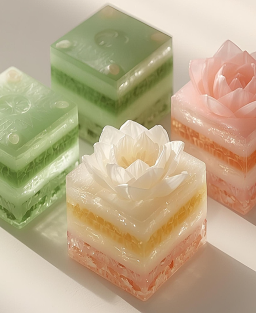
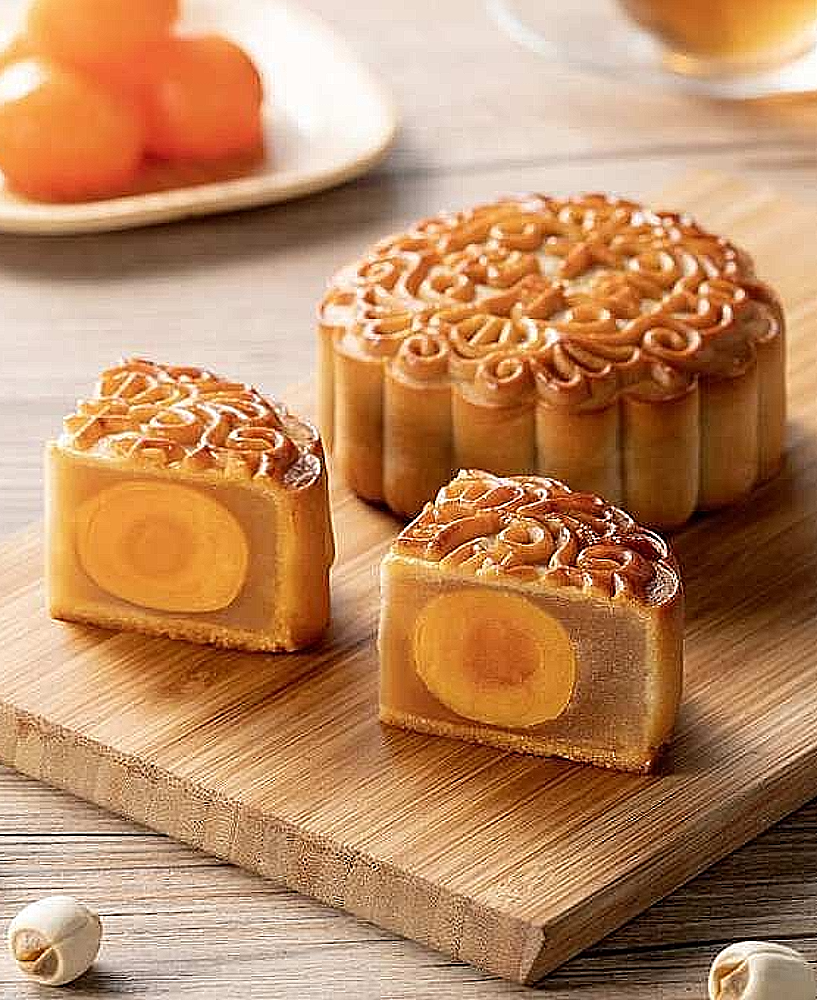
Discover the traditional recipe of the White Snake Mooncake — an emblematic Chinese dessert combining finesse, cultural symbolism, and refined flavors, with its golden crust and sweet lotus-based filling.
In Hangzhou (杭州) – Love and Fortune
在杭州,人们说,在中秋节吃白蛇传主题的月饼,可以保佑情侣幸福长久。
In Hangzhou, it was said that eating a mooncake themed around The Legend of the White Snake during the Mid-Autumn Festival would bring lasting happiness to couples.
In Suzhou (苏州) – Art and Tradition
苏州的糕点师傅常在月饼上雕刻白素贞和许仙的形象,传说谁吃了这些月饼,心愿就能实现。
In Suzhou, pastry chefs often carved the images of Bai Suzhen and Xu Xian onto mooncakes. It was believed that those who ate them would have their wishes fulfilled.
In Beijing (北京) – Imperial Legend
据说在清朝,宫廷御膳房会制作白蛇传月饼,象征爱情忠贞,皇帝赐予王公贵族以示吉祥。
It is said that during the Qing Dynasty, the imperial kitchens crafted White Snake Mooncakes to symbolize faithful love, which the emperor gifted to nobles as a token of good fortune.
Popular Saying – Loyalty and Devotion
月圆人团圆,吃白蛇传月饼,爱情长长久久。
“When the moon is full, families reunite; eating a White Snake Mooncake symbolizes enduring and faithful love.”
Mid-Autumn Festival (中秋节) – Family Transmission
每年中秋节,杭州的家庭会传给孩子们白蛇传月饼,讲述白素贞和许仙的故事,寓意爱情与家庭的传承。
Each Mid-Autumn Festival, families in Hangzhou gift White Snake Mooncakes to their children while recounting the tale of Bai Suzhen and Xu Xian, symbolizing love and the transmission of family values.
The Legend of the White Snake (白蛇传, Bái Shé Zhuàn) is one of the most famous works of Chinese literature and folklore, dating back to the Song Dynasty (960–1279). It interweaves themes of love, magic, and morality, standing as a timeless symbol of fidelity and perseverance.
Bai Suzhen (白素贞), an immortal white serpent, attains human form after centuries of meditation and Taoist study. During the Mid-Autumn Festival (中秋节, Zhōngqiū Jié) in the 11th century, she encounters Xu Xian (许仙, Xǔ Xiān), a virtuous scholar, on the Broken Bridge over Hangzhou’s West Lake (杭州, Hángzhōu). Their meeting blossoms into love, symbolizing the union between humanity and the supernatural — between loyalty and true affection.
Their happiness, however, draws the ire of Fa Hai (法海, Fǎ Hǎi), a stern Taoist monk who believes such love defies natural order. Using spells and Taoist magic, he repeatedly tries to separate them. Bai Suzhen, despite her powers, remains patient and loyal, aided by her companion Xiao Qing (小青, Xiǎo Qīng), a green serpent who also assumes human form.
The story reaches its climax on Mount Jinshan (金山, Jīnshān), where Fa Hai imprisons Bai Suzhen beneath Jinshan Pagoda (金山寺, Jīnshān Sì), leaving Xu Xian heartbroken. Their long separation symbolizes the struggle between duty and sincere love. In the end, virtue and devotion triumph — the lovers reunite, embodying love’s victory over adversity.
Mooncakes (月饼, yuèbǐng) decorated with serpent or lunar motifs are closely associated with this legend. The mooncake’s round shape mirrors the full moon — a symbol of reunion and completeness — while the serpent represents loyalty, protection, and endurance. Eating these mooncakes during the Mid-Autumn Festival thus honors the legend, expressing fidelity, happiness, and harmony between the human and spiritual worlds.
Country: China
Region: Hangzhou and Jiangsu
Transmission: Oral and cultural tradition
Mooncakes date back to the Tang Dynasty (618–907), initially offered as lunar tributes.
Over the centuries, they became a symbol of the Mid-Autumn Festival.
The Legend of the White Snake entered literature during the Qing Dynasty (1644–1912).
White snake motifs began appearing on mooncakes as homages to folk tales.
In Hangzhou, lovers exchanged these mooncakes for good fortune.
Fillings evolved from lotus paste to red bean, nuts, and even modern chocolate.
Today, Bai Suzhen-inspired mooncakes are celebrated as culinary storytelling pieces.
Hangzhou – Tong Ren Tang House: traditional decorated mooncakes
Shanghai – Daoxiangcun: limited White Snake edition
Beijing – Quanjude Bakery: modern reinterpretation
Suzhou – Mei Xuan: artistic designs on mooncakes
Nanjing – Jinling Hotel: Bai Suzhen workshops
Shenzhen – Chef Wang Yu: contemporary themed mooncakes
Guangzhou – Chef Li Ming: tea and lotus-infused flavors
Xi’an – Huaxiang Pastry: imperial tradition reimagined
Chengdu – Chef Zhao Qiang: mild spicy-style mooncakes
Hangzhou – Lin’an Pastry: artisanal mini mooncakes
Macao – Chef António Lou: Sino-Portuguese fusion, almond and lotus
Tianjin – Guiyuan Bakery: collectible limited editions
Wuhan – Chef Chen Rui: artistic, legend-inspired creations
Hainan – Chef Liu Fang: exotic fruit and oceanic fillings
Appearance: round, golden, engraved with serpent or moon motif
Texture: fine, crisp crust with a soft, sweet filling
Dominant aromas: lotus, nuts, sugar, and mild spices (cinnamon, sesame)
Utensils: mooncake mold, rolling pin, pastry brush
Dough:
400 g flour
160 g sugar syrup
80 g vegetable oil
½ tsp alkaline powder
Filling:
500 g lotus seed or red bean paste
50 g melon seeds or nuts (optional)
2 egg yolks for glazing
Decoration:
Engraved mold featuring the White Snake motif
Prep time: 60 min
Cooking time: 20–25 min
Baking temperature: 180 °C (static heat)
Yield: 12 mooncakes, 80 g each
Detailed Steps:
Dough preparation: Sift flour, mix with syrup, oil, and leavening agent. Rest 30 min.
Filling shaping: Roll filling into 40–45 g balls.
Assembly: Wrap filling in dough, seal, and smooth.
Molding: Press into mooncake mold to reveal the White Snake motif.
Egg wash: Brush gently with beaten yolk diluted with water.
Baking: Bake 20–25 min at 180 °C until golden brown.
Cooling: Cool on wire rack, store airtight.
Cantonese (广东月饼): soft, low-sugar dough with lotus filling.
Shanghai (上海月饼): elaborate surface motifs, nut-enriched fillings.
Modern / Contemporary (现代创意月饼): chocolate or ganache fillings.
Fusion (融合月饼): matcha, red fruit, or citrus flavorings.
Steamed (蒸月饼): soft, moist dough; light plant-based fillings.
Snow skin (冰皮月饼): glutinous rice crust, served chilled.
Northern (北方月饼): denser crust, crisp exterior, red bean or meat fillings.
White Snake Festival (白蛇节月饼): serpent and moon engravings, natural coloring (spirulina, beetroot).
Avoid overworking the dough to prevent toughness.
Lightly flour the mold to prevent sticking.
Apply two thin coats of egg wash for even color.
Let rest 12 hours for the crust to absorb moisture and soften.
Presentation: elegant plate or sharing platter
Traditional accompaniments:
Light green tea or oolong
Jasmine or chrysanthemum infusion
Mild fruit juices (pear, mango)
Energy: 400 kcal / 1670 kJ
Fat: 15 g
Carbohydrates: 60 g
Protein: 7 g
Fiber: 2 g
Allergens: egg, gluten, seeds, nuts
Adaptations: gluten-free (alternate flour), vegan (replace egg glaze)
Other names: Legendary Motif Mooncake, Bai Suzhen Mooncake
Discover the traditional recipe of the White Snake Mooncake — an emblematic Chinese dessert combining finesse, cultural symbolism, and refined flavors, with its golden crust and sweet lotus-based filling.
In Hangzhou (杭州) – Love and Fortune
在杭州,人们说,在中秋节吃白蛇传主题的月饼,可以保佑情侣幸福长久。
In Hangzhou, it was said that eating a mooncake themed around The Legend of the White Snake during the Mid-Autumn Festival would bring lasting happiness to couples.
In Suzhou (苏州) – Art and Tradition
苏州的糕点师傅常在月饼上雕刻白素贞和许仙的形象,传说谁吃了这些月饼,心愿就能实现。
In Suzhou, pastry chefs often carved the images of Bai Suzhen and Xu Xian onto mooncakes. It was believed that those who ate them would have their wishes fulfilled.
In Beijing (北京) – Imperial Legend
据说在清朝,宫廷御膳房会制作白蛇传月饼,象征爱情忠贞,皇帝赐予王公贵族以示吉祥。
It is said that during the Qing Dynasty, the imperial kitchens crafted White Snake Mooncakes to symbolize faithful love, which the emperor gifted to nobles as a token of good fortune.
Popular Saying – Loyalty and Devotion
月圆人团圆,吃白蛇传月饼,爱情长长久久。
“When the moon is full, families reunite; eating a White Snake Mooncake symbolizes enduring and faithful love.”
Mid-Autumn Festival (中秋节) – Family Transmission
每年中秋节,杭州的家庭会传给孩子们白蛇传月饼,讲述白素贞和许仙的故事,寓意爱情与家庭的传承。
Each Mid-Autumn Festival, families in Hangzhou gift White Snake Mooncakes to their children while recounting the tale of Bai Suzhen and Xu Xian, symbolizing love and the transmission of family values.
The Legend of the White Snake (白蛇传, Bái Shé Zhuàn) is one of the most famous works of Chinese literature and folklore, dating back to the Song Dynasty (960–1279). It interweaves themes of love, magic, and morality, standing as a timeless symbol of fidelity and perseverance.
Bai Suzhen (白素贞), an immortal white serpent, attains human form after centuries of meditation and Taoist study. During the Mid-Autumn Festival (中秋节, Zhōngqiū Jié) in the 11th century, she encounters Xu Xian (许仙, Xǔ Xiān), a virtuous scholar, on the Broken Bridge over Hangzhou’s West Lake (杭州, Hángzhōu). Their meeting blossoms into love, symbolizing the union between humanity and the supernatural — between loyalty and true affection.
Their happiness, however, draws the ire of Fa Hai (法海, Fǎ Hǎi), a stern Taoist monk who believes such love defies natural order. Using spells and Taoist magic, he repeatedly tries to separate them. Bai Suzhen, despite her powers, remains patient and loyal, aided by her companion Xiao Qing (小青, Xiǎo Qīng), a green serpent who also assumes human form.
The story reaches its climax on Mount Jinshan (金山, Jīnshān), where Fa Hai imprisons Bai Suzhen beneath Jinshan Pagoda (金山寺, Jīnshān Sì), leaving Xu Xian heartbroken. Their long separation symbolizes the struggle between duty and sincere love. In the end, virtue and devotion triumph — the lovers reunite, embodying love’s victory over adversity.
Mooncakes (月饼, yuèbǐng) decorated with serpent or lunar motifs are closely associated with this legend. The mooncake’s round shape mirrors the full moon — a symbol of reunion and completeness — while the serpent represents loyalty, protection, and endurance. Eating these mooncakes during the Mid-Autumn Festival thus honors the legend, expressing fidelity, happiness, and harmony between the human and spiritual worlds.
Country: China
Region: Hangzhou and Jiangsu
Transmission: Oral and cultural tradition
Mooncakes date back to the Tang Dynasty (618–907), initially offered as lunar tributes.
Over the centuries, they became a symbol of the Mid-Autumn Festival.
The Legend of the White Snake entered literature during the Qing Dynasty (1644–1912).
White snake motifs began appearing on mooncakes as homages to folk tales.
In Hangzhou, lovers exchanged these mooncakes for good fortune.
Fillings evolved from lotus paste to red bean, nuts, and even modern chocolate.
Today, Bai Suzhen-inspired mooncakes are celebrated as culinary storytelling pieces.
Hangzhou – Tong Ren Tang House: traditional decorated mooncakes
Shanghai – Daoxiangcun: limited White Snake edition
Beijing – Quanjude Bakery: modern reinterpretation
Suzhou – Mei Xuan: artistic designs on mooncakes
Nanjing – Jinling Hotel: Bai Suzhen workshops
Shenzhen – Chef Wang Yu: contemporary themed mooncakes
Guangzhou – Chef Li Ming: tea and lotus-infused flavors
Xi’an – Huaxiang Pastry: imperial tradition reimagined
Chengdu – Chef Zhao Qiang: mild spicy-style mooncakes
Hangzhou – Lin’an Pastry: artisanal mini mooncakes
Macao – Chef António Lou: Sino-Portuguese fusion, almond and lotus
Tianjin – Guiyuan Bakery: collectible limited editions
Wuhan – Chef Chen Rui: artistic, legend-inspired creations
Hainan – Chef Liu Fang: exotic fruit and oceanic fillings
Appearance: round, golden, engraved with serpent or moon motif
Texture: fine, crisp crust with a soft, sweet filling
Dominant aromas: lotus, nuts, sugar, and mild spices (cinnamon, sesame)
Utensils: mooncake mold, rolling pin, pastry brush
Dough:
400 g flour
160 g sugar syrup
80 g vegetable oil
½ tsp alkaline powder
Filling:
500 g lotus seed or red bean paste
50 g melon seeds or nuts (optional)
2 egg yolks for glazing
Decoration:
Engraved mold featuring the White Snake motif
Prep time: 60 min
Cooking time: 20–25 min
Baking temperature: 180 °C (static heat)
Yield: 12 mooncakes, 80 g each
Detailed Steps:
Dough preparation: Sift flour, mix with syrup, oil, and leavening agent. Rest 30 min.
Filling shaping: Roll filling into 40–45 g balls.
Assembly: Wrap filling in dough, seal, and smooth.
Molding: Press into mooncake mold to reveal the White Snake motif.
Egg wash: Brush gently with beaten yolk diluted with water.
Baking: Bake 20–25 min at 180 °C until golden brown.
Cooling: Cool on wire rack, store airtight.
Cantonese (广东月饼): soft, low-sugar dough with lotus filling.
Shanghai (上海月饼): elaborate surface motifs, nut-enriched fillings.
Modern / Contemporary (现代创意月饼): chocolate or ganache fillings.
Fusion (融合月饼): matcha, red fruit, or citrus flavorings.
Steamed (蒸月饼): soft, moist dough; light plant-based fillings.
Snow skin (冰皮月饼): glutinous rice crust, served chilled.
Northern (北方月饼): denser crust, crisp exterior, red bean or meat fillings.
White Snake Festival (白蛇节月饼): serpent and moon engravings, natural coloring (spirulina, beetroot).
Avoid overworking the dough to prevent toughness.
Lightly flour the mold to prevent sticking.
Apply two thin coats of egg wash for even color.
Let rest 12 hours for the crust to absorb moisture and soften.
Presentation: elegant plate or sharing platter
Traditional accompaniments:
Light green tea or oolong
Jasmine or chrysanthemum infusion
Mild fruit juices (pear, mango)
Energy: 400 kcal / 1670 kJ
Fat: 15 g
Carbohydrates: 60 g
Protein: 7 g
Fiber: 2 g
Allergens: egg, gluten, seeds, nuts
Adaptations: gluten-free (alternate flour), vegan (replace egg glaze)