
Fougasse and Fougassette: History and Provençal Symbolism
Provençal Anecdote: La Fougasso of Our Village
In Provence, in the village of Lourmarin, people used to say:
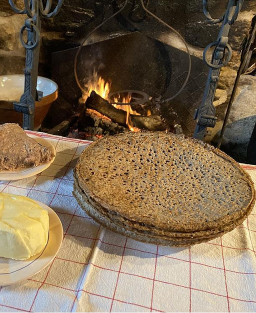
"When Christmas time came, the housewife would bring us the church-blessed fougasse. The fougasse had seven holes, representing the seven wounds of Christ. If you cut it with a knife, they said you would have no luck in the coming year."
Translation:
"When Christmas came, the housewife brought us the church-blessed fougasse. The fougasse had seven holes, which represented the seven wounds of Christ. If you cut it with a knife, it was said that you would have no luck in the coming year."
This anecdote illustrates the unique blend of superstition, tradition, and religious symbolism surrounding the fougasse. It was not just bread but an object full of meaning and blessing. The seven holes recalled the wounds of Christ, and breaking the bread by hand symbolized solidarity, sharing, and prosperity for the coming year. Children and families eagerly awaited this moment, as it represented a collective, almost sacred ritual, blending faith, culture, and Provençal conviviality.
Bread and Pastries: Living Memory of Provence
In Provence, bread is not merely food; it symbolizes life, labor, sharing, and tradition. Since ancient times, bread-making has marked the rhythm of village and city life, marking seasons, celebrations, and family gatherings.
Provençal bread is deeply connected to the land, local crops, and ancestral know-how. Wheat flour, natural leaven, olive oil, herbs, and dried fruits are simple ingredients but carry a rich history. They tell the story of the bond between humans and nature and between generations, passed from bakers to apprentices, mothers to daughters, and families to communities.
In Provençal tradition, some preparations go beyond sustenance. Fougasses and fougassettes are a perfect example: these breads and pastries were crafted with particular care, often tied to religious rites or festive celebrations. Their shapes, aromas, and ingredients reflect the culture, spirituality, and sociability of the South of France.
At Christmas, Easter, or simple family meals, bread and pastry become symbols of solidarity, blessing, and generosity. Sharing a fougasse or offering an orange blossom-scented fougassette conveys a bit of sunny Provence, its traditions, and its lifestyle.
Studying fougasse and fougassette thus means discovering not just recipes but an entire facet of Provençal cultural heritage, made of simple gestures, flavors, and symbols deeply rooted in collective memory.
Origins of Fougasse: A Primitive Bread
The fougasse (from the Latin focus, “hearth”) was originally a test bread.
Roman bakers, and later Provençal bakers, baked a small flatbread made simply of flour, water, salt, and leaven to test the oven’s temperature before baking the rest of the bread.
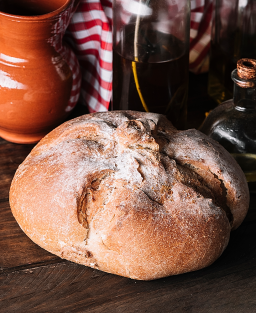
This primitive bread, baked directly on the oven floor, contained neither oil, olives, nor bacon; it was a rustic white bread, sometimes slightly burned, often eaten hot by apprentices or bakery workers.
Evolution into a Garnished Bread
Over time, especially from the Middle Ages and the Renaissance, fougasse evolved from a simple test bread to a bread for regular consumption. In the South of France, local products were added:
Olive oil, to soften the dough and add flavor
Olives, aromatic herbs, and sometimes bacon or anchovies, depending on the region
These additions transformed fougasse into a festive or accompaniment bread, emblematic of Provençal cuisine. This enriched version became a culinary tradition, notably in Marseille, Arles, and Aix.
Summary of Fougasse Evolution:
| Era | Ingredients | Use |
|---|---|---|
| Antiquity – Early Middle Ages | Flour, water, leaven, salt | Test bread for oven heat |
| Late Middle Ages | Added olive oil | Household consumption bread |
| Modern era | Added olives, herbs, bacon (regional variations) | Typical Provencal bread, savory and aromatic |
A Religious and Popular Tradition
In some parts of Provence, fougasse took on symbolic value at Christmas. Sometimes shaped like a face representing Christ, it was brought to the cathedral to be blessed.
The custom was to break the fougasse by hand to share it among the faithful, because:
"If it was cut with a knife, one would be ruined the following year."
This act of sharing symbolized solidarity, blessing, and prosperity for the coming year. It perfectly illustrates how bread in Provençal culture transcends mere nourishment to become a spiritual and communal symbol.
Fougasse or Fougassette?
Although they share the same culinary roots, fougasse and fougassette are not the same specialty.
| Characteristic | Fougasse | Fougassette |
|---|---|---|
| Origin | Provence (Aix, Marseille, Arles) | French Riviera (Grasse, Nice) |
| Taste | Savory | Sweet |
| Typical ingredients | Olive oil, olives, bacon, herbs | Flour, olive oil, sugar, orange blossom |
| Use | Table bread or appetizer | Sweet brioche served at Christmas or Easter |
| Symbolism | Sharing bread, ritual blessing | Festive sweetness, aroma of the Grasse region |
One Soul, Two Expressions
These two preparations showcase the ancestral expertise of Southern French bakers.
Savory fougasse evokes the bread of the land and labor.
Sweet, aromatic fougassette embodies festive joy and the generosity of Provençal tables.
Together, they remind us that Provençal cuisine is not just a way of life but also a living memory of gestures, beliefs, and traditions.
Traditional Recipes
Here are the two traditional recipes—one for savory Provençal fougasse, the other for sweet Grasse fougassette. They respect regional customs, typical ingredients, and skills passed down through generations.
1. Provençal Fougasse (Savory, with Olive Oil and Herbs)
Ingredients (for 2 fougasses)
500 g wheat flour (T55)
25 g fresh baker’s yeast (or 8 g dry yeast)
10 g salt
300 ml lukewarm water
4 tbsp olive oil
Herbes de Provence (thyme, rosemary, oregano)
Black olives (optional)
1 tsp sugar (to activate the yeast)
Preparation
Prepare the dough:
Dissolve yeast in some lukewarm water with sugar.
In a large bowl, mix flour and salt. Add dissolved yeast, remaining water, and 2 tbsp olive oil. Knead until smooth and elastic (about 10 minutes).
First rise:
Cover with a cloth and let rest in a warm place for 1.5–2 hours, until doubled in size.
Shaping:
Punch down dough and divide into two balls. Roll each into an oval on a floured tray.
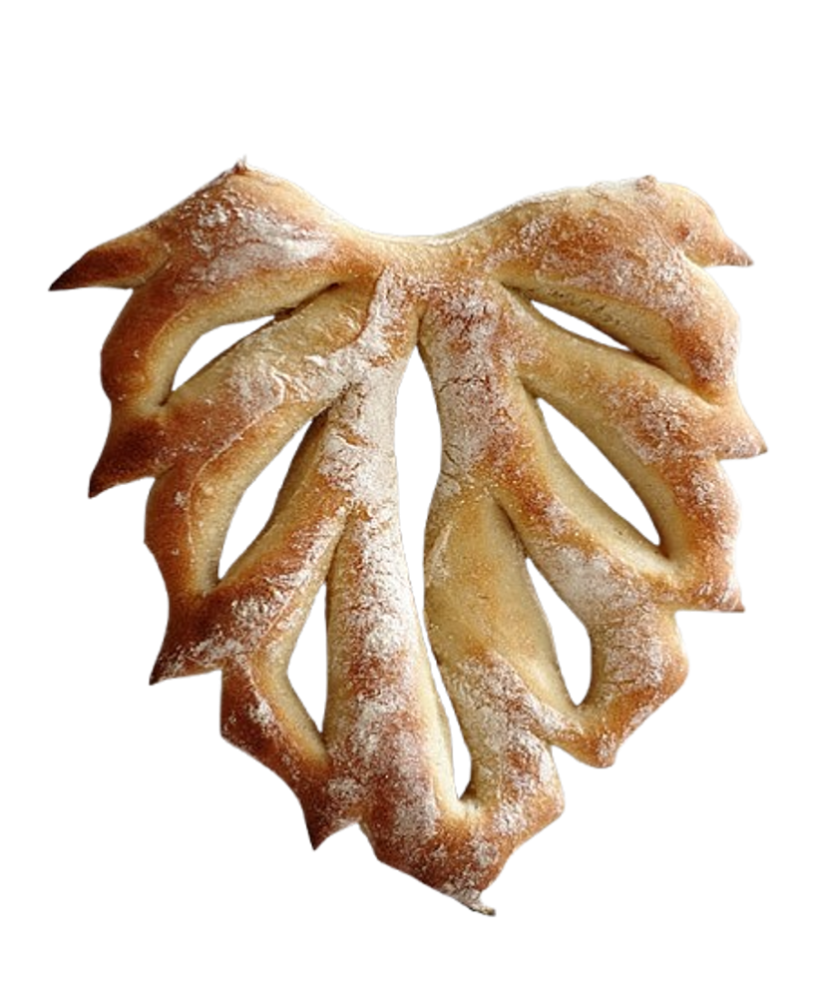
Using a knife, make cuts in the shape of a stalk or leaf. Brush with olive oil and sprinkle herbs. Add olives if desired.
Second rise:
Rest 30 more minutes.
Baking:
Preheat oven to 220°C (fan). Bake 15–20 minutes until golden. Optionally brush with olive oil for shine.
Serving:
Serve warm or cold as an appetizer or with salads, soups, or grilled dishes. Texture should be soft inside, slightly crispy outside. Symbol of conviviality and Provençal sharing.
2. Grasse Fougassette (Sweet, with Orange Blossom)
Ingredients (for 6 small fougassettes)
500 g wheat flour (T45)
15 g fresh baker’s yeast (or 5 g dry yeast)
100 g sugar
100 ml mild olive oil
50 g melted butter (optional but traditional in Grasse)
2 eggs
120 ml lukewarm milk
4 tbsp orange blossom water
Pinch of salt
Preparation
Dissolve yeast:
Mix yeast with a little lukewarm milk and 1 tsp sugar. Let rest 10 minutes.
Prepare dough:
In a large bowl, mix flour, remaining sugar, and salt. Add eggs, olive oil, melted butter, dissolved yeast, milk, and orange blossom water. Knead for 10–15 minutes until soft and slightly sticky.
First rise:
Cover and let rise 2 hours at room temperature.
Shaping:
Divide dough into 6 portions. Shape into discs or ovals about 1.5 cm thick. Make decorative slits on top. Place on a baking sheet lined with parchment paper.
Second rise:
Rest 45 more minutes.
Baking:
Preheat oven to 180°C. Brush with a little sweetened milk. Bake 15–20 minutes until golden.
Optional finishing:
Brush with a light syrup (water + sugar + orange blossom) for shine and enhanced aroma.
Serving:
Enjoy for breakfast or afternoon snack. The delicate orange blossom aroma recalls Grasse pastries and the Christmas tradition of eastern Provence. A soft, sunny, heartwarming brioche deeply rooted in the memory of Riviera families.
Fougasse and Fougassette: History and Provençal Symbolism
Provençal Anecdote: La Fougasso of Our Village
In Provence, in the village of Lourmarin, people used to say:
"When Christmas time came, the housewife would bring us the church-blessed fougasse. The fougasse had seven holes, representing the seven wounds of Christ. If you cut it with a knife, they said you would have no luck in the coming year."
Translation:
"When Christmas came, the housewife brought us the church-blessed fougasse. The fougasse had seven holes, which represented the seven wounds of Christ. If you cut it with a knife, it was said that you would have no luck in the coming year."
This anecdote illustrates the unique blend of superstition, tradition, and religious symbolism surrounding the fougasse. It was not just bread but an object full of meaning and blessing. The seven holes recalled the wounds of Christ, and breaking the bread by hand symbolized solidarity, sharing, and prosperity for the coming year. Children and families eagerly awaited this moment, as it represented a collective, almost sacred ritual, blending faith, culture, and Provençal conviviality.
Bread and Pastries: Living Memory of Provence
In Provence, bread is not merely food; it symbolizes life, labor, sharing, and tradition. Since ancient times, bread-making has marked the rhythm of village and city life, marking seasons, celebrations, and family gatherings.
Provençal bread is deeply connected to the land, local crops, and ancestral know-how. Wheat flour, natural leaven, olive oil, herbs, and dried fruits are simple ingredients but carry a rich history. They tell the story of the bond between humans and nature and between generations, passed from bakers to apprentices, mothers to daughters, and families to communities.
In Provençal tradition, some preparations go beyond sustenance. Fougasses and fougassettes are a perfect example: these breads and pastries were crafted with particular care, often tied to religious rites or festive celebrations. Their shapes, aromas, and ingredients reflect the culture, spirituality, and sociability of the South of France.
At Christmas, Easter, or simple family meals, bread and pastry become symbols of solidarity, blessing, and generosity. Sharing a fougasse or offering an orange blossom-scented fougassette conveys a bit of sunny Provence, its traditions, and its lifestyle.
Studying fougasse and fougassette thus means discovering not just recipes but an entire facet of Provençal cultural heritage, made of simple gestures, flavors, and symbols deeply rooted in collective memory.
Origins of Fougasse: A Primitive Bread
The fougasse (from the Latin focus, “hearth”) was originally a test bread.
Roman bakers, and later Provençal bakers, baked a small flatbread made simply of flour, water, salt, and leaven to test the oven’s temperature before baking the rest of the bread.
This primitive bread, baked directly on the oven floor, contained neither oil, olives, nor bacon; it was a rustic white bread, sometimes slightly burned, often eaten hot by apprentices or bakery workers.
Evolution into a Garnished Bread
Over time, especially from the Middle Ages and the Renaissance, fougasse evolved from a simple test bread to a bread for regular consumption. In the South of France, local products were added:
Olive oil, to soften the dough and add flavor
Olives, aromatic herbs, and sometimes bacon or anchovies, depending on the region
These additions transformed fougasse into a festive or accompaniment bread, emblematic of Provençal cuisine. This enriched version became a culinary tradition, notably in Marseille, Arles, and Aix.
Summary of Fougasse Evolution:
| Era | Ingredients | Use |
|---|---|---|
| Antiquity – Early Middle Ages | Flour, water, leaven, salt | Test bread for oven heat |
| Late Middle Ages | Added olive oil | Household consumption bread |
| Modern era | Added olives, herbs, bacon (regional variations) | Typical Provencal bread, savory and aromatic |
A Religious and Popular Tradition
In some parts of Provence, fougasse took on symbolic value at Christmas. Sometimes shaped like a face representing Christ, it was brought to the cathedral to be blessed.
The custom was to break the fougasse by hand to share it among the faithful, because:
"If it was cut with a knife, one would be ruined the following year."
This act of sharing symbolized solidarity, blessing, and prosperity for the coming year. It perfectly illustrates how bread in Provençal culture transcends mere nourishment to become a spiritual and communal symbol.
Fougasse or Fougassette?
Although they share the same culinary roots, fougasse and fougassette are not the same specialty.
| Characteristic | Fougasse | Fougassette |
|---|---|---|
| Origin | Provence (Aix, Marseille, Arles) | French Riviera (Grasse, Nice) |
| Taste | Savory | Sweet |
| Typical ingredients | Olive oil, olives, bacon, herbs | Flour, olive oil, sugar, orange blossom |
| Use | Table bread or appetizer | Sweet brioche served at Christmas or Easter |
| Symbolism | Sharing bread, ritual blessing | Festive sweetness, aroma of the Grasse region |
One Soul, Two Expressions
These two preparations showcase the ancestral expertise of Southern French bakers.
Savory fougasse evokes the bread of the land and labor.
Sweet, aromatic fougassette embodies festive joy and the generosity of Provençal tables.
Together, they remind us that Provençal cuisine is not just a way of life but also a living memory of gestures, beliefs, and traditions.
Traditional Recipes
Here are the two traditional recipes—one for savory Provençal fougasse, the other for sweet Grasse fougassette. They respect regional customs, typical ingredients, and skills passed down through generations.
1. Provençal Fougasse (Savory, with Olive Oil and Herbs)
Ingredients (for 2 fougasses)
500 g wheat flour (T55)
25 g fresh baker’s yeast (or 8 g dry yeast)
10 g salt
300 ml lukewarm water
4 tbsp olive oil
Herbes de Provence (thyme, rosemary, oregano)
Black olives (optional)
1 tsp sugar (to activate the yeast)
Preparation
Prepare the dough:
Dissolve yeast in some lukewarm water with sugar.
In a large bowl, mix flour and salt. Add dissolved yeast, remaining water, and 2 tbsp olive oil. Knead until smooth and elastic (about 10 minutes).
First rise:
Cover with a cloth and let rest in a warm place for 1.5–2 hours, until doubled in size.
Shaping:
Punch down dough and divide into two balls. Roll each into an oval on a floured tray.
Using a knife, make cuts in the shape of a stalk or leaf. Brush with olive oil and sprinkle herbs. Add olives if desired.
Second rise:
Rest 30 more minutes.
Baking:
Preheat oven to 220°C (fan). Bake 15–20 minutes until golden. Optionally brush with olive oil for shine.
Serving:
Serve warm or cold as an appetizer or with salads, soups, or grilled dishes. Texture should be soft inside, slightly crispy outside. Symbol of conviviality and Provençal sharing.
2. Grasse Fougassette (Sweet, with Orange Blossom)
Ingredients (for 6 small fougassettes)
500 g wheat flour (T45)
15 g fresh baker’s yeast (or 5 g dry yeast)
100 g sugar
100 ml mild olive oil
50 g melted butter (optional but traditional in Grasse)
2 eggs
120 ml lukewarm milk
4 tbsp orange blossom water
Pinch of salt
Preparation
Dissolve yeast:
Mix yeast with a little lukewarm milk and 1 tsp sugar. Let rest 10 minutes.
Prepare dough:
In a large bowl, mix flour, remaining sugar, and salt. Add eggs, olive oil, melted butter, dissolved yeast, milk, and orange blossom water. Knead for 10–15 minutes until soft and slightly sticky.
First rise:
Cover and let rise 2 hours at room temperature.
Shaping:
Divide dough into 6 portions. Shape into discs or ovals about 1.5 cm thick. Make decorative slits on top. Place on a baking sheet lined with parchment paper.
Second rise:
Rest 45 more minutes.
Baking:
Preheat oven to 180°C. Brush with a little sweetened milk. Bake 15–20 minutes until golden.
Optional finishing:
Brush with a light syrup (water + sugar + orange blossom) for shine and enhanced aroma.
Serving:
Enjoy for breakfast or afternoon snack. The delicate orange blossom aroma recalls Grasse pastries and the Christmas tradition of eastern Provence. A soft, sunny, heartwarming brioche deeply rooted in the memory of Riviera families.