
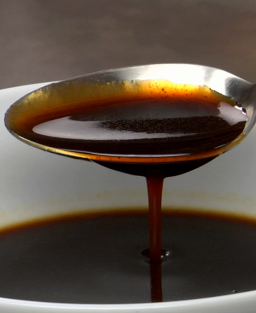
Meat Glace Recipe – Ultimate Reduction and Concentrated Essence for Haute Cuisine Sauces
Country: France
Region: Classical French cuisine (saucier tradition)
Official status: Fundamental product of haute cuisine
Recipe codified by: Auguste Escoffier
Specifications: None
Certification body: None
Origin and history:
Meat glace represents the pinnacle of the saucier’s craft. Historically, it allowed cooks to preserve the essence of meat juices in a reduced and stable form. It is obtained through the extreme concentration of a brown stock until the natural gelatin from the bones becomes the primary structural element.
Evolution of the recipe:
While the reduction technique has remained largely unchanged since the nineteenth century, contemporary chefs now favor gentler reductions to preserve aromatic clarity and avoid the “burnt” or overly heavy character sometimes found in ancestral reductions.
Signature interpretations by three chefs
Auguste Escoffier: described meat glace as “the soul of sauces” in his Guide Culinaire.
Joël Robuchon: famous for the mirror-like shine of his glaces, insisting on extremely precise degreasing.
Sauveur Constant: master saucier who elevated slow reduction to a level of absolute purity.
Anecdote:
In professional kitchens, it is said that a perfectly made meat glace should be firm enough when cold to “play ball with”: it should bounce without breaking, a sign of perfect natural gelatin concentration.
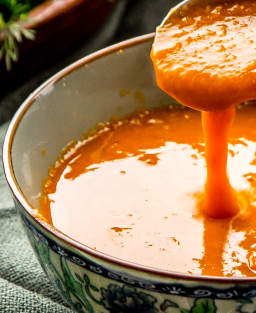
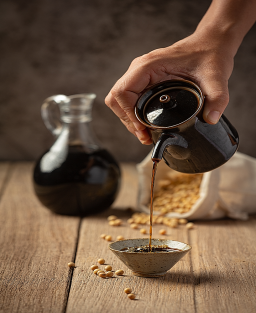
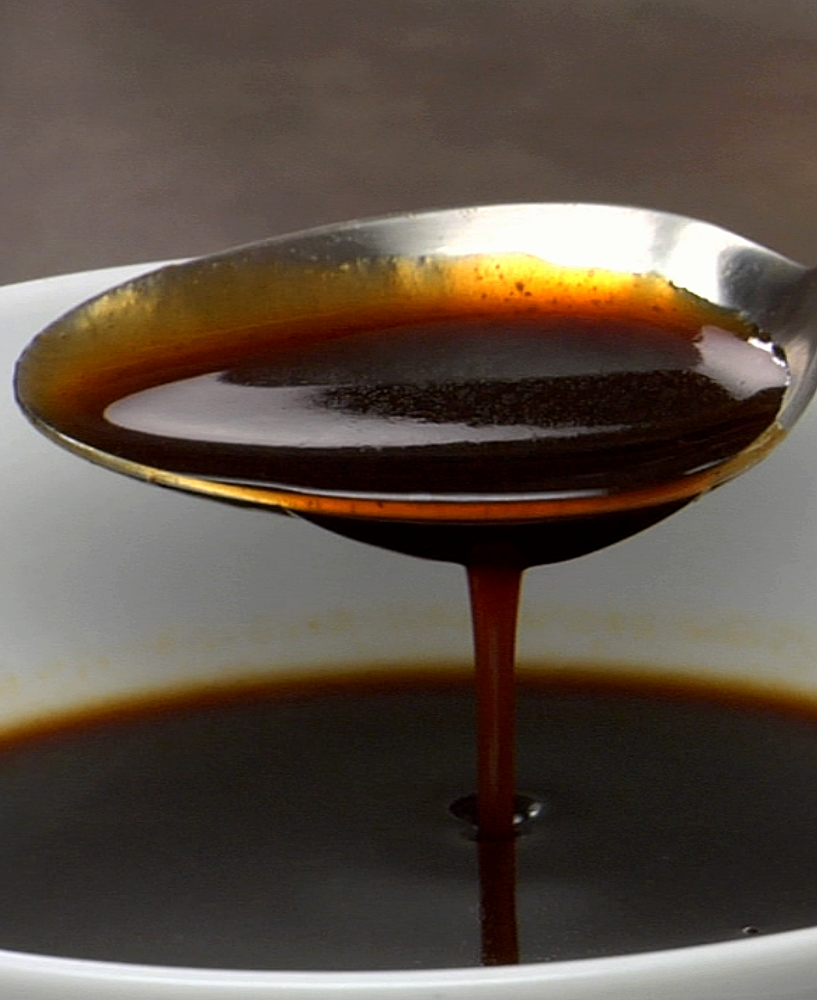
Meat glace is a brown beef (or veal) stock reduced according to a strict 1/10 ratio, resulting in a syrupy consistency when hot and a gelatinous texture when cold. It is a concentration of flavor, color, and brilliance. It contains no thickening agents (such as flour or starch); its texture derives solely from liquid reduction and collagen concentration.
High-quality brown beef or veal stock: 10 liters
Initial filtration:
Strain 10 liters of high-quality brown beef stock through a very fine chinois lined with cheesecloth.
Start the reduction:
Pour the stock into a wide sauté pan or a low rondeau to maximize evaporation.
Cooking:
Bring to a boil, then lower the heat. Maintain a gentle and steady simmer.
Skimming and degreasing (crucial):
Skim impurities and remove fat very regularly. The glace must remain perfectly clear.
Successive transfers:
As the reduction progresses, transfer the liquid into smaller containers to prevent the juices from burning along the sides.
Reduction control (1/10):
Reduce until the final volume reaches about 1 liter. The liquid should coat the spoon thickly.
Final filtration:
Strain the finished glace through a chinois with fine cloth (muslin) to obtain a mirror-like shine.
Storage:
Cool rapidly. The glace should become a firm and elastic jelly block.
Poultry Glace:
Obtained by reducing a brown poultry stock. More delicate flavor and finer texture, used to enrich poultry sauces or consommés.
Game Glace:
Prepared from game stocks (venison, roe deer, pheasant). Deep, intense aromas and robust taste ideal for powerful sauces.
Pork Glace:
Used in certain regional cuisines. Produced from a reduced brown pork stock and suitable for rich dishes and rustic stews.
Fish Glace:
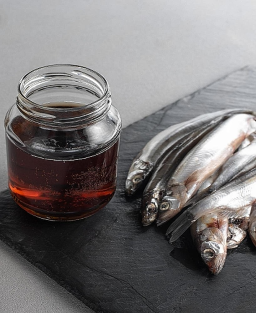
A concentrated reduction of fish fumet. Lighter in character, it provides marine intensity to sauces for white fish and shellfish.
Veal Glace (or Blanched Veal Glace):
Made from blanched veal bones. Produces a clearer and less robust result, ideal for white sauces or very refined dishes.
Beef or Veal Glace for Espagnole Sauce:
Ultra-concentrated glaces used as a base for complex mother sauces, providing essential depth for successive reductions.
Zero Salt:
Never salt the base stock. A tenfold reduction would make the glace inedible.
Degreasing:
A poorly degreased glace will appear dull. Shine is the ultimate proof of technical mastery.
Usage:
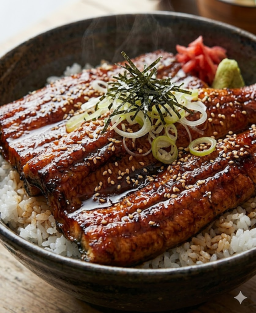
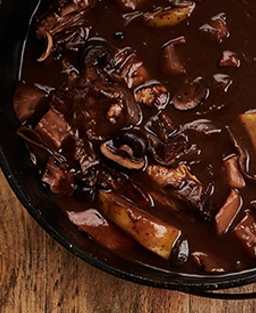
Use sparingly to strengthen a sauce or to glaze roasted meat (lacquering effect).
Storage:
Keeps for several weeks refrigerated or can be frozen in small portions (ice cube trays) for convenient use.
Meat Glace Recipe – Ultimate Reduction and Concentrated Essence for Haute Cuisine Sauces
Country: France
Region: Classical French cuisine (saucier tradition)
Official status: Fundamental product of haute cuisine
Recipe codified by: Auguste Escoffier
Specifications: None
Certification body: None
Origin and history:
Meat glace represents the pinnacle of the saucier’s craft. Historically, it allowed cooks to preserve the essence of meat juices in a reduced and stable form. It is obtained through the extreme concentration of a brown stock until the natural gelatin from the bones becomes the primary structural element.
Evolution of the recipe:
While the reduction technique has remained largely unchanged since the nineteenth century, contemporary chefs now favor gentler reductions to preserve aromatic clarity and avoid the “burnt” or overly heavy character sometimes found in ancestral reductions.
Signature interpretations by three chefs
Auguste Escoffier: described meat glace as “the soul of sauces” in his Guide Culinaire.
Joël Robuchon: famous for the mirror-like shine of his glaces, insisting on extremely precise degreasing.
Sauveur Constant: master saucier who elevated slow reduction to a level of absolute purity.
Anecdote:
In professional kitchens, it is said that a perfectly made meat glace should be firm enough when cold to “play ball with”: it should bounce without breaking, a sign of perfect natural gelatin concentration.
Meat glace is a brown beef (or veal) stock reduced according to a strict 1/10 ratio, resulting in a syrupy consistency when hot and a gelatinous texture when cold. It is a concentration of flavor, color, and brilliance. It contains no thickening agents (such as flour or starch); its texture derives solely from liquid reduction and collagen concentration.
High-quality brown beef or veal stock: 10 liters
Initial filtration:
Strain 10 liters of high-quality brown beef stock through a very fine chinois lined with cheesecloth.
Start the reduction:
Pour the stock into a wide sauté pan or a low rondeau to maximize evaporation.
Cooking:
Bring to a boil, then lower the heat. Maintain a gentle and steady simmer.
Skimming and degreasing (crucial):
Skim impurities and remove fat very regularly. The glace must remain perfectly clear.
Successive transfers:
As the reduction progresses, transfer the liquid into smaller containers to prevent the juices from burning along the sides.
Reduction control (1/10):
Reduce until the final volume reaches about 1 liter. The liquid should coat the spoon thickly.
Final filtration:
Strain the finished glace through a chinois with fine cloth (muslin) to obtain a mirror-like shine.
Storage:
Cool rapidly. The glace should become a firm and elastic jelly block.
Poultry Glace:
Obtained by reducing a brown poultry stock. More delicate flavor and finer texture, used to enrich poultry sauces or consommés.
Game Glace:
Prepared from game stocks (venison, roe deer, pheasant). Deep, intense aromas and robust taste ideal for powerful sauces.
Pork Glace:
Used in certain regional cuisines. Produced from a reduced brown pork stock and suitable for rich dishes and rustic stews.
Fish Glace:
A concentrated reduction of fish fumet. Lighter in character, it provides marine intensity to sauces for white fish and shellfish.
Veal Glace (or Blanched Veal Glace):
Made from blanched veal bones. Produces a clearer and less robust result, ideal for white sauces or very refined dishes.
Beef or Veal Glace for Espagnole Sauce:
Ultra-concentrated glaces used as a base for complex mother sauces, providing essential depth for successive reductions.
Zero Salt:
Never salt the base stock. A tenfold reduction would make the glace inedible.
Degreasing:
A poorly degreased glace will appear dull. Shine is the ultimate proof of technical mastery.
Usage:
Use sparingly to strengthen a sauce or to glaze roasted meat (lacquering effect).
Storage:
Keeps for several weeks refrigerated or can be frozen in small portions (ice cube trays) for convenient use.