
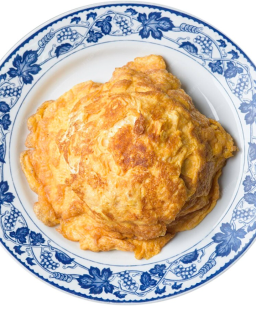
Mousseline Omelette
Etymology: The term "mousseline" derives from "mousse" (foam), by analogy with the fine and lightweight cotton fabric of the same name. In cooking, it designates a preparation made airy through the incorporation of air or cream, offering an exceptionally fine texture.
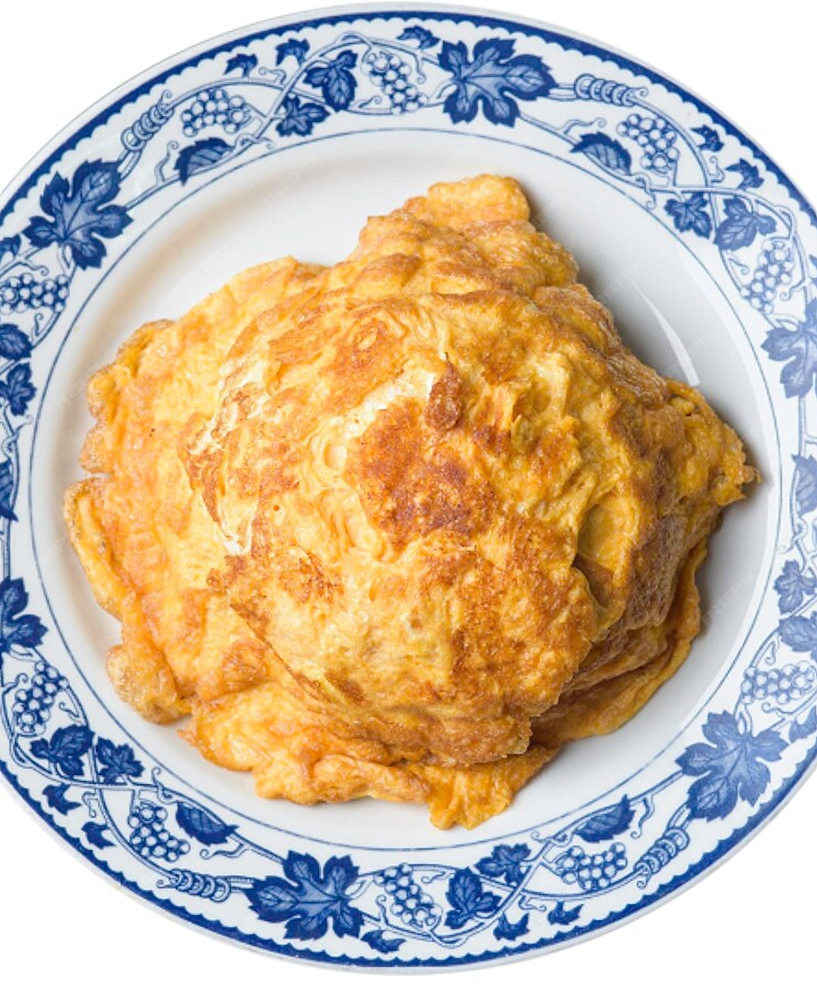
Technique of the souffléed omelette with stiffly beaten egg whites, a speciality of classic French gastronomy, cooked in churned butter.
Discover the traditional recipe of the Mousseline Omelette, an emblematic speciality of French bourgeois cuisine, recognised for its technical refinement and its culinary heritage rooted in the Age of Enlightenment.
Other denominations
Main variants
⚠️ Status: No PGI (Pure technique recipe).
Saying
"A well-beaten omelette, a well-kept house."
(Meaning that the diligence applied to a simple gesture reflects the rigour of the craftsman.)
Legend
It is said that in Geneva, the mousseline omelette was the "convalescence" dish of the Empire's officers, its lightness allowing nourishment without weighing on the wounded soldiers' stomachs, symbolising the breath of life regained.
Detailed history
The Mousseline Omelette represents the pinnacle of the technical transformation of the egg in French cuisine. Although egg-based preparations are attested since Antiquity — the Romans prepared the ova spongia ex lacte, a preparation closer to a milk crêpe than to a folded omelette in the modern sense of the term — the "mousseline" version was born out of a desire for social and gastronomic distinction in the 18th century. At that time, court cuisine sought to distance itself from peasant preparations considered too dense. In 1742, in La Cuisinière Bourgeoise, Menon already evokes the separation of the egg's elements to bring "air" to the preparation.
The role of the religious calendar is not negligible: the egg being one of the few protein sources authorised during certain days of abstinence, cooks competed in ingenuity to vary its textures. The mousseline omelette thus becomes a "lean" festive dish, combining the simplicity of the product with the complexity of the gesture.
In the 19th century, physics entered the kitchen. It became understood that the volume of the omelette does not depend on a leavening agent, but on Charles's Law of gas expansion. By trapping air bubbles in the protein network of egg whites (albumin), a structure is created which, under the effect of heat, expands. If the cooking is well controlled, the proteins coagulate around these air pockets before the air escapes, thus fixing the volume. This is the very essence of the "soufflé" applied to the frying pan.
The most significant cultural influence comes from Auguste Escoffier who, at the beginning of the 20th century, definitively separated the classic omelette (rolled and runny) from the mousseline (souffléed and airy). He imposed a "to order" cooking method, prohibiting reheating which would cause the foamy structure and protein network to collapse. This technical requirement made this dish a formidable test for kitchen assistants in the great brigades.
Technical evolution also followed that of equipment. Until the mid-19th century, egg whites were beaten with rudimentary utensils — long-tined forks, wicker whisks — making the operation lengthy and the result unpredictable. The arrival of the wire whisk allowed a standardisation of the "bird's beak" texture, indispensable to the success of the mousseline. Today, although the electric mixer facilitates the task, the folding gesture by lifting with a silicone spatula remains the hallmark of artisanal expertise. The transition from open hearth to induction hob and combi oven has allowed perfect control of the thermal gradient, avoiding drying out while ensuring the development of volume.
Presentation
Blue steel or non-stick frying pan of 20 cm, cold stainless steel bowl, balloon whisk, silicone spatula, pastry brush, salamander or fan-assisted oven.
1. Mise en place (5 min)
Clarify the eggs: whites in the cold stainless steel bowl, yolks in a small bowl. Preheat the oven or salamander. Do not allow the beaten egg whites to rest: fold them in without delay to avoid graining.
2. Preliminary preparations (3 min)
Season the yolks. Add a drop of lemon juice to the whites to stabilise the protein network. Beat the egg whites to firm peaks but not "brittle" (bird's beak stage).
3. Transformation (3 min)
Loosen the yolks with a spoonful of whites, then fold in the remaining whites using an enveloping vertical rotation movement with the silicone spatula, lifting the mixture from bottom to top without crushing the air bubbles. This folding-by-lifting gesture is distinct from pastry macaronage, which conversely aims to partially break down the meringue structure.
4. Cooking (5 min)
Heat the pan to a temperature between 160°C and 180°C. Add the butter until it reaches the "foamy" stage. Pour in the batter. Cook over gentle heat for 2 minutes to set the base. Pass under the salamander or place in the oven for 1 minute to brown and puff the top.
5. Plating (1 min)
Give a sharp flick of the wrist on the pan handle to release the omelette. Fold gently onto a warm plate. Glaze with clarified butter using the pastry brush.
Document drawn up in accordance with the Professional Heritage Recipe Record Template — Corrected version March 2026.
Mousseline Omelette
Etymology: The term "mousseline" derives from "mousse" (foam), by analogy with the fine and lightweight cotton fabric of the same name. In cooking, it designates a preparation made airy through the incorporation of air or cream, offering an exceptionally fine texture.
Technique of the souffléed omelette with stiffly beaten egg whites, a speciality of classic French gastronomy, cooked in churned butter.
Discover the traditional recipe of the Mousseline Omelette, an emblematic speciality of French bourgeois cuisine, recognised for its technical refinement and its culinary heritage rooted in the Age of Enlightenment.
Other denominations
Main variants
⚠️ Status: No PGI (Pure technique recipe).
Saying
"A well-beaten omelette, a well-kept house."
(Meaning that the diligence applied to a simple gesture reflects the rigour of the craftsman.)
Legend
It is said that in Geneva, the mousseline omelette was the "convalescence" dish of the Empire's officers, its lightness allowing nourishment without weighing on the wounded soldiers' stomachs, symbolising the breath of life regained.
Detailed history
The Mousseline Omelette represents the pinnacle of the technical transformation of the egg in French cuisine. Although egg-based preparations are attested since Antiquity — the Romans prepared the ova spongia ex lacte, a preparation closer to a milk crêpe than to a folded omelette in the modern sense of the term — the "mousseline" version was born out of a desire for social and gastronomic distinction in the 18th century. At that time, court cuisine sought to distance itself from peasant preparations considered too dense. In 1742, in La Cuisinière Bourgeoise, Menon already evokes the separation of the egg's elements to bring "air" to the preparation.
The role of the religious calendar is not negligible: the egg being one of the few protein sources authorised during certain days of abstinence, cooks competed in ingenuity to vary its textures. The mousseline omelette thus becomes a "lean" festive dish, combining the simplicity of the product with the complexity of the gesture.
In the 19th century, physics entered the kitchen. It became understood that the volume of the omelette does not depend on a leavening agent, but on Charles's Law of gas expansion. By trapping air bubbles in the protein network of egg whites (albumin), a structure is created which, under the effect of heat, expands. If the cooking is well controlled, the proteins coagulate around these air pockets before the air escapes, thus fixing the volume. This is the very essence of the "soufflé" applied to the frying pan.
The most significant cultural influence comes from Auguste Escoffier who, at the beginning of the 20th century, definitively separated the classic omelette (rolled and runny) from the mousseline (souffléed and airy). He imposed a "to order" cooking method, prohibiting reheating which would cause the foamy structure and protein network to collapse. This technical requirement made this dish a formidable test for kitchen assistants in the great brigades.
Technical evolution also followed that of equipment. Until the mid-19th century, egg whites were beaten with rudimentary utensils — long-tined forks, wicker whisks — making the operation lengthy and the result unpredictable. The arrival of the wire whisk allowed a standardisation of the "bird's beak" texture, indispensable to the success of the mousseline. Today, although the electric mixer facilitates the task, the folding gesture by lifting with a silicone spatula remains the hallmark of artisanal expertise. The transition from open hearth to induction hob and combi oven has allowed perfect control of the thermal gradient, avoiding drying out while ensuring the development of volume.
Presentation
Blue steel or non-stick frying pan of 20 cm, cold stainless steel bowl, balloon whisk, silicone spatula, pastry brush, salamander or fan-assisted oven.
1. Mise en place (5 min)
Clarify the eggs: whites in the cold stainless steel bowl, yolks in a small bowl. Preheat the oven or salamander. Do not allow the beaten egg whites to rest: fold them in without delay to avoid graining.
2. Preliminary preparations (3 min)
Season the yolks. Add a drop of lemon juice to the whites to stabilise the protein network. Beat the egg whites to firm peaks but not "brittle" (bird's beak stage).
3. Transformation (3 min)
Loosen the yolks with a spoonful of whites, then fold in the remaining whites using an enveloping vertical rotation movement with the silicone spatula, lifting the mixture from bottom to top without crushing the air bubbles. This folding-by-lifting gesture is distinct from pastry macaronage, which conversely aims to partially break down the meringue structure.
4. Cooking (5 min)
Heat the pan to a temperature between 160°C and 180°C. Add the butter until it reaches the "foamy" stage. Pour in the batter. Cook over gentle heat for 2 minutes to set the base. Pass under the salamander or place in the oven for 1 minute to brown and puff the top.
5. Plating (1 min)
Give a sharp flick of the wrist on the pan handle to release the omelette. Fold gently onto a warm plate. Glaze with clarified butter using the pastry brush.
Document drawn up in accordance with the Professional Heritage Recipe Record Template — Corrected version March 2026.